Fire Pump Inspection After Pump Room Flooding Steps
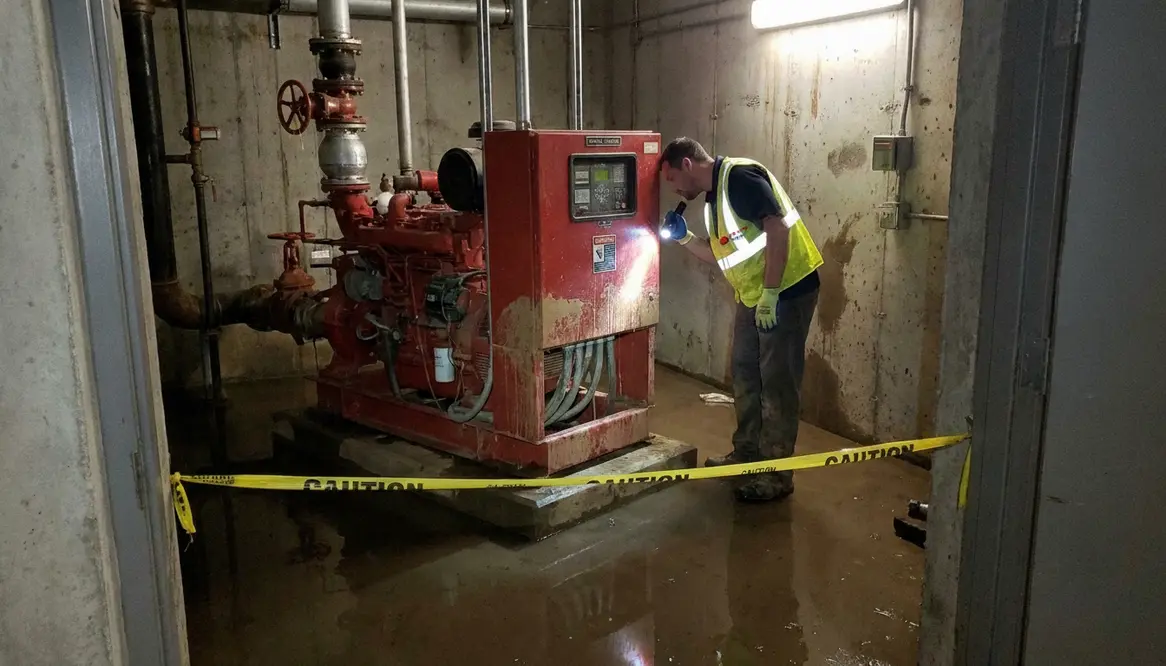
I’ve seen a fire pump inspection after pump room flooding turn from a routine service call into a full rescue mission. When water gets into a pump room, the system may still look calm, but that calm can be misleading. In commercial and industrial facilities, and in major property buildings, one wet room can threaten the whole fire protection setup. So I check fast, I check deep, and I check with one goal in mind: make sure the pump will answer the call when it matters most. Because when fire protection fails, nobody wants a dramatic plot twist. This is not a movie.
Why I start with safety and shutdown checks
First, I make the area safe. I verify that power is isolated where needed, and I look for any sign of live electrical risk. Then I confirm whether the flood affected the pump controller, transfer switches, alarm circuits, or backup power parts. Since water and electricity make a terrible team, I treat every wet component as suspect until I prove otherwise.
After that, I inspect the room itself. I check how high the water reached, how long it stayed, and whether it carried mud, oil, or debris. These details matter because clean water and dirty water cause very different kinds of damage. Also, I note the source of the flood. A burst pipe, a drain backup, or a roof leak tells me something different about the risk of repeat damage.
What I inspect on the pump, motor, and controls
Next, I move to the heart of the system. I look at the pump casing, shaft, bearings, seals, and couplings. If water touched these parts, I check for rust, binding, and wear. Even a small amount of moisture can start damage that does not show up right away. That is why a careful fire pump inspection after pump room flooding must go beyond a quick glance and a hopeful nod.
I also inspect the motor or engine, depending on the setup. For electric units, I check insulation, terminals, conduit, and wiring. For diesel units, I check the fuel system, batteries, starters, and air intake parts. Then I test the controller for moisture, corrosion, and fault codes. If the panel shows trouble, I do not guess. I trace the issue, step by step, until I know what needs repair or replacement.
What technicians check after a flood in the pump room
Here is how I usually break the work down.
Column 1
- Water level and flood line
- Pump casing and seals
- Motor or engine condition
- Controller and alarms
Column 2
- Power supply and backup source
- Batteries, terminals, and charging parts
- Valves, gauges, and pressure settings
- Signs of rust, sludge, or shorted parts
After this, I decide what can be cleaned, what must be dried, and what must be replaced. If water reached a critical part, I do not take chances. A pump room is not the place for a “let’s see what happens” strategy. That kind of thinking belongs in bad sitcoms, not life safety systems.
How I test valves, pressure, and flow after cleanup
Once the equipment is dry and safe to test, I check the valves. I make sure they open and close the way they should, and I confirm that flood damage did not seize them or wash debris into the seats. Then I inspect pressure gauges and sensing lines. If a gauge sticks or reads wrong, the whole system can give a false picture of readiness.
Then I move to performance testing. I verify suction conditions, discharge pressure, and pump operation under load. This step matters because a pump can look fine and still fail when demand rises. I also watch for strange noise, vibration, heat, or leaks. If I hear a rattle, I treat it like the system’s way of clearing its throat before telling me something is wrong.
Where I use fire pump inspection after pump room flooding in larger facilities
In commercial and industrial properties, flood recovery also means I look at how the event affected the full fire protection path. I coordinate with related systems and check whether connected equipment stayed dry and ready. For example, I may review related electrical service work through commercial electrical support for critical systems when the flood risk reaches more than one part of the building.
In some cases, I also reference the system setup and maintenance guidance at los angeles fire pump service details so I can match the inspection work to the right system type and property need. And when a site uses broader fire protection components, I may compare related service needs with industrial fire sprinkler support. That keeps the inspection tied to the real building layout, not a guess from the hallway.
https://kordfire.com/fire-pump/
https://kordfire.com.au/australian-fire-sprinkler-services/
FAQ
Conclusion
If your property has gone through flooding, I can help you bring the fire pump system back to a safe, tested state. A careful inspection protects your building, your people, and your operations. So do not wait for a small flood problem to turn into a big fire risk. Reach out now, schedule a professional review, and make sure your commercial or industrial fire pump is ready before the next emergency writes its own ending.