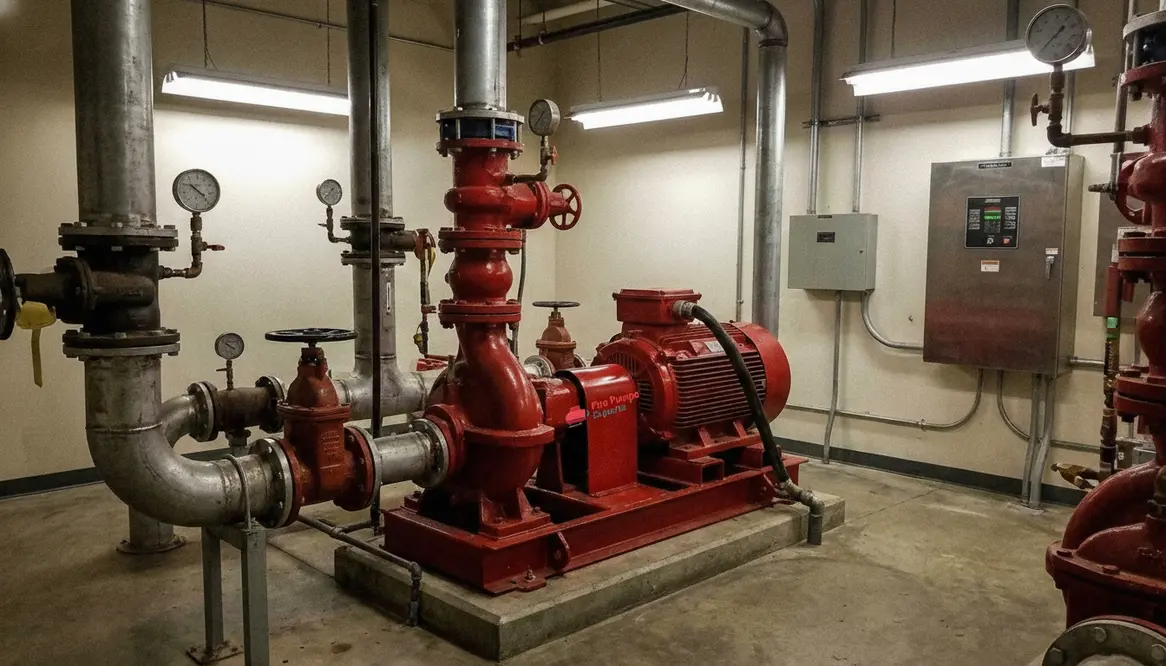
Fire Pump Flow Rate: How Much Flow Does a Building Need?
When I talk about fire pump flow rate, I am talking about the amount of water a pump must deliver to keep a commercial or industrial building protected when the fire system wakes up and says, “All hands on deck.” That number matters more than most people think. Too little flow, and the system may not reach the heads or hydrants that need water. Too much, and you can overspend on equipment that feels like hiring a tank to water a houseplant. So, if you manage a major property, a plant, a warehouse, or a large office tower, I want to help you pin down what the building really needs.
Start with the building risk profile
I always begin with the property itself. A fire pump does not serve a building in the abstract. It serves a real place with real hazards, real height, and real demand. For a large commercial or industrial site, I look at the building size, occupancy type, sprinkler layout, standpipes, and any hydrants tied to the system. Then I check the fire load. A data center does not behave like a high rack storage facility, and a warehouse does not act like a medical office. Wild, I know.
In simple terms, the higher the demand on the system, the higher the required fire pump capacity. If the building has tall risers, long pipe runs, or dense storage, the pump may need to work harder to keep pressure and flow steady. That is where correct sizing saves the day, and probably a few headaches too.
Fire pump flow rate basics for large buildings
Fire pump flow rate tells me how much water the pump can move at a given pressure. In a commercial or industrial building, I match that flow to the system demand, not to a guess, not to a gut feeling, and definitely not to whatever number sounds impressive in a meeting.
The main factors I consider are:
- Sprinkler demand for the most remote area
- Standpipe demand if the building has one
- Hose stream allowance where codes require it
- Elevation changes that add pressure loss
- Pipe friction loss across the system
Here is the key point. A pump does not just push water. It must push enough water at enough pressure to protect the worst case area of the building. That is why the correct pump curve matters just as much as the flow number itself. A pump curve is the map, and the flow rate is the road trip. Without both, you end up somewhere you did not plan to be.
How I size the pump without guessing
To size a pump, I start with code based demand. Then I review the water supply and compare it with what the building needs at the farthest or most demanding point. If the municipal water supply falls short, the fire pump fills that gap. If the site uses a tank or stored water, I confirm the pump can deliver the needed flow for the required duration.
For larger facilities, I often break the review into two parts.
Water demand side
This covers how much water the fire protection system needs during a fire event. I check sprinkler demand, standpipe flow, and any extra needs tied to the property.
Supply side
This covers where the water comes from and whether it can keep up. Even a strong pump cannot fix a weak water source by magic. If only Marvel had made that one.
That is why I always stress coordination between the pump, the water source, and the full protection system. When those three line up, the building gets dependable performance instead of a hopeful guess.
Dual column guide for common commercial and industrial needs
Building type
- Warehouse
- High rise building
- Manufacturing plant
- Office tower
Typical flow concern
- High rack storage and wide floor area often raise demand
- Standpipe pressure and elevation often drive the pump size
- Special hazards and system layout often increase flow needs
- Combined sprinkler and standpipe demand may shape the final size
Use code guidance and local system rules
I also check the rules that govern the system. In Australia, for example, the AS 2419 fire pump and hydrant performance guide gives useful direction on performance expectations and system setup. For large buildings, that kind of guidance helps align the pump with the hydrant and fire service needs, which is exactly where a strong design earns its keep.
When I compare those standards with site conditions, I can confirm whether the pump selection fits the building and the authority having jurisdiction. That step matters because a system can look fine on paper and still miss the mark in real life. Paper is polite. Fire is not.
When to review and test the fire pump flow rate
I never treat pump sizing as a one time task. Buildings change. Tenants change. Storage changes. Even a small change in layout can shift the demand on the fire protection system. So I recommend flow testing, inspection, and review at regular intervals, especially for major properties with complex systems.
I also check the pump after any change to the water supply, building height, sprinkler layout, or occupancy type. If a warehouse adds higher storage racks or a plant expands production space, the original numbers may no longer hold up. That is why ongoing testing protects the building and avoids a costly surprise later.
FAQ
Quick answers to keep your fire pump flow rate decisions sharp.
Conclusion
If you manage a commercial or industrial building, I recommend taking fire pump sizing seriously before you need it in a real event. The right fire pump flow rate protects people, property, and uptime, while the wrong one leaves too much to chance. So, review your system, confirm the demand, and speak with a fire protection specialist who works with major properties. A solid pump plan today can save a very bad day tomorrow.