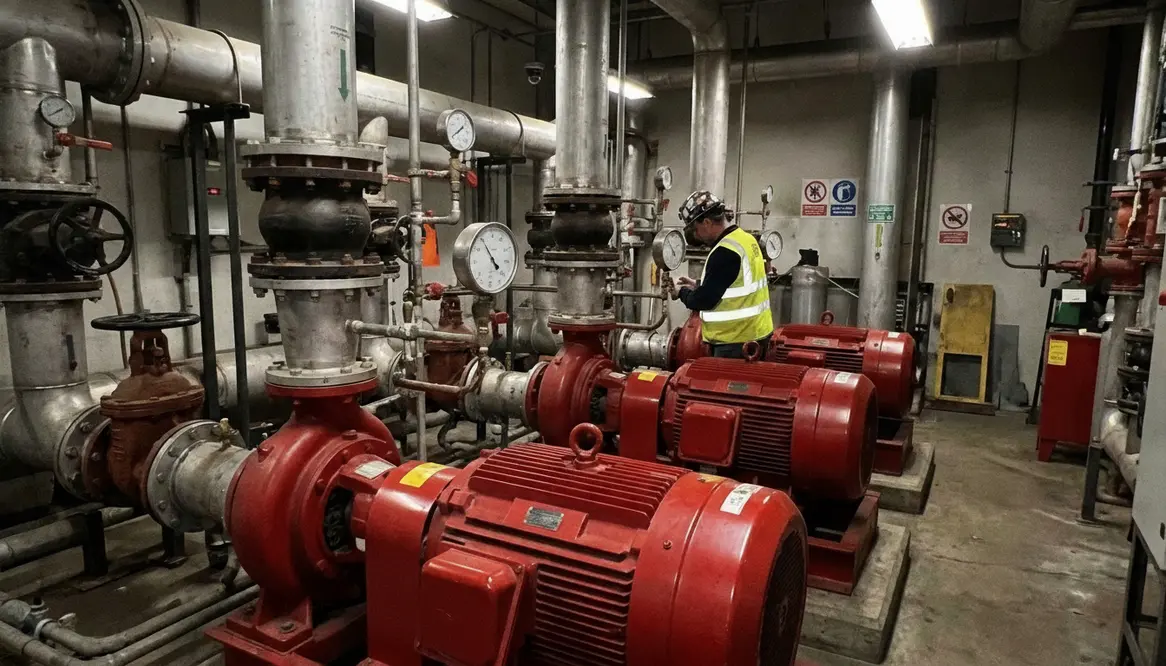
Fire Pump Water Demand Flow and Pressure Explained
How Much Water Does a Fire Pump Need? Flow and Demand Explained
If you work with a large commercial building, an industrial site, or a major property, then fire pump water demand is not a small detail. It is the part of the system that decides whether water shows up with real force when the sprinkler or hydrant system wakes up. I like to think of it as the building’s emergency heartbeat. If it is weak, everything downstream feels it. If it is strong, the system does its job without drama, and that is exactly the kind of drama I prefer to avoid.
In plain terms, the pump must deliver enough water at the right pressure for the worst expected fire event in that building. So, the real question is not just how much water it needs, but how much the system must move to protect the property. Let’s break it down in a way that makes sense without turning this into a fire protection textbook audition for a sleepy documentary.
What fire pump water demand really means
Fire pump water demand is the amount of water a pump must supply to keep fire protection systems working under pressure. That demand depends on the building size, the hazard level, the sprinkler design, the hydrant load, and the local code rules. For example, a light office building may need less water than a warehouse packed with high fuel load materials. Therefore, demand changes from site to site.
Most systems do not ask the pump to cover everything at once. However, the pump still must handle the largest expected flow at the lowest acceptable pressure. That is why design teams look closely at the building’s fire risk before they choose a pump. No one wants a system that acts brave in the brochure and shy in real life.
How I estimate the flow needed for a site
I start with the fire protection design basis. Then I look at the codes, the sprinkler density, the hose stream allowance, and any hydrant or standpipe need. After that, I check whether the pump must support one zone or several. The flow number comes from those loads, not from guesswork and not from “that should be about right.” That method belongs in a comedy sketch, not a compliance plan.
Here is the basic flow logic I use:
- First, identify the hazard class of the building.
- Next, calculate sprinkler flow based on the design area and density.
- Then, add hose or hydrant demand if the system requires it.
- Finally, check pressure loss through pipes, valves, and fittings.
Because friction loss eats pressure like a teenager raids a fridge, the pump must make up for it. That is why a water supply that looks fine on paper can still fall short in the real world. So, I always check both flow and pressure together.
Fire pump water demand in real terms
Once I know the design flow, I compare it with the pump curve and the available water supply. This is where the numbers get real. A pump may need to move hundreds or even thousands of gallons per minute in a large commercial or industrial facility. The exact figure depends on the building use and system layout.
Dual column view
| What I check | Why it matters |
| Available supply | Shows how much water the site can actually deliver |
| Pump flow rating | Confirms the pump can meet the needed demand |
| Pressure at critical points | Proves the system can still protect the farthest area |
| Duration of supply | Shows how long the water source can support the event |
That table looks simple, but each line can decide whether a system passes or fails. So, I never treat it as paperwork fluff. It is the backbone of the whole design.
Why code rules matter more than guesswork
For commercial and industrial properties, code rules set the baseline for safe design. In Australia, for example, guidance such as the AS 2419 fire pump and hydrant performance guide helps shape how these systems should perform. If you want a deeper look at that standard in practice, I recommend this AS 2419 fire pump and hydrant performance guide. It gives useful context on performance expectations and why the pump must match the system demand, not just the nameplate number.
Also, if you are checking system options for a large site, this los angeles fire pump solutions for commercial and industrial sites page is a helpful reference for pump-related services. That matters because a pump that suits a small facility may not suit a major property at all. In this line of work, scale changes everything. A little like casting Tom Cruise in a quiet library scene. Possible, yes. Ideal, no.
How I keep the system reliable over time
Even a properly sized pump can struggle if maintenance slips. So, I look at testing, inspection, and water supply health as part of the full picture. A pump should start fast, build pressure, and keep flow steady when called on. If it hesitates, that is a warning, not a personality quirk.
I also watch for changes in the building. If a site adds storage racks, expands production, or changes use, the fire pump water demand may rise. Therefore, the system must stay in step with the property, not with last year’s drawings. A growing building can outgrow its fire protection faster than a streaming series runs out of plot twists.
FAQ
If you are comparing designs, reviewing a pump curve, or sanity-checking numbers, these quick answers cover the core idea behind fire pump water demand and how flow and pressure work together.
Conclusion
If you manage a commercial, industrial, or major property, I would treat fire pump water demand as a core design issue, not a side note. The right flow keeps your protection system ready, steady, and effective when it matters most. So, if you are planning a new system or reviewing an existing one, take the time to verify the demand, check the supply, and confirm the pump curve. Then, if you need expert support, act now and get the numbers right before they get you wrong.