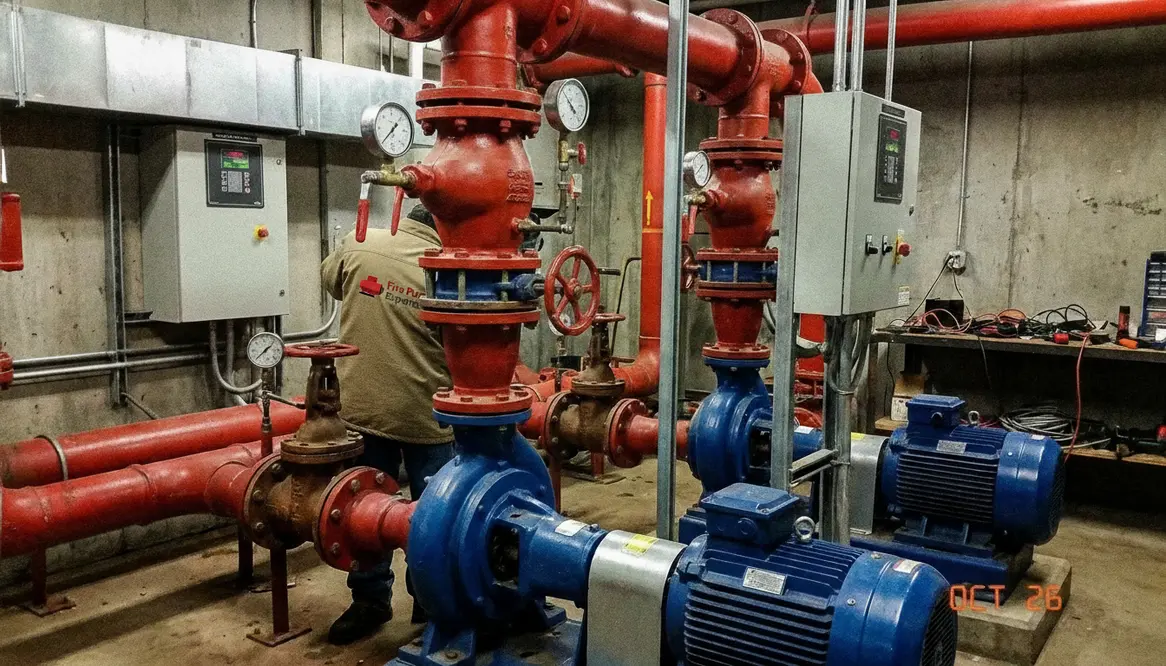
AS 2941 Fire Pump Installation and Maintenance Requirements
AS 2941 Fire Pumps Installation and Maintenance
When I talk about fire protection in commercial and industrial buildings, I always come back to one thing: reliability. AS 2941 fire pumps sit at the heart of that promise. If a sprinkler system is the first line of defense, then the fire pump is the muscle that keeps water moving when pressure drops and stakes rise. In a large facility, that is not a nice extra. It is the difference between control and chaos, and frankly, chaos never files a compliance report on time.
What AS 2941 fire pumps do in a commercial building
AS 2941 fire pumps support fire systems when the water supply cannot meet demand on its own. I see them used in warehouses, factories, high rise towers, hospitals, and other major properties where a weak water feed would leave the system underpowered. The standard sets the rules for how these pumps should be installed, tested, and maintained so they can perform under pressure.
In simple terms, the pump must start fast, run smoothly, and deliver the right flow and pressure when a fire system needs it. That sounds simple, but the reality is not. A pump room can fail because of poor layout, bad electrical work, low fuel, blocked access, or a control issue that looked small during install and became a drama later. As I see it, the standard helps stop those problems before they turn into expensive lessons.
How I handle installation to meet the standard
When I plan installation, I begin with the building risk, water source, and system demand. The pump must match the fire protection design, not just fit wherever there is space. In a busy facility, I always check access for inspection, service, and emergency use. If maintenance staff cannot reach it without playing a game of obstacle course, the layout needs work.
Installation focus areas
1. Pump room location
It should stay safe, dry, secure, and easy to access.
2. Power supply
The pump must have a dependable supply, with controls that suit the site design.
3. Pipe layout
I keep suction and discharge piping correct so the pump does not fight its own system.
4. Ventilation and drainage
Heat and water both need a proper exit, because the pump room is not a spa.
Supporting components that make or break performance
Then I check the controller, valves, alarms, and signage. Each part must work as a set, because a fire pump does not care if one piece looks polished while another is hanging on by a thread. It wants clean start up, steady output, and dependable control.
I treat the pump room as critical infrastructure, not storage space. Clear floor areas, labelled valves, and well placed controls make it easier for technicians and emergency crews to act fast when seconds count.
Maintenance tasks I never skip
Good installation is only half the story. The maintenance side keeps the system ready for real use. I treat routine service as a core duty, not a box to tick when someone remembers after lunch. For commercial and industrial sites, this matters even more because heavy use, dust, vibration, and long operating hours can wear equipment faster than people expect.
Routine checks that keep AS 2941 fire pumps ready
I focus on the basics first. I inspect the pump, valves, gauges, fuel supply where relevant, batteries, controller condition, and signs of leaks or corrosion. I also confirm that test records stay current and that any fault gets fixed quickly. If a pump does not start on schedule, or if pressure drops below the expected level, I treat that as a serious warning, not a small inconvenience with a bad attitude.
Regular testing matters because it shows how the pump behaves under load. A quiet room and a good looking panel do not prove much. Real testing does. I look for smooth start up, stable pressure, and no strange noise, heat, or vibration. Those signs often reveal hidden trouble before a failure can make headlines nobody wants.
What I check during testing and compliance
Testing tells me whether the system still meets the intent of AS 2941. It also gives the building owner proof that the fire pump can do its job. That proof matters when insurers, auditors, or fire safety teams ask for records. And yes, they usually ask at the least convenient time, which feels very on brand for compliance.
How I structure test routines
Daily and weekly checks focus on visible condition, alarms, fluid levels, and control readiness. Monthly tests confirm the pump starts and performs as expected. Scheduled servicing digs deeper into wear, settings, and parts that may fail later. Together, these steps build trust in the system and reduce surprise breakdowns.
I also keep service records easy to read and easy to find. That way, the site team can trace faults, track repairs, and show compliance without digging through a filing cabinet that looks like it survived three audits and a thunderstorm.
Why commercial and industrial sites need a tighter routine
Large properties carry more risk because they often house people, stock, machines, and critical operations in one place. A fire pump failure in a small shed is bad. A failure in a major facility can halt production, damage assets, and put lives at risk. That is why I push for a tighter routine in industrial plants, logistics hubs, shopping centres, and multi level buildings.
Risk, uptime, and real world pressure
On these sites, AS 2941 fire pumps support not only life safety but also business continuity. A single failure can trigger downtime, force evacuation, and invite a very detailed chat with insurers and regulators. A structured maintenance routine is cheaper and calmer than an unplanned shutdown.
Where to go for deeper practical guidance
For readers who want a deeper guide, I recommend this AS 2941 fire pump testing and maintenance compliance guide. It adds practical detail on how testing and upkeep support compliance across Australian sites. I find it useful because it connects the standard with real work on the ground, where the pump room does not care about theory.
FAQ for AS 2941 fire pumps
Keeping your fire pump ready for the real world
Ready to protect your site with confidence? I can help you keep your fire pump system aligned with AS 2941, reliable under pressure, and ready for the real world. If you manage a commercial or industrial property, do not wait for a fault to make the call for you. Get your installation checked, your maintenance plan tightened, and your records in order now, because the best time to fix a fire pump is before anyone needs it.