AS 2118 Sprinkler Requirements Guide for Buildings
AS 2118 Sprinkler System Requirements Explained
When I talk about AS 2118 sprinkler requirements, I am talking about the backbone of fire protection for major commercial and industrial buildings. These rules shape how a sprinkler system must be designed, installed, tested, and maintained so it can do its job when heat rises and seconds matter. In plain English, the standard helps make sure a fire does not turn a warehouse, plant, or large property into a very expensive campfire. That is the goal, anyway, and a solid one at that. So, if you manage a big facility, this is not just paperwork with a fancy code name. It is the playbook.
What AS 2118 covers in real terms
I like to keep this simple. The standard sets the rules for automatic fire sprinkler systems in buildings where people, stock, equipment, and operations need strong protection. It tells me how to choose the right system type, where to place sprinkler heads, how much water supply is needed, and how the whole setup should respond under fire conditions.
More importantly, it focuses on performance. The system must detect heat fast, distribute water effectively, and control the fire before it spreads. That matters because a weak setup can look fine on paper and still fail under pressure. And as every facilities manager learns sooner or later, fire does not care about your schedule.
AS 2118 sprinkler requirements for design and water supply
First, the design must match the building use. A warehouse does not need the same layout as a data hall or a manufacturing floor. Therefore, I always look at fuel load, ceiling height, storage method, roof shape, and how the space is used day to day.
Next, the water supply must support the system for the required duration and flow. That means enough pressure, enough volume, and a pump or tank arrangement that can keep up when the sprinklers open. If the supply falls short, the system becomes a very polite suggestion. Nobody wants that.
Key design checks at a glance
Design area
The space or zone the system must protect under fire conditions
Water demand
The flow and pressure needed to keep sprinklers working properly
Pump support
Extra supply help for large or high risk buildings
Hazard type
Light, ordinary, or high hazard use changes the system choice
Also, I pay close attention to pump room setup and ongoing reliability. If you want a deeper look at that side of the equation, I recommend reading this guide on AS 2118 fire pump requirements for warehouses. It connects well with the real world demands of commercial storage sites and helps explain why pump sizing and backup matter so much.
How installation and spacing work
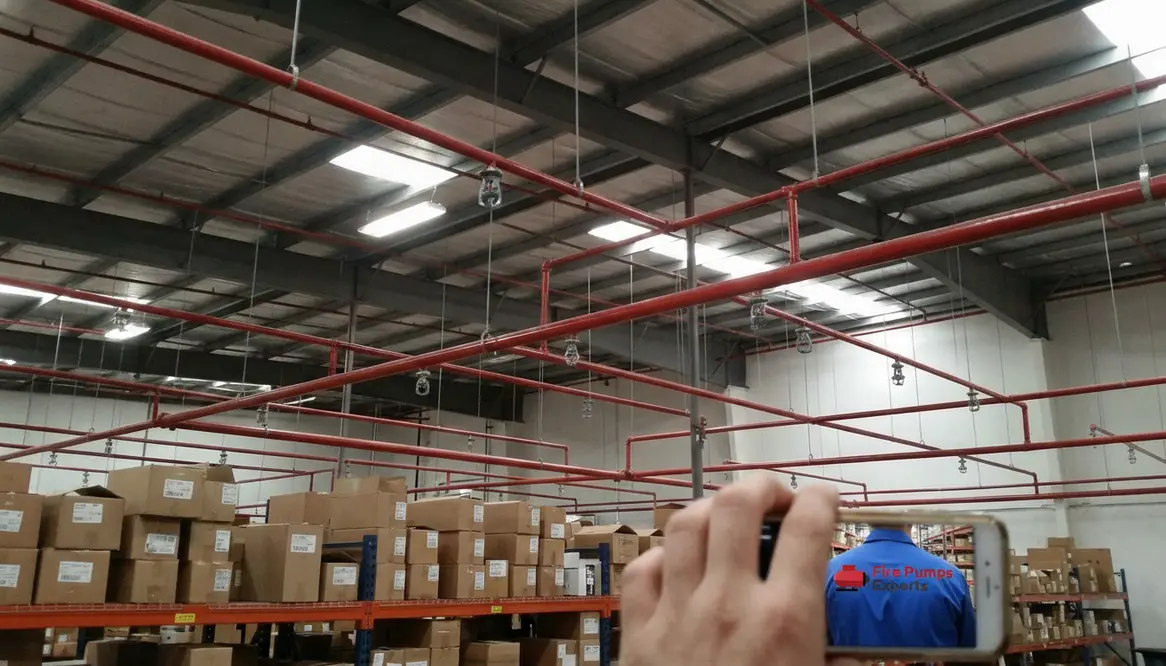
Installation is where good plans prove they deserve the title. I need the sprinkler heads placed to cover the full risk area without gaps, blockages, or silly mistakes caused by lights, beams, racks, or ductwork. After all, a sprinkler hidden behind a large obstruction is about as useful as a superhero stuck in traffic.
Spacing depends on the system type and the hazard level. In many cases, the installer must also consider ceiling height and any shelving or storage changes that may affect spray patterns. Because of that, I always treat installation as a site specific job, not a copy and paste exercise. Buildings change, tenants change, stock changes, and the fire risk changes with them.
Furthermore, pipe routing, valve placement, and access to controls matter a great deal. If firefighters or maintenance teams cannot reach the parts they need, response time suffers. That is bad for business, insurance, and peace of mind.
Inspection, testing, and maintenance that keep the system ready
Once the system is in place, the work does not stop. In fact, it has only just begun. AS 2118 sprinkler requirements also depend on regular inspection, testing, and maintenance so the system stays ready for the long haul.
I usually focus on these core tasks:
- Check sprinkler heads for damage, paint, dust, and blockage
- Test valves, alarms, and water flow devices
- Inspect pumps, tanks, and power supply support
- Confirm pressure levels and system records
- Fix faults fast and record every action
These checks may sound routine, yet they are the difference between a system that works and one that merely occupies ceiling space. Also, records matter. Good logs help prove compliance, support insurance reviews, and make future servicing far easier. I have seen more than one maintenance headache grow into a full drama because no one kept clean notes. Cue the sad violin.
Why AS 2118 matters for commercial and industrial buildings
For large facilities, the standard does more than tick a compliance box. It protects stock, staff, equipment, and continuity. A fire event can halt production, trigger costly repairs, and damage client trust in a heartbeat. Therefore, a well designed sprinkler system becomes part of the business plan, not just the safety plan.
It also helps with risk control across different building types. A distribution centre, a manufacturing plant, and a high value storage site each face different fire patterns. So, the right sprinkler approach supports the actual operation, not some imaginary “one size fits all” building from a training video.
AS 2118 sprinkler requirements give a shared language for designers, installers, and facility teams. That shared framework cuts down on guesswork, keeps approvals smoother, and reduces the chances that a critical detail goes missing between the drawing board and the plant floor.
For owners and managers, that means less uncertainty. When AS 2118 sprinkler requirements are properly applied, the system is tailored to the fire load, the water supply is robust, and the maintenance plan matches the real risk on site.
FAQ
Conclusion
If I had to sum it up, I would say this: AS 2118 sprinkler requirements protect more than buildings. They protect operations, people, and the future of the business. So, if you manage a major commercial or industrial site, do not wait for a fire to reveal weak spots. Review your system, check your water supply, and make sure your protection matches the risk. The right setup today can save you from a very bad day tomorrow.