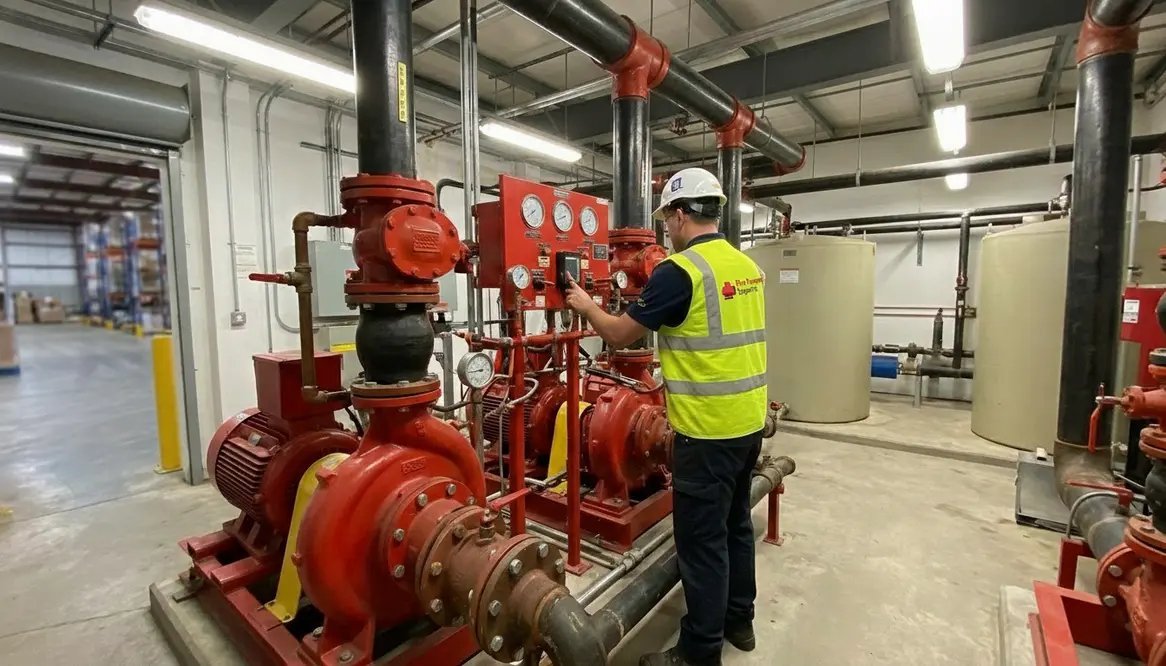
BS EN 12845 Fire Pump Compliance for Industrial Buildings
When I talk about BS EN 12845 industrial fire protection, I am not talking about a box to tick and forget. I am talking about a system that must work when heat, smoke, and pressure decide to have a bad day together. In industrial buildings, fire pumps sit at the heart of that system. They keep water moving, help sprinklers do their job, and give people time to respond. That matters because factories, warehouses, plant rooms, and other major properties carry real risk. And yes, fire does not care about your deadlines, your stock count, or your monthly report.
In this article, I will walk through how BS EN 12845 applies to industrial buildings, what compliance means in practice, and how I make sure a fire pump setup supports both safety and performance.
What BS EN 12845 Means for Industrial Fire Pumps
BS EN 12845 sets the rules for automatic sprinkler systems in commercial and industrial buildings. It shapes how I select, install, test, and maintain the fire pump that feeds the system. In simple terms, the pump must deliver the right pressure and flow at the right time. If it does not, the sprinkler network may look ready while doing very little. That is a fine illusion for a theatre show, but not for a warehouse full of stored goods.
I focus on three things first. The pump must match the system demand. The water supply must support the pump. The installation must allow quick, reliable operation during a fire event. These points may sound basic, yet they are where many failures begin. Also, BS EN 12845 does not reward guesswork. It rewards clear planning, correct sizing, and disciplined checks.
Hazard levels and BS EN 12845 industrial systems
Industrial occupancies rarely sit in the “simple” category. Storage heights climb, flammable liquids appear, and heat sources multiply. A BS EN 12845 industrial installation must reflect that. The standard links hazard classes to water demand and run time, which in turn drive pump selection. If the hazard is underestimated, the pump curve and tank capacity will not support the real fire load. That is how a tidy design drawing turns into a disappointing pressure gauge reading when it matters.
How I Check Compliance in an Industrial Building
To check compliance, I start with the building use, hazard level, and sprinkler design. Industrial sites often store goods in high racks, use hot machinery, or run long production hours. So, I look at the fire load, water demand, and whether the pump can sustain the full required run time. Then I review the layout of the pump room, suction supply, valves, power source, and backup arrangements.
I also check that the pump set suits the risk level. For many industrial sites, a single weak link can change the whole plan. A blocked suction line, poor power backup, or low tank capacity can turn a compliant design into a costly lesson. And nobody wants that lesson. It usually comes with panic, paperwork, and a very long morning meeting.
Key checkpoints before calling a system compliant
- Confirm the sprinkler design basis, hazard category, and design area.
- Match pump duty to the hydraulic demand plus safety margins set by BS EN 12845.
- Verify suction conditions: flooded suction, strainer position, and NPSH margin.
- Check the tank volume, refill arrangements, and usable capacity for the required duration.
- Assess power sources, automatic start features, and any secondary pump requirement.
- Review access, lighting, and drainage in the pump room so maintenance can actually happen.
What the Fire Pump System Must Include
Here is the practical view. A BS EN 12845 fire pump setup for industrial buildings usually needs the following elements to work as one unit. The standard outlines the performance you must achieve; the site layout and risk profile decide how you reach it.
Dual column layout for the BS EN 12845 industrial mindset
I often think in two columns when I assess a pump system: water supply and pump performance. Both must stay strong. This split keeps the BS EN 12845 industrial focus clear and stops shiny equipment from hiding weak infrastructure.
Water supply side
- Reliable tank or approved connection to a guaranteed supply.
- Proper suction arrangement with adequate submergence and low friction losses.
- Safe valves, clear flow paths, and signage so nobody closes the wrong valve at the wrong time.
- Strainers and fittings placed where they can be inspected without acrobatics.
Pump performance side
- Correct pump size and curve so duty point lands in the efficient, stable region.
- Automatic start response from pressure switches or flow devices with proper settings.
- Backup power or secondary drive where required by risk and BS EN 12845 clauses.
- Controls and alarms that tell you clearly when something is wrong instead of whispering about it.
This split helps me keep the system honest. If the supply side struggles, the pump cannot save the day alone. Likewise, a strong water source means little if the pump cannot deliver it. It is a bit like a superhero with no cape. Technically present, not especially useful.
Testing, Maintenance, and the Real World
Compliance does not end after installation. In fact, that is where the real work begins. I test fire pumps to confirm start up, pressure, flow, and control function. I also look for vibration, overheating, unusual noise, and weak automatic response. These signs tell me more than a polished nameplate ever could.
Maintenance matters just as much. Industrial buildings change over time. Storage moves. Production grows. Pipe routes shift. So, I keep reviewing the system against actual site use. Regular checks help me catch wear before it becomes failure. I also make sure logs stay current, because records support both safety and proof of compliance. In the world of fire safety, memory is nice, but paperwork wins arguments.
Routine tasks that keep a BS EN 12845 industrial system ready
- Weekly test runs to confirm automatic start and stable running.
- Monthly checks on fuel levels, battery condition, and charger performance for diesel sets.
- Quarterly review of alarms, valves, and pump controllers against the maintenance plan.
- Annual full flow testing to confirm the pump still meets its duty point.
- Periodic review of building changes so the system follows the actual industrial risk, not last year’s drawings.
Why Industrial Facilities Need Expert Fire Pump Support
Industrial facilities need more than a standard install. They need a system shaped around risk, uptime, and building use. That is why I always advise working with specialists who understand commercial and industrial properties, not just generic buildings. The rules under BS EN 12845 affect design choices, but real site conditions decide whether the system will perform under pressure.
For useful technical guidance, I recommend reviewing industrial fire pump compliance guidance from a provider focused on commercial and industrial facilities. That kind of support helps turn the standard into a working solution instead of a shelf ornament with a pump attached.
Turning standards into real protection
When I review a BS EN 12845 industrial installation, I am not looking for an academic success. I am looking for a pump system that will start in the dark, under stress, with people shouting, and still deliver the flow the sprinklers expect. That demands coordination between design, installation, commissioning, and long-term maintenance. Miss one of those and you end up with an expensive decoration quietly failing an unseen test.
Conclusion
If you manage an industrial building, I would not treat fire pump compliance as a side note. I would treat it as core protection for people, stock, and operations. BS EN 12845 gives the framework, but the real value comes from correct design, careful testing, and steady maintenance. If you want your fire pump system to stand ready when it matters most, I can help you review, plan, and improve it with confidence. Let us make compliance practical, clear, and built for real industrial risk.