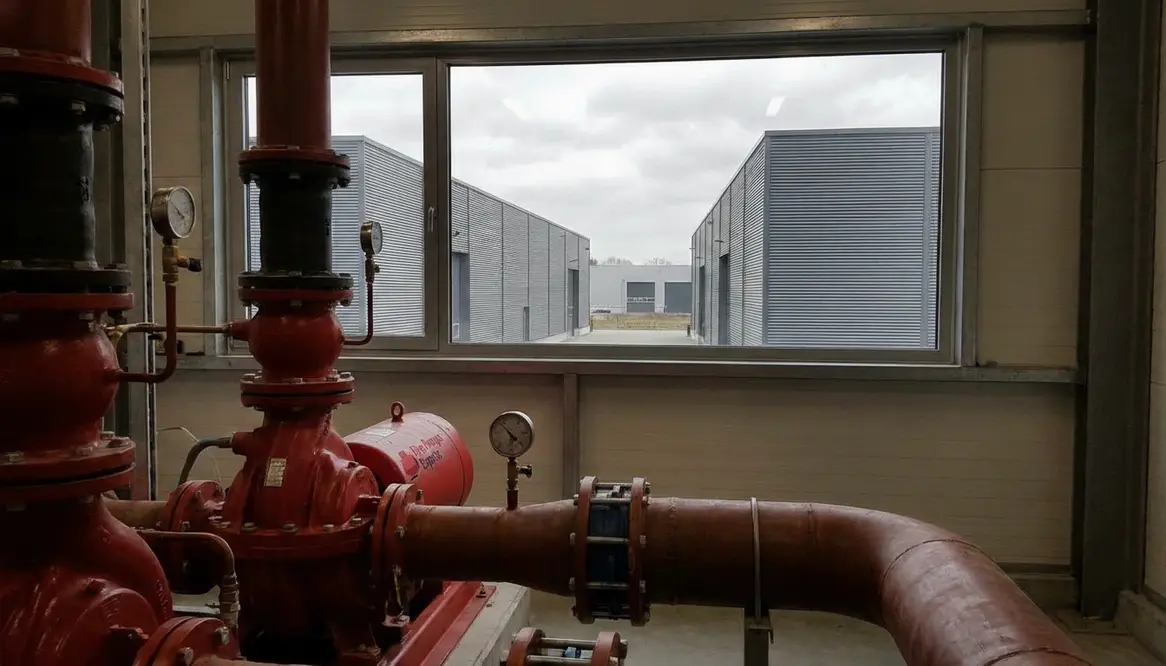
Can One Fire Pump Support an Additional Building?
I get this question a lot, and it matters because fire pump sizing, fire pump capacity, and fire pump system design can make or break a project. If I am dealing with one pump, one site, and now a second building joins the party, I do not guess. I check the water demand, the layout, and the code path first. Otherwise, I am basically asking one pump to play every role in the movie, and that never ends well.
Short answer: sometimes yes, but only if the system was designed for it. If the original pump, water supply, and piping can handle the added load, then one pump may support both buildings. However, for commercial and industrial facilities, I always review the full demand before making that call. A “probably fine” answer is not a design method, no matter how confident it sounds at the meeting.
What I check before saying yes
First, I compare the sprinkler and standpipe demand for both buildings. Then I look at elevation, pipe length, friction loss, and whether the buildings share the same risk class. A warehouse and a high rise do not live in the same world, even if they sit on the same property and share a parking lot. In addition, I check whether the pump can deliver enough pressure at the farthest point while still meeting the required flow.
If the second building is small and the original pump has spare capacity, the answer may be yes. Still, I also check the water source. A strong pump with a weak water supply is like a sports car with no fuel. It looks impressive until you need it most.
How I judge fire pump capacity for two buildings
For dual building setups, I look at total demand, not just the demand of the new building. That includes sprinkler demand, hose allowance, and any special site needs. I also study whether both buildings could need water at the same time. In a real fire event, I do not want to bet on good luck or on everyone being “pretty sure” only one building will be at risk. Fire does not schedule appointments.
fire pump capacity must cover the worst credible case. If the system was built for one building and the owner later adds another major structure, I may need a larger pump, a second pump, or a more advanced water supply setup. I also check controls, power supply, and test results. A system that passes on paper but fails under real flow tells a very sad story.
When one pump can work and when it cannot
I usually see one pump work when the buildings share a common yard, the piping is well planned, and the total demand stays within the pump curve. On the other hand, one pump often falls short when the second building sits far away, has higher pressure needs, or adds a large hazard area. Industrial plants, large commercial campuses, and mixed use properties need extra care here.
Here is the practical split I use:
One pump may be enough
Shared site with short piping runs
Low added demand from the second building
Water source and pump curve still have margin
One pump may not be enough
Long distance between buildings
Higher hazard or taller structure added
Pressure loss pushes the system below required levels
Why fire pump system design gets harder with a second building
Once a second building enters the picture, fire pump system design changes fast. I have to think about zoning, isolation valves, looped mains, backflow, and pressure control. If one building is much taller, the highest point may drive the whole design. That means I cannot just “tie in” a new building and call it a day. That approach belongs in a sitcom, not in life safety.
In many cases, I review whether each building should have its own supply path or whether the campus should use a shared system with proper controls. That decision depends on code, risk, and long term growth. If the owner plans future expansion, I want the system ready for it now, not after the next construction crew shows up with hard hats and optimism.
How I use trusted references during the review
When I need to compare layouts or service options, I often review technical resources from providers who focus on commercial systems. For example, I use the los angeles fire pump service reference when checking pump related project details for local commercial needs. I also look at the electrical support resource for power related coordination, since fire pump performance depends on more than just the pump itself. And when a project involves broader sprinkler service coordination, I may review the sprinkler service reference to compare service planning ideas.
What I recommend before you add the building
Before anyone relies on one pump for two buildings, I recommend a full hydraulic review, a water supply check, and a pump curve analysis. I also verify the code path for both structures and confirm whether the pump can handle future growth. If the numbers work, great. If they do not, I do not force it. A safe system beats a clever shortcut every single time.
FAQ
Conclusion
If you are planning an added building on a commercial or industrial site, I would not trust a guess with fire protection. I would review the pump, the water supply, and the full system before anyone breaks ground. That is how I protect people, property, and the project budget. If you want a smart next step, request a hydraulic review and confirm whether your current pump can truly carry the load.