How High Piled Storage Changes Affect Fire Pump Demand
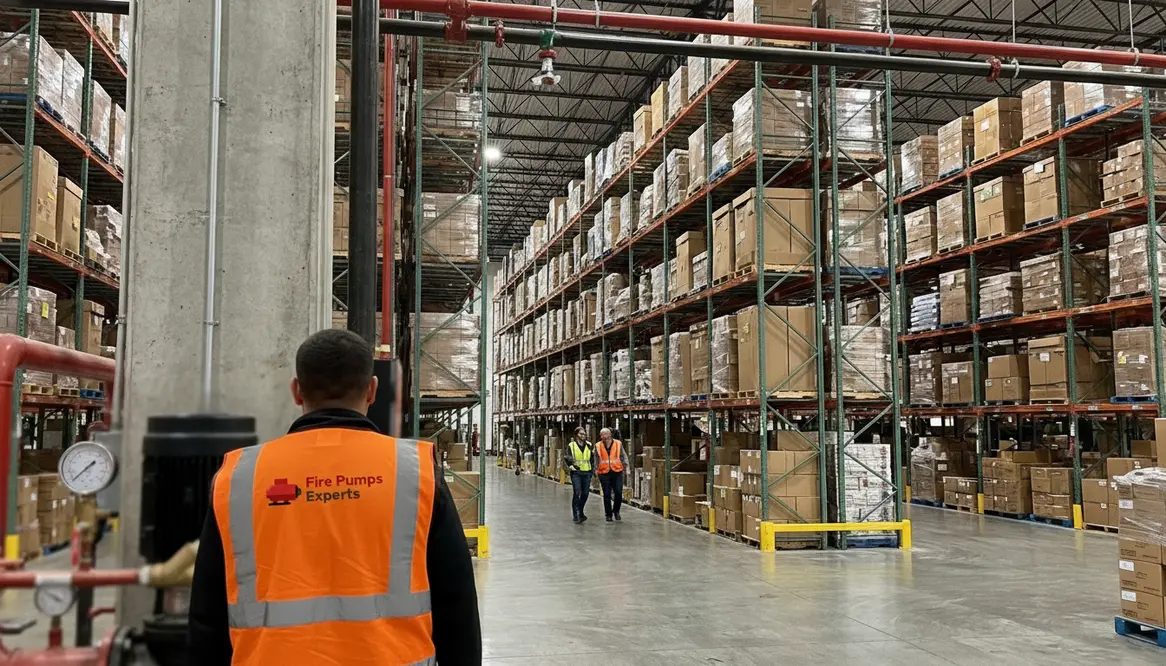
When I look at a warehouse packed with racks, pallets, and tall storage rows, I see more than inventory. I see a system that can change the way water moves during a fire. That is where high piled storage fire sprinkler requirements and fire pump sizing come into play. In a commercial or industrial facility, even a small change in storage height, commodity type, or aisle layout can raise the water demand fast. And yes, water demand sounds simple until it starts behaving like a movie sequel nobody asked for. Still, if the pump cannot keep up, the whole protection plan weakens.
In this article, I explain how storage changes affect pump demand, why that matters for major buildings, and what I check before I sign off on any design.
Why high piled storage changes raise water demand
High piled storage increases fire risk because flames can spread upward and across the storage array with speed. As storage gets taller, sprinkler water must reach deeper into the fire plume and cover a wider hazard area. Therefore, the system often needs more water at the right pressure for a longer time.
In plain terms, a change from light storage to dense palletized goods can turn a modest sprinkler layout into a much harder job for the pump. I watch three things closely. First, the storage height. Second, the type of product. Third, the rack arrangement. Each one can push demand higher. As a result, the fire pump may need more flow, more pressure, or both.
What I check before changing the sprinkler design
When a client changes storage, I do not treat it like a simple tenant note. I review the actual hazard. Then I compare the new layout against the approved design basis. That means I look at the sprinkler density, the spacing, the ceiling height, and any in rack sprinkler need. I also review the water supply curve because a weak supply can make a pump work harder than it should.
Here is the part that often gets missed. A storage change does not only affect the sprinklers. It can also affect hose stream allowance, remote area calculations, and the need for a larger fire pump. So, when the building team says, “We only moved some product around,” I usually hear, “We may need a new hydraulic review.” Tiny change. Big consequence. Classic warehouse drama.
How I approach fire pump sizing for major properties
When I handle fire pump sizing, I start with the worst credible demand the system can face under the current storage setup. That includes sprinkler demand plus hose demand, then I compare that total with the available water supply. If the supply falls short, the pump bridges the gap.
For commercial and industrial properties, I also look at future growth. A building may pass inspection today and fail later if the owner upgrades from low hazard goods to high piled plastic storage. Therefore, I do not size the pump only for the present. I size it for the real risk profile and the expected use of the building.
In the field, I have found that a pump that once looked generous can become barely adequate after a storage change. That is why I treat every layout update like a fresh engineering event, not a quick checkbox.
How storage changes affect pressure and flow
Here is the simple version. More storage height usually means more sprinkler demand. More sprinkler demand usually means more pump flow. And when friction loss rises through long pipe runs or dense rack systems, the pump may also need more pressure.
For readers who want the short answer, I often explain it like this:
Storage Change
Storage Change | Effect on Fire Pump Demand
Higher stack height
Denser commodity
Rack storage added
More floor area under protection
Effect on Fire Pump Demand
More sprinkler water needed
Greater flow and possible pressure rise
Longer reach and more hydraulic loss
Larger design area and higher demand
That table may look plain, but the math behind it is not. A sprinkler system does not care about wishful thinking. It cares about hydraulics, and hydraulics always win the argument.
Using high piled storage fire sprinkler requirements in real projects
I use high piled storage fire sprinkler requirements as the base line for every review. Then I test the actual site conditions against that baseline. If the commodity class changes, I check whether the original sprinkler type still fits. If the storage gets higher, I confirm whether the water demand still matches the pump curve. If the owner adds new racks, I ask whether the system can still protect the full hazard.
That process also helps me avoid overbuilding. Not every change needs a massive upgrade. However, I never guess. I verify. That saves time, protects the building, and helps the owner avoid costly surprises later. Nobody enjoys learning about a weak pump during an emergency. That would be a terrible plot twist, even by streaming service standards.
How I coordinate with fire pump and electrical teams
When a pump change becomes likely, I work with both fire and electrical teams early. The pump needs proper power, controls, and backup support. If the electrical side cannot support the pump load, then the whole system may fail when it matters most.
For related electrical support, I often review commercial electrical services as part of the full building protection picture. In larger facilities, I also compare pump room setup, power reliability, and emergency system needs before final approval. If the site uses an existing pump package, I may also reference los angeles fire pump solutions when checking local project needs.
I also keep one eye on system compliance outside the United States when projects need it. For example, Australian sprinkler support for industrial sites can help guide a broader conversation about storage protection methods.
FAQ
Conclusion
If your commercial or industrial building uses high piled storage, I recommend reviewing every layout change before it becomes a fire risk. A storage update can shift sprinkler demand, pressure needs, and pump performance in ways that are easy to miss. So, do not wait for a problem to expose the gap. If you want a clear pump review, a proper hydraulic check, or a storage based fire protection plan, now is the right time to act and protect the property.