Commercial Building Fire Pump Requirements Guide
When I talk about commercial fire pump requirements, I am not talking about some dusty code book that lives on a shelf and collects more dust than respect. I am talking about the pressure, flow, and reliability that keep a commercial or industrial building ready when the sprinklers need help. In major properties, a fire pump can be the quiet giant in the room. It does the hard work so the rest of the system can do its job. And yes, that matters a lot more than the office coffee machine ever will.
Understand the Core Job of a Fire Pump
I start here because the purpose shapes everything else. A fire pump boosts water pressure for a sprinkler or standpipe system when the supply from the city main cannot meet demand. In a tall commercial tower, a warehouse, a plant, or a large campus, that pressure gap can be the difference between control and chaos.
First, I look at the building size, height, use, and risk level. Then I check the water source and the system demand. After that, I make sure the pump matches the real need, not some wishful guess from a spreadsheet that thinks every building is a superhero. The right fire pump supports the full protection plan, not just part of it.
What commercial fire pump requirements usually include
I always check a few key items early, because this is where strong systems are built. The major fire pump requirements for commercial and industrial facilities usually center on:
- Flow capacity that matches the system demand
- Pressure rating that supports the highest point in the building
- Reliable power source such as electric or diesel
- Proper pump room access for service and inspection
- Listed equipment that meets the right fire safety standards
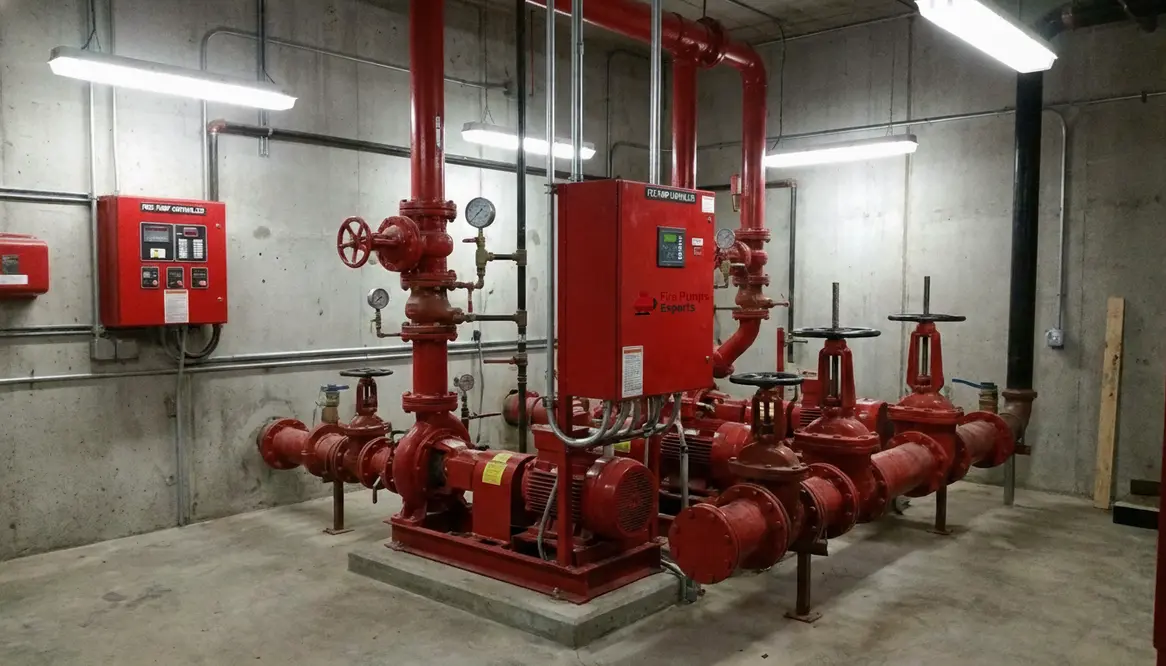
Next, I make sure the pump room stays dry, heated when needed, and easy to reach. If the pump room feels like a storage closet after a bad day, then something went wrong long before inspection day arrived. I also watch for the correct controller, test headers, gauges, and valves. Each piece has a job, and each job matters.
How I Check the Building System Design
From supply and demand to the pump curve
Before I trust any pump setup, I review the full fire protection design. That means I look at the water supply curve, friction loss, elevation change, and the expected demand from sprinklers or standpipes. Then I compare those numbers to the pump curve. If the math does not line up, the system can fail when it should perform like a leading actor in a final battle scene.
Redundancy and resilience
I also check whether the building needs a single pump or a pump with a backup setup. In large commercial and industrial properties, redundancy can be a smart move. It adds resilience and helps keep operations safer during repairs or power issues. In other words, it gives the system a Plan B, which is more than some people bring to a Monday meeting.
Commercial fire pump requirements and code basics
I do not treat code as a side note. It drives the design, installation, testing, and upkeep. Fire pumps in major properties often fall under strict local and national fire protection rules, and those rules may also shape the size of the pump room, the power source, and the inspection schedule. So, I always confirm the applicable standards before work begins.
Side‑by‑side review of design choices
Design Item
- Pump flow
- Pump pressure
- Power source
- Room layout
Why It Matters
- Keeps sprinklers and standpipes supplied
- Supports water delivery at the highest demand point
- Keeps the pump working during normal or emergency conditions
- Allows safe testing, service, and quick access
Also, I pay close attention to the suction supply. If the suction side cannot feed the pump well, the whole system can stumble. And a fire pump that stumbles is about as useful as a movie trailer with no film behind it.
Testing, Maintenance, and Real World Readiness
I always say a fire pump is only as good as its last test. Regular testing helps confirm the pump starts, runs, and delivers the needed pressure. It also reveals wear, leaks, vibration, or controller issues before they become expensive surprises. Nobody wants a “surprise” in fire protection. That is a genre we can all skip.
Routine checks that keep the pump honest
- Weekly or monthly visual checks depending on site policy and code
- Annual flow testing to confirm performance
- Controller checks for alarms, power, and startup response
- Valve position checks so the system stays ready for action
- Service records that prove the equipment stays in good shape
Moreover, I advise owners to keep clear records. Good records help during inspections, audits, and insurance reviews. They also save time when someone asks, “When was the last test?” which is never asked at a convenient moment.
Why FirePumps.org style guidance matters for major properties
I always recommend a practical, site specific review for commercial and industrial facilities because every property has its own risk profile. If you want a deeper look at commercial fire pump requirements for major buildings, I suggest using expert guidance that focuses on large properties, not small side projects or one size fits all advice. For a helpful next step, review commercial fire pump requirements for major properties with a team that understands complex buildings, code, and performance in the real world. A good starting point is https://firepumps.org, where the focus stays on real systems, real risks, and real pressure and flow.
Quick answers to common fire pump questions
People ask about commercial fire pump requirements because they want to know what really keeps a system ready when it counts. The basics below frame how a solid plan should look and why small shortcuts can turn into big problems.
Conclusion
I treat fire pump planning as a core part of building protection, not a box to check and forget. When I review the system early, test it often, and match it to the building’s real demand, I help protect people, property, and operations. If you manage a commercial or industrial facility, now is the time to verify your system, close any gaps, and speak with a qualified fire protection expert before the next inspection season rolls in.