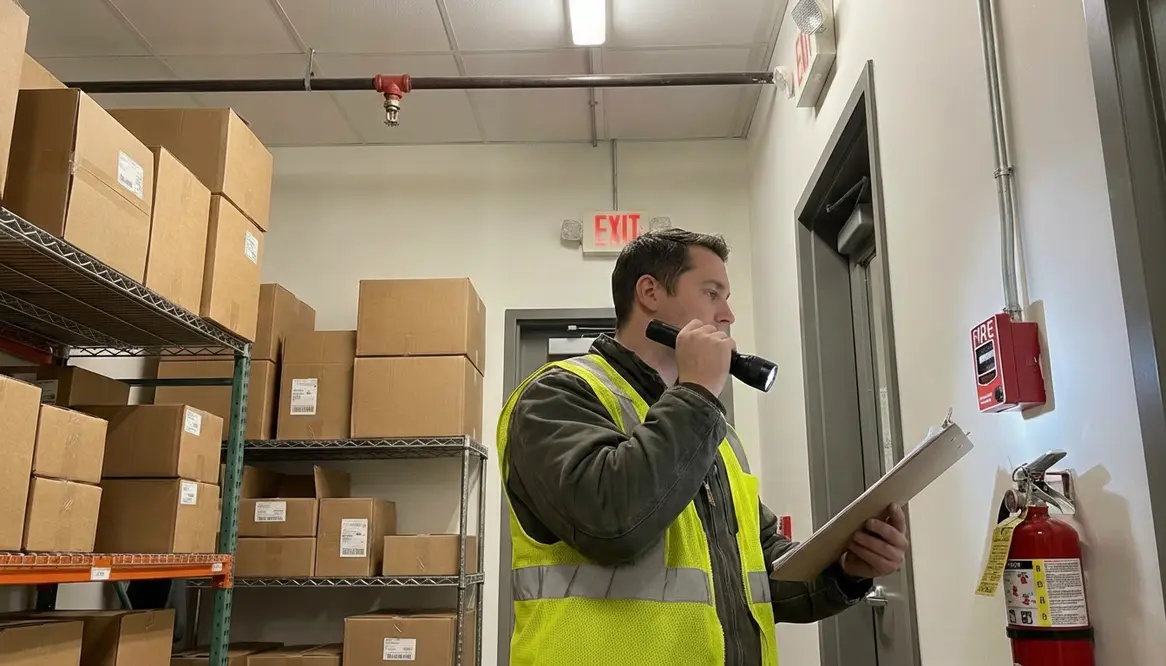
Commercial Fire Safety Inspection Checklist Guide
When I think about a commercial fire safety inspection, I do not picture a clipboard and a hard hat just for show. I picture a business staying open, people staying safe, and a property owner avoiding that awful moment when a small issue turns into a very expensive headline. In commercial and industrial buildings, fire risk can hide in plain sight. A loose wire, a blocked exit, or a tired sprinkler head can cause trouble faster than a bad sequel to a good movie. So, let me walk you through what I check, why it matters, and how to keep your building ready before the fire marshal, or fate, decides to pay a visit.
What I check first in a commercial fire safety inspection
I start with the big picture, because the basics usually tell the truth. First, I look at the building layout, exits, and access paths. Then I check whether people can move out fast and whether responders can get in fast. That part matters more than most folks think. A fire door that sticks or an exit that turns into a storage closet is not a small issue. It is a problem with a tuxedo on.
Next, I review the fire alarm system, emergency lighting, exit signs, and visible damage. I also check whether the control panels show trouble signals or past faults. After that, I inspect suppression systems, including sprinklers, fire pumps, and fire extinguishers, because every layer helps. For industrial sites and major properties, I pay extra attention to high risk zones such as mechanical rooms, electrical areas, loading docks, and storage spaces.
How I inspect the building like a pro
I move through the site in a steady order so nothing gets missed. I test what I can, confirm what I cannot, and document every issue in plain language. That way, the next step does not feel like reading ancient scrolls. It feels like a clear action plan.
Key areas I review during a commercial fire safety inspection
| Area | What I look for |
| Exits and paths | Clear access, proper signs, open doors, safe travel routes |
| Alarm system | Panel status, sounders, pull stations, backup power |
| Suppression equipment | Sprinklers, fire pumps, extinguishers, valves, pressure levels |
| Hazard zones | Fuel storage, electrical rooms, hot work areas, housekeeping issues |
Then I ask one simple question: if a fire starts now, will this building help people escape or slow them down? That question cuts through the noise. It also exposes weak spots fast, which saves time and money later.
Why fire pumps and suppression systems deserve close attention
In large commercial and industrial properties, fire pumps are not background players. They are the muscle behind the system when water pressure drops or the building needs a stronger response. Because of that, I inspect them with care. I look at power supply, pump condition, valves, test readings, and signs of wear. If a fire pump fails, the whole protection plan can wobble like a folding chair on a gravel driveway.
Sprinkler systems need the same serious attention. I check for corrosion, missing heads, painted heads, blocked coverage, and valve issues. I also make sure nothing stacks too close to sprinkler heads, because storage that climbs too high can block water flow. In warehouses and large facilities, that mistake shows up more often than people admit. It is easy to forget until it matters, and by then it matters a lot.
For building owners who want deeper help with this part of the process, I recommend reviewing commercial fire pump inspection services for industrial facilities as part of a larger protection plan.
How this fits into your overall commercial fire safety inspection
A strong suppression strategy turns a routine commercial fire safety inspection into a real stress test for the building. When pumps, sprinklers, and valves all perform the way they should, you are not just checking boxes. You are buying time for people to get out and for responders to do their job.
How I prepare the site before the inspection
Preparation saves time, lowers stress, and makes the inspection far more useful. I always tell property teams to treat it like stage prep before opening night. Nobody wants to hunt for keys, manuals, or missing maintenance logs while I am standing there waiting like a patient detective in a TV drama.
What I want ready on inspection day
- Current maintenance records for alarms, sprinklers, extinguishers, and pumps
- Access to electrical rooms, pump rooms, risers, and control panels
- Clear pathways to exits, panels, and protected areas
- Names of staff who know the systems well
- Past repair notes and outstanding work orders
With those items ready, I can focus on the building itself instead of chasing paperwork. As a result, the inspection runs smoother, the findings stay sharper, and the next steps become easier to manage.
What happens after I finish the report
After I complete the site walk, I document every concern in a way that helps decision makers act fast. I group items by risk level, because not every issue has the same urgency. A missing extinguisher tag is not the same as a failed pump or a locked exit. Still, each one deserves attention.
Then I explain what to fix now, what to watch, and what to schedule next. That approach helps property managers and facility teams build a real plan instead of a pile of notes that gets ignored after lunch. I also suggest follow up checks where needed, especially after repairs or system upgrades. In large properties, ongoing review keeps the building ready and helps avoid surprises during an emergency or a code visit.
Turning a commercial fire safety inspection into a real strategy
When the findings from a commercial fire safety inspection feed into training, maintenance schedules, and capital planning, the report stops being a formality. It becomes a playbook that keeps people safe and keeps the doors open when trouble shows up.
FAQ
Bringing it all together
Ready to make your building safer today? I can help you turn a routine check into real protection. Schedule your commercial fire safety inspection, review your current systems, and close the gaps before they become costly problems. For commercial and industrial properties, that is not just smart planning. It is the kind of decision that keeps people safe, keeps operations moving, and keeps the business on solid ground. Start now, and let the next inspection work for you.