Fire Safety Audit: What Inspectors Check Guide
Fire Safety Audits Explained: What Inspectors Check
When I talk about a fire safety audit, I am talking about more than a quick walk through with a clipboard and a serious face. I am talking about a careful check of a building’s fire risks, safety gear, and daily habits. For commercial and industrial facilities, this matters even more. A missed issue in a warehouse, plant, or major property can turn into a full scale disaster faster than a bad plot twist in a season finale. So, let me break down what inspectors look for, why they look for it, and how I would prepare a site to pass with confidence.
Why inspectors start with risk, not just equipment
First, inspectors look at the whole building, not just the shiny red extinguisher on the wall. They want to know how fire could start, how fast it could spread, and how people would get out. That means they review the type of work done on site, storage areas, electrical loads, hot work zones, and any place where heat, dust, fuel, or chemicals build up. In large facilities, one weak point can spread trouble across a wide area, so the risk review sets the tone for the full inspection.
Next, they check whether the building has clear safety rules and whether workers actually follow them. A policy that lives in a binder but never meets real life is about as useful as a flashlight with no batteries. Inspectors want proof that staff know emergency steps, report hazards, and keep exits open.
What inspectors check during a fire safety audit
Here is the short answer: they check the systems, the people, and the space itself. I like to split it into two columns for clarity.
System checks
Inspectors review alarms, sprinklers, extinguishers, emergency lighting, fire pumps, and suppression systems. They confirm that each one works, gets serviced on time, and matches the building’s use. In a commercial or industrial setting, they also look at backup power and water supply, because a system that quits during an emergency is not doing anyone any favors.
People and process checks
Inspectors ask how staff respond to an alarm, who leads the evacuation, and whether workers know where to gather. They also check training records, drill logs, and maintenance notes. If a team cannot show proof, the inspector may treat the task as not done. In other words, good intentions do not count as documentation. Bureaucracy may be boring, but it does enjoy being fed paperwork.
Common problems inspectors flag
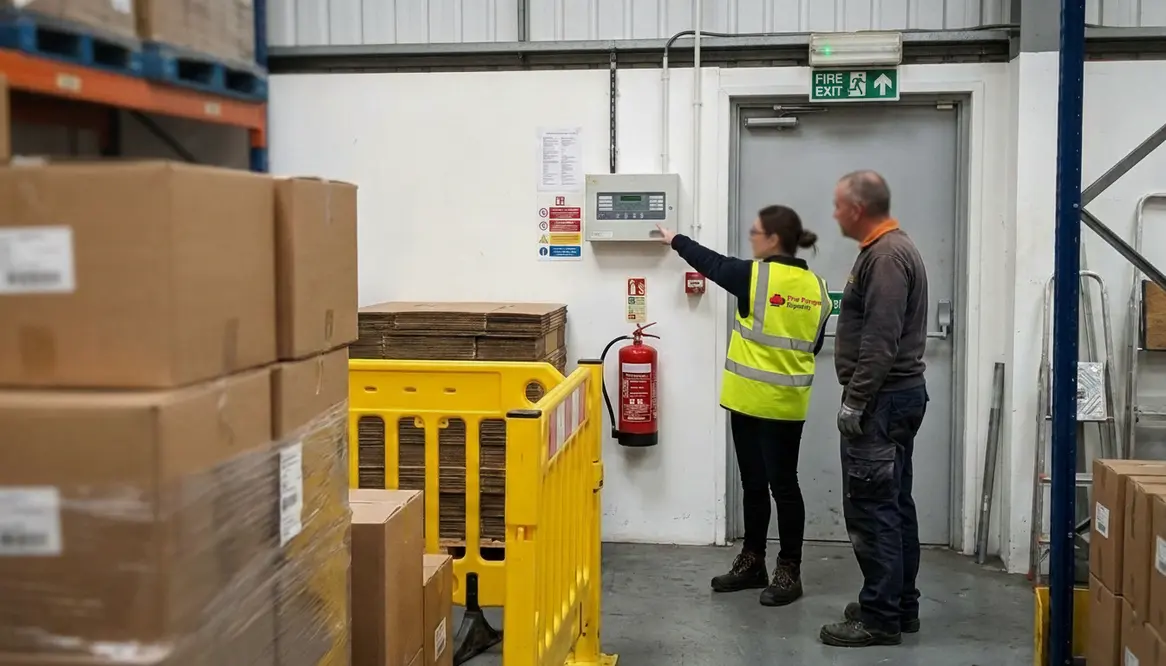
In my experience, the same problems show up again and again. Exit doors get blocked by boxes. Fire extinguishers sit too high, too low, or behind equipment. Sprinkler heads collect dust or get covered by stored items. Electrical rooms turn into storage closets, which is a bold choice and a terrible one.
Inspectors also flag missing inspection tags, broken emergency lights, expired service dates, and damaged hoses or cabinets. On larger sites, they pay close attention to areas where contractors work, because temporary setups often create the biggest risks. If a facility runs welding, fuel use, heavy machinery, or chemical storage, inspectors dig deeper. They know those zones can turn into headline material fast.
How to prepare a major facility before the visit
Preparation starts long before the inspector arrives. I always recommend a site walk with maintenance, safety staff, and operations leaders. Together, they should test alarms, inspect exits, review service records, and look for blocked equipment. Then, they should correct issues right away.
Also, make sure records are easy to find. That includes inspection reports, repair logs, drill notes, staff training files, and vendor service dates. If the inspector has to hunt through three offices, two drawers, and one mystery folder labeled “misc,” the day gets longer for everyone.
What a strong inspection report should show
A good report gives a clear picture of safety at the site. It should show what passed, what failed, what needs repair, and what needs follow up. It should also list the exact location of each issue. For example, “north warehouse loading bay” works much better than “somewhere near the back.”
Then, the report should explain urgency. Some items need quick correction, while others need a planned fix. A broken alarm panel matters far more than a chipped paint mark on a wall. The best reports help property teams act fast and spend money where it counts.
When to call in expert help
If your site is large, complex, or busy, outside help can save time and reduce risk. A third party review gives you a fresh view before the official inspection. That is especially useful for commercial towers, warehouses, plants, hospitals, and other major properties where small misses can lead to big trouble. For teams that want deeper support, I suggest reviewing commercial fire protection inspection services for major properties as part of a stronger safety plan.
Bringing in specialists also sharpens your next fire safety audit. They spot weak points that internal teams walk past every day, help prioritize fixes, and show exactly where investment has the biggest impact.
Quick checklist for your next fire safety audit
- Walk every floor and check that exits, routes, and stairs are clear.
- Confirm alarms, emergency lighting, and suppression systems operate correctly.
- Verify extinguishers are accessible, correctly mounted, and tagged in date.
- Inspect high risk zones like hot work, fuel, and chemical storage areas.
- Make sure staff can explain what to do when the alarm sounds.
- Pull training, drill, and maintenance records into one ready folder.
- Fix simple housekeeping issues before anyone arrives with a checklist.
- Schedule your next fire safety audit instead of waiting for a surprise.
FAQ
Conclusion
If I had to sum it up, I would say this: a strong fire safety audit protects people, property, and operations before trouble starts. So, do not wait for a warning light, a failed test, or a near miss to get serious. Walk the site, check the records, fix the weak spots, and keep the system ready. If your facility needs a sharper, more reliable review, now is the time to act and build a safer future.
Treat every fire safety audit as a chance to tighten your defenses, strengthen your culture, and prove that your building is ready for the day you hope never comes.