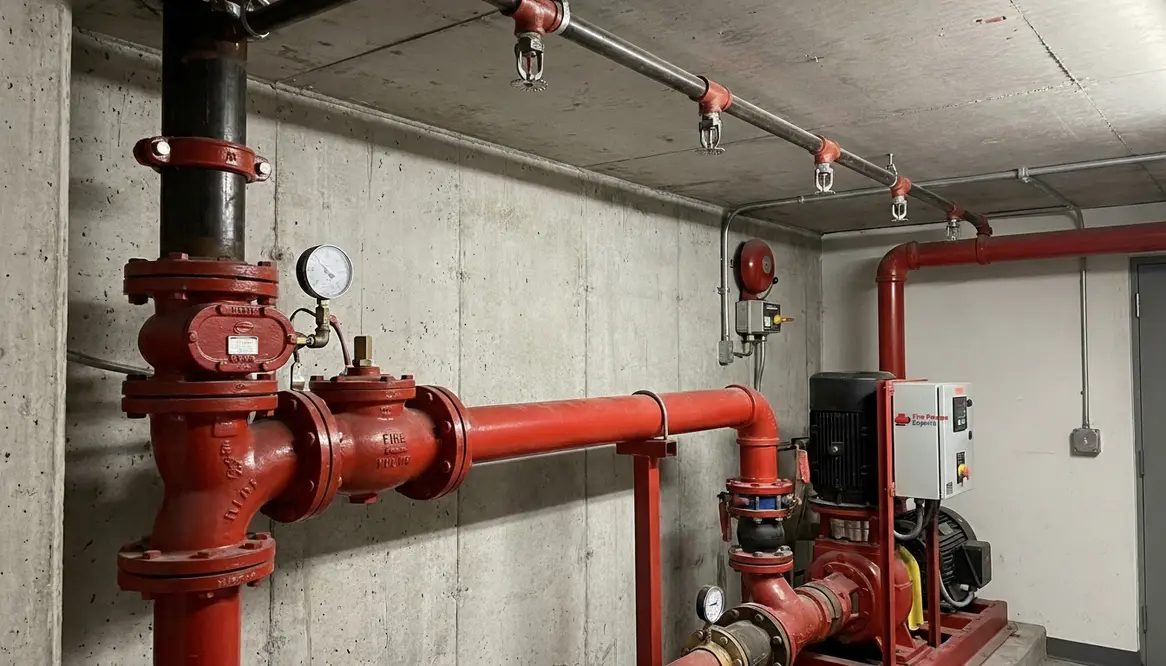
Commercial Fire Sprinkler System Components
When I look at a building’s fire protection setup, I do not see a pile of pipes and valves. I see a quiet crew that stands ready to act when things go sideways. The commercial fire sprinkler system components do the heavy lifting long before panic enters the room. From the control valve to the sprinkler heads, every part has a job. And yes, each one matters, because in a fire, “close enough” is not a strategy. It is a bad sequel.
In commercial and industrial facilities, the system must work fast, work clean, and work together. So, let me walk you through the parts, what they do, and why they matter for major property buildings that cannot afford guesswork.
What Are the main parts of a sprinkler system?
The main commercial fire sprinkler system components include the water supply, fire pump, control valves, alarm devices, sprinkler heads, piping, and monitoring gear. Each one supports the next. If one part fails, the whole chain can lose strength.
First, the water supply feeds the system. Next, the fire pump boosts pressure when the building needs more force than the municipal line can give. Then the valves manage flow, while the sprinkler heads release water only where heat triggers them. Finally, alarms and monitoring tools tell people and emergency teams that the system has activated. Simple idea. Powerful result. Very much the Batman utility belt of building safety.
How each component works in a fire event
Water side is doing the heavy lifting. Response side is doing the “act now” part. The story only works when both sides are ready, every time.
Water supply
Starts the process. Without enough water, the rest of the system is just metal with ambition. In many commercial and industrial facilities, the water source comes from a city main, tank, or reservoir. The system must always have enough volume and pressure for the hazard level in the building.
Fire pump
Steps in when pressure drops below what the system needs. I like to think of it as the engine room. It pushes water through the pipes with the force needed to reach the sprinkler heads quickly. For deeper details on pump needs in sprinkler systems, I recommend reading AS 2118 fire pump requirements for sprinkler systems. That guide helps explain why pump sizing and reliability matter so much.
Control valves
Direct the flow. They let the system stay ready while still allowing testing and maintenance. If a valve is closed by mistake, the system cannot protect the building. That is why inspections matter. A valve in the wrong position is the fire safety version of leaving your car keys inside the car and then staring at the door, offended by reality.
Sprinkler heads
Respond to heat, not smoke. That is important. They do not all go off at once like a movie explosion. Instead, only the heads near the fire open. Each head has a heat sensitive element that breaks or melts at a set temperature. Then water sprays onto the fire area and slows the spread.
Piping
Carries the water from the source to the heads. It must handle pressure, resist corrosion, and stay clear. If pipes clog or corrode, water delivery suffers. That can turn a strong system into a very expensive ceiling decoration.
Alarms and monitoring
Tell people the system has activated. Flow switches, pressure switches, and alarm panels help send alerts. In larger buildings, these signals also link to central monitoring or the fire department. So, while the sprinkler controls the fire, the alarm controls the humans. A fair division of labor, if you ask me.
Dual view of the system layout
Here is a simple way I break it down:
This split helps me explain the whole system to building owners. One side delivers the water. The other side makes sure that water lands exactly where it should.
What commercial facilities should inspect regularly
I always focus on the parts that age, shift, or get ignored until something goes wrong. That means I check the fire pump, valves, pressure levels, sprinkler heads, and alarm signals. In commercial and industrial facilities, even a small issue can create a big delay during an emergency. The best time to find problems with commercial fire sprinkler system components is before the building needs a rescue plan.
Also, dirt, paint, corrosion, and stored items can block sprinkler heads. That sounds minor until a fire starts and the system has to act like the hero in the final act. Regular inspections help catch those problems early. As a result, the building stays ready, and the system does not get caught napping.
FAQ
Conclusion
When I look at commercial fire sprinkler system components, I see more than hardware. I see protection built for commercial and industrial facilities that cannot afford failure. If you manage a major property building, take the time to inspect, test, and understand every part of the system. And if you need help with los angeles fire pump services, reach out now. A strong system starts with knowing what each component does, and then keeping every one of them ready.