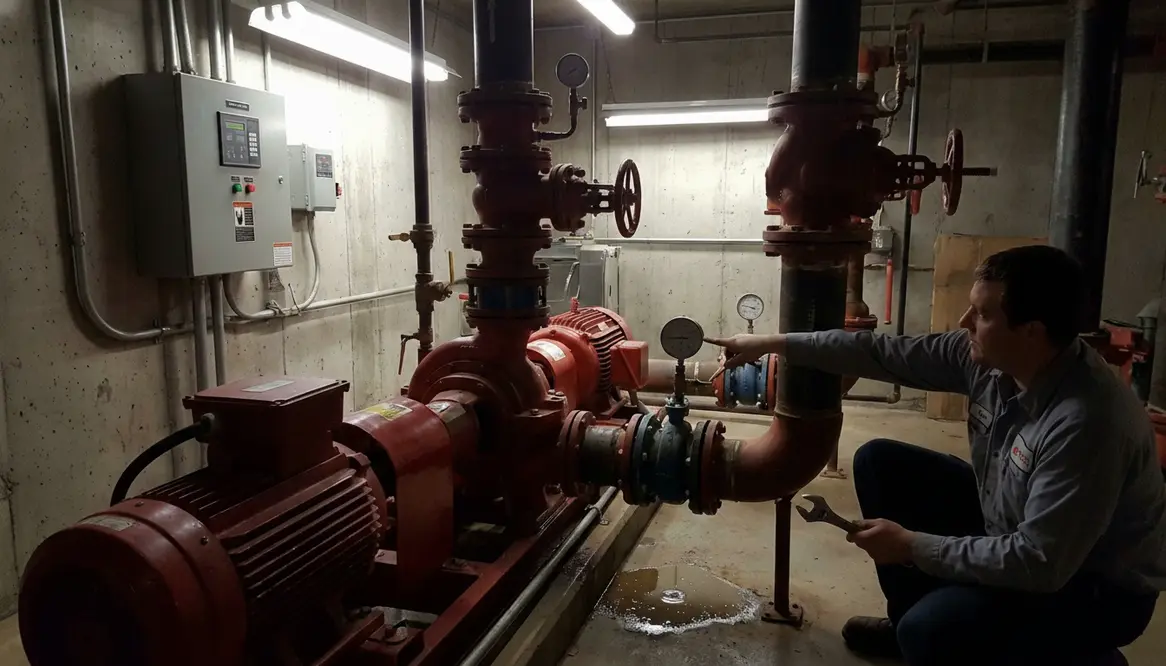
Common Fire Pump Problems and Solutions
I have seen many fire pump problems show up at the worst possible time, and that is exactly why I treat them like a quiet threat in the engine room. A pump may sit there looking noble and ready, yet a small issue can turn into a big failure when pressure drops and the system needs to work. In commercial and industrial facilities, that is not a funny surprise. It is a building risk. So, I want to walk through the most common trouble spots, what causes them, and how I handle them before they become the kind of problem that makes everyone suddenly very interested in the maintenance log.
Quick Read Checklist
- Check the full chain, not just the pump
- Confirm suction conditions and valve position
- Listen for early signs: noise, vibration, overheating
- Stick to weekly, monthly, and annual testing
Why fire pump issues happen in commercial buildings
Fire pumps work hard, but they do not enjoy neglect. I usually find that most failures start with one of three things: poor maintenance, bad setup, or hidden wear. Since these systems protect major properties, even a small slip can matter. For example, a weak suction supply can starve the pump. Likewise, electrical faults can stop a motor driven unit before it even gets going. Also, a diesel pump with weak batteries may act brave right up until the moment it needs to start. That is not leadership. That is drama.
Because these systems support life safety, I always check the full chain, not just the pump itself. The water source, valves, controllers, power supply, and test records all matter. If one part drifts, the rest of the system has to carry the load. And usually, it does not complain until the pressure test.
Fire pump problems and solutions I see most often
Below is a simple look at the issues I run into most in commercial and industrial sites.
| Problem | What I look for | Solution |
|---|---|---|
| Pump will not start | Power loss, bad controller, failed batteries, broken wiring | Test the controller, check power feed, inspect batteries, repair wiring fast |
| Low pressure | Clogged strainers, suction leak, worn impeller, closed valve | Clear blockage, seal leaks, inspect wear parts, confirm valve position |
| Excess vibration | Misalignment, loose mounts, bearing wear, cavitation | Realign, tighten, replace bearings, improve suction conditions |
| Overheating | Poor lubrication, motor strain, restricted flow | Service bearings, check load, verify water flow and cooling |
When I see a pump that refuses to start, I first check the controller and the power source. Then I move to the batteries if the system uses a diesel driver. A dead battery is a tiny part with a very large ego. After that, I inspect wiring and control settings. If the pump still does not respond, I look deeper into the starter, sensors, and any alarm lockout.
Low pressure usually tells me the system cannot move water the way it should. So, I check the suction side first. A closed valve can cause a headache in seconds, and a suction leak can reduce performance without much noise. Also, if the impeller has worn down, the pump may still run but deliver weak results. That is why I never stop at “the pump is on.” A running pump is nice. A working pump is better.
How I fix noise, vibration, and overheating
When a pump shakes, rattles, or sounds like it wants a soundtrack, I know something is off. Often, the issue starts with poor alignment or loose hardware. Over time, that stress wears out bearings and seals. In addition, cavitation can create noise that sounds like gravel in the casing. That happens when the pump does not get enough water at the suction side.
To solve it, I check mounting bolts, shaft alignment, bearing condition, and suction piping. Then I look for air leaks or blocked lines. If the pump overheats, I also inspect lubrication and motor load. A motor that works too hard will run hot, and heat rarely improves with attitude. It usually needs service.
How I keep fire pump systems reliable
I trust regular testing more than hopeful thinking. So, I build a simple routine that catches trouble early. First, I verify weekly pump runs and recorded pressures. Next, I review monthly flow tests and controller checks. Then, I confirm annual inspection work for the full system. This helps me find small changes before they become expensive ones.
For a deeper service approach, I often look to resources like Kord Fire pump service support when I want a practical reference for system care in commercial and industrial settings. And if you are comparing options for los angeles fire pump service, it helps to work with a team that understands large property demands, not just basic equipment checks.
FAQ
Conclusion
If you manage a commercial or industrial property, I suggest you treat your fire pump like a silent guardian that deserves respect, not guesswork. Catching fire pump problems early protects your building, your people, and your bottom line. So, review your system, follow a real maintenance plan, and call in a qualified fire protection team when something looks off. If you want fewer surprises and stronger peace of mind, now is the time to act, not after the alarm starts singing.