Corrosion in Fire Water Tank Affects Pumps
How Corrosion Inside Fire Water Tanks Can Affect Pump Systems
I have seen plenty of quiet problems turn into loud ones, and fire water tank corrosion is one of them. It starts out looking harmless, almost shy, like a little rust in a corner that nobody wants to deal with on a busy Monday. But when corrosion settles inside a fire protection tank, it can spread fast, weaken water quality, and put serious stress on fire pump maintenance. For commercial and industrial facilities, that is not a small issue. It can hit system pressure, pump life, and overall fire safety when the building needs it most.
In the sections below, I will break down what corrosion does, how it moves through the system, and what I watch for when protecting major properties. The goal is simple. Keep the tank healthy, keep the pumps ready, and keep your building from becoming the kind of case study everyone wishes they never had to write.
What corrosion inside a tank really does to pump performance
When corrosion builds inside a fire water tank, it changes the water the pump pulls in. First, rust flakes and scale can move into the suction line. Then, those particles can clog strainers, wear pump seals, and scar impellers. As a result, the pump works harder just to deliver the same flow. That extra strain creates heat, vibration, and early wear.
Moreover, corrosion can reduce the usable water volume in the tank. I may have a tank that looks full on the outside, but inside, sludge and sediment can take up space and mess with the intake. So, when the system starts, the pump may pull uneven water, which can lead to cavitation. And yes, cavitation sounds like a science class villain, but it is really just a pump getting battered by bad suction conditions.
Signs I look for before the damage spreads
In commercial and industrial settings, I check for warning signs early because early signs are cheaper than emergency repairs. Rust colored water is an obvious one. However, I also look for pressure swings, strange pump noise, and longer start times. If the pump vibrates more than usual, that can point to debris or flow problems linked to corrosion inside the tank.
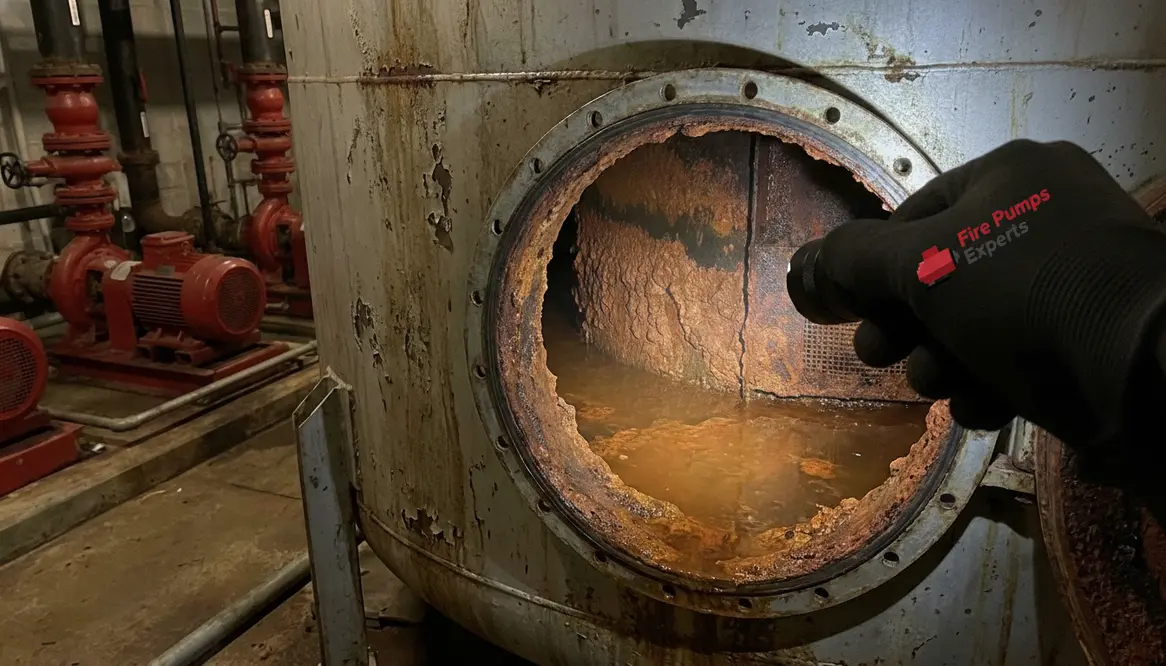
Also, I pay attention to tank interior condition during inspection. Pitting, flaking steel, loose coating, and sediment at the bottom all tell a story. In many cases, the pump is not the first problem. The tank is. That is why fire water tank corrosion deserves attention before someone starts blaming the pump like it forgot its lines in the final act of a superhero movie.
How pump stress grows over time
Short term effect
Debris can block intake parts and cause rough starts.
The pump may lose smooth flow and run hotter.
Long term effect
Repeated wear can damage seals, bearings, and impellers.
Efficiency drops, and repair costs climb.
That is why I treat corrosion as a system issue, not just a tank issue. Once the pump starts fighting dirty water, every cycle adds stress. Over time, that stress can shorten the life of the motor, reduce output, and trigger service calls that could have been avoided. In other words, the damage compounds quietly, like a bad playlist that somehow keeps getting worse.
What I do to protect commercial systems
For major property buildings, I focus on routine inspection, water quality checks, and interior tank care. I also make sure the tank coating stays in good shape and that any signs of scale or rust get handled fast. If I see sludge or mineral buildup, I treat it as a warning, not a cleanup chore for later.
At the same time, I review pump performance during fire pump maintenance so I can spot changes before failure hits. I look at suction conditions, valve function, and signs that the pump is working too hard. Then, I make sure the tank and pump are treated as one connected system. That approach matters because a weak tank can drag down even a strong pump.
When to call for help and keep the system ready
If corrosion shows up inside a tank, I do not wait for a bigger mess. I bring in qualified support for inspection, cleaning, and repair planning. For facilities that need dependable fire protection service, I also review trusted resources like los angeles fire pump services, fire sprinkler service support, and electrical service solutions when system coordination matters. These links help support a broader maintenance plan for commercial and industrial properties.
In the end, a fire protection tank only does its job if the water inside stays clean and the pump can move it without a fight. So, if I see rust, scale, or pressure issues, I act early. That simple move can save equipment, reduce downtime, and keep a critical system ready when people depend on it most. If your property depends on reliable fire protection, now is the time to inspect, correct, and stay ahead of corrosion.
FAQ
How does corrosion affect a fire pump?
It can clog parts, cause wear, reduce flow, and increase vibration.
What is the most common sign of tank corrosion?
Rust colored water and sediment buildup are common early signs.
Can corrosion shorten pump life?
Yes, dirty water and debris can damage seals, bearings, and impellers.
How often should I inspect the tank?
I recommend regular inspections based on site needs and code requirements.
Why does the tank matter so much?
Because the pump depends on clean, reliable water to perform well.
Fire water tank corrosion, fire pump maintenance, and protection tank health
When fire water tank corrosion shows up, it does not stay polite for long. It affects suction conditions, creates debris-driven wear, and turns normal operation into extra strain. That is why fire pump maintenance needs to account for what is happening inside the fire protection tank as well as what is happening at the pump. Catching the early signs keeps system pressure stable, helps maintain pump efficiency, and protects the equipment that has to work on demand.
Quick focus areas that matter most
- Interior inspection for pitting, flaking steel, loose coating, and sediment buildup.
- Water quality checks to spot scale and contamination before it moves into suction lines.
- Coating condition review so fire protection tank surfaces do not keep losing the fight.
- Pump performance monitoring during fire pump maintenance for noise, vibration, and start-time changes.
- Strainer and intake evaluation to reduce clogs from rust flakes and scale.
- Suction conditions and valve function checks to help prevent cavitation and uneven pull.
Conclusion
Treat fire water tank corrosion like the system issue it is. When you keep the fire protection tank interior healthy and pair it with solid fire pump maintenance, the pump does not have to wrestle with debris, scale, or poor suction conditions. The payoff is straightforward: more stable performance, fewer surprises, and a fire system that is ready to do its job when it matters.
Corrosion in Fire Water Tank Affects Pumps
How Corrosion Inside Fire Water Tanks Can Affect Pump Systems
I have seen plenty of quiet problems turn into loud ones, and fire water tank corrosion is one of them. It starts out looking harmless, almost shy, like a little rust in a corner that nobody wants to deal with on a busy Monday. But when corrosion settles inside a fire protection tank, it can spread fast, weaken water quality, and put serious stress on fire pump maintenance. For commercial and industrial facilities, that is not a small issue. It can hit system pressure, pump life, and overall fire safety when the building needs it most.
In the sections below, I will break down what corrosion does, how it moves through the system, and what I watch for when protecting major properties. The goal is simple. Keep the tank healthy, keep the pumps ready, and keep your building from becoming the kind of case study everyone wishes they never had to write.
What corrosion inside a tank really does to pump performance
When corrosion builds inside a fire water tank, it changes the water the pump pulls in. First, rust flakes and scale can move into the suction line. Then, those particles can clog strainers, wear pump seals, and scar impellers. As a result, the pump works harder just to deliver the same flow. That extra strain creates heat, vibration, and early wear.
Moreover, corrosion can reduce the usable water volume in the tank. I may have a tank that looks full on the outside, but inside, sludge and sediment can take up space and mess with the intake. So, when the system starts, the pump may pull uneven water, which can lead to cavitation. And yes, cavitation sounds like a science class villain, but it is really just a pump getting battered by bad suction conditions.
Signs I look for before the damage spreads
In commercial and industrial settings, I check for warning signs early because early signs are cheaper than emergency repairs. Rust colored water is an obvious one. However, I also look for pressure swings, strange pump noise, and longer start times. If the pump vibrates more than usual, that can point to debris or flow problems linked to corrosion inside the tank.
Also, I pay attention to tank interior condition during inspection. Pitting, flaking steel, loose coating, and sediment at the bottom all tell a story. In many cases, the pump is not the first problem. The tank is. That is why fire water tank corrosion deserves attention before someone starts blaming the pump like it forgot its lines in the final act of a superhero movie.
How pump stress grows over time
Short term effect
Debris can block intake parts and cause rough starts.
The pump may lose smooth flow and run hotter.
Long term effect
Repeated wear can damage seals, bearings, and impellers.
Efficiency drops, and repair costs climb.
That is why I treat corrosion as a system issue, not just a tank issue. Once the pump starts fighting dirty water, every cycle adds stress. Over time, that stress can shorten the life of the motor, reduce output, and trigger service calls that could have been avoided. In other words, the damage compounds quietly, like a bad playlist that somehow keeps getting worse.
What I do to protect commercial systems
For major property buildings, I focus on routine inspection, water quality checks, and interior tank care. I also make sure the tank coating stays in good shape and that any signs of scale or rust get handled fast. If I see sludge or mineral buildup, I treat it as a warning, not a cleanup chore for later.
At the same time, I review pump performance during fire pump maintenance so I can spot changes before failure hits. I look at suction conditions, valve function, and signs that the pump is working too hard. Then, I make sure the tank and pump are treated as one connected system. That approach matters because a weak tank can drag down even a strong pump.
When to call for help and keep the system ready
If corrosion shows up inside a tank, I do not wait for a bigger mess. I bring in qualified support for inspection, cleaning, and repair planning. For facilities that need dependable fire protection service, I also review trusted resources like los angeles fire pump services, fire sprinkler service support, and electrical service solutions when system coordination matters. These links help support a broader maintenance plan for commercial and industrial properties.
In the end, a fire protection tank only does its job if the water inside stays clean and the pump can move it without a fight. So, if I see rust, scale, or pressure issues, I act early. That simple move can save equipment, reduce downtime, and keep a critical system ready when people depend on it most. If your property depends on reliable fire protection, now is the time to inspect, correct, and stay ahead of corrosion.
FAQ
How does corrosion affect a fire pump?
It can clog parts, cause wear, reduce flow, and increase vibration.
What is the most common sign of tank corrosion?
Rust colored water and sediment buildup are common early signs.
Can corrosion shorten pump life?
Yes, dirty water and debris can damage seals, bearings, and impellers.
How often should I inspect the tank?
I recommend regular inspections based on site needs and code requirements.
Why does the tank matter so much?
Because the pump depends on clean, reliable water to perform well.
Fire water tank corrosion, fire pump maintenance, and protection tank health
When fire water tank corrosion shows up, it does not stay polite for long. It affects suction conditions, creates debris-driven wear, and turns normal operation into extra strain. That is why fire pump maintenance needs to account for what is happening inside the fire protection tank as well as what is happening at the pump. Catching the early signs keeps system pressure stable, helps maintain pump efficiency, and protects the equipment that has to work on demand.
Quick focus areas that matter most
- Interior inspection for pitting, flaking steel, loose coating, and sediment buildup.
- Water quality checks to spot scale and contamination before it moves into suction lines.
- Coating condition review so fire protection tank surfaces do not keep losing the fight.
- Pump performance monitoring during fire pump maintenance for noise, vibration, and start-time changes.
- Strainer and intake evaluation to reduce clogs from rust flakes and scale.
- Suction conditions and valve function checks to help prevent cavitation and uneven pull.
Conclusion
Treat fire water tank corrosion like the system issue it is. When you keep the fire protection tank interior healthy and pair it with solid fire pump maintenance, the pump does not have to wrestle with debris, scale, or poor suction conditions. The payoff is straightforward: more stable performance, fewer surprises, and a fire system that is ready to do its job when it matters.