Diesel Fire Pump Battery Charger Failure Symptoms
Read the clues early
Battery chargers rarely fail with fireworks. They “act tired” first, and those early signs are what technicians hunt for.
Test the charger, then the batteries
Sometimes the charger looks guilty when the batteries are the real issue. Both get checked.
Fix the problem before the test
Repeat alarms and weak output are your cue. Early action keeps the diesel fire pump ready.
I have seen a lot of quiet trouble in fire pump rooms, and the battery charger is often the sneaky one. It does not always fail with fireworks and drama. Sometimes it just starts acting tired. That is why diesel fire pump battery charger failure symptoms matter so much for commercial and industrial facilities, plus major property buildings that depend on fast fire protection. When the charger slips, the whole diesel fire pump system can lose its edge. And when safety is on the line, “almost working” is just another way of saying trouble.
In this article, I will show how technicians spot the warning signs, what they test, and why early action keeps the system ready. I will keep it plain, useful, and yes, a little human. Even machines deserve a decent checkup before they start acting like a side character in a disaster movie.
Spot the early warning signs before the charger gives up
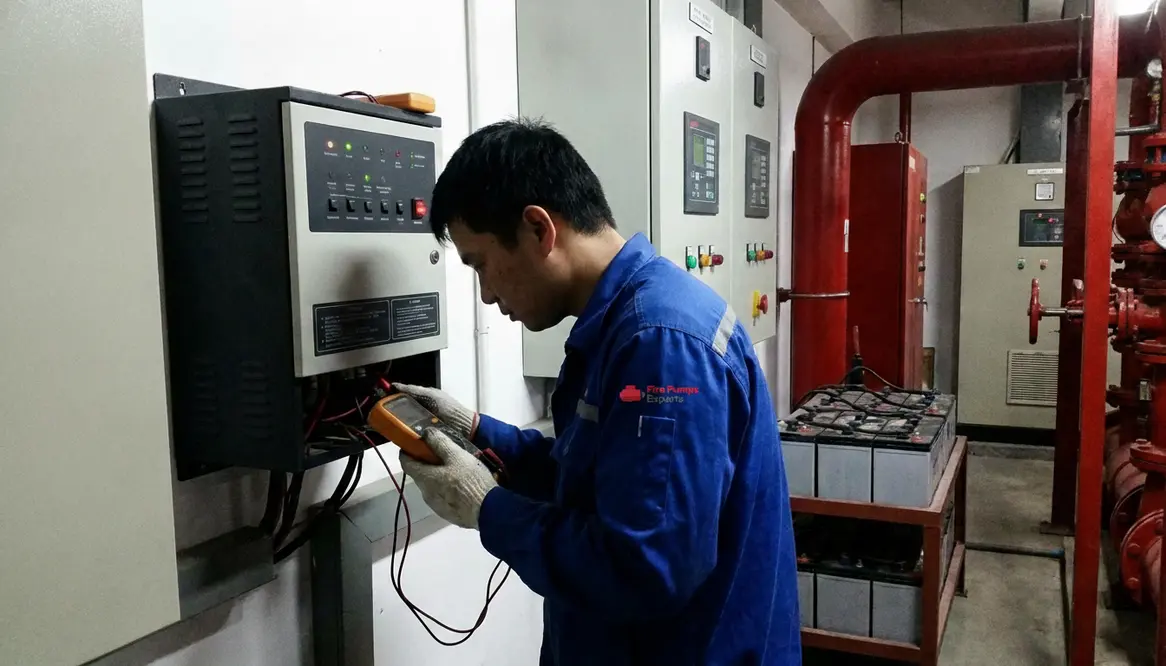
Technicians usually begin with the basics because the basics tell the truth. First, they look for weak indicator lights, dead display panels, loose wires, and signs of heat around the charger. Then they check for swelling, rust, burnt smell, or dust buildup that can hide deeper trouble. These diesel fire pump battery charger failure symptoms often show up before a full shutdown, so I treat them like the opening scene of a mystery. You may not see the whole plot yet, but the clues are already on stage.
Next, I watch how the charger behaves during normal operation. If it cycles too often, runs too hot, or fails to hold steady output, that tells me the unit may not keep the batteries ready for a fire pump start. In a commercial building, that is not a small hiccup. That is the kind of issue that can turn a test into a headache.
Check battery charger output like a pro
After the visual check, technicians move to electrical testing. They measure charger voltage, current, and ripple. These numbers tell a clean story when the charger works well. However, when the output drifts, the batteries may not charge fully, and the diesel engine may struggle to start when needed.
I also pay close attention to uneven charging. If one battery looks stronger than the other, or if the charger cannot keep both within range, then I know something is off. A good charger should act like a steady drum beat, not a jazz solo with surprise notes. Technicians may also test AC supply input to make sure the problem does not come from the building power source. That step matters because the charger can only do its job if the feed is sound.
How technicians test battery health and charging behavior
This is where the work gets deeper. I do not stop at the charger alone. I test the batteries too, because a weak battery can make a good charger look guilty. Technicians check battery age, resting voltage, specific gravity where used, and load response. If the batteries cannot hold charge, the system may mimic charger failure even when the charger is doing most of the work.
Here is a simple way I break it down:
What I inspect
- Terminal corrosion
- Loose connections
- Heat damage
- Low charge recovery
What the result can mean
- Poor current flow
- Short battery life
- Charger stress
- Start failure risk
That kind of dual check matters because the charger and batteries work as a team. If one falls behind, the whole system starts limping. And a limp is fine for a tired human after lunch, not for life safety equipment.
Why alarms, logs, and heat tell the real story
Technicians do not guess. They read alarms, event logs, and temperature patterns. If the charger keeps sending warning signals, I look for root causes such as failed rectifiers, bad relays, or aging control parts. Also, if the charger runs hot, that heat often points to stress inside the unit long before it fails.
Logs matter because they show history. A single alarm may mean a small issue. A repeated pattern means the charger has been asking for help in its own quiet way. I also compare the site conditions with the manufacturer’s limits. High room heat, dust, bad airflow, and vibration can all wear the unit down faster. For more on system care tied to commercial fire protection, I often reference los angeles diesel fire pump service and related fire pump support for larger facilities. I also keep an eye on broader electrical service support through commercial electrical maintenance, since power quality can affect charger health.
When to call for service and keep the system ready
If I see repeat alarms, weak output, slow charging, battery boil over, or visible heat damage, I do not wait around for a dramatic finale. I schedule service right away. Preventive checks keep the charger from becoming the weak link in a diesel fire pump system that protects a plant, tower, warehouse, or other major property. For teams that manage sprinkler and pump systems together, I also look at broader fire protection support like fire sprinkler service solutions because the whole life safety package should work as one.
In my experience, the best time to catch charger trouble is before the monthly test turns into a failure report. That is why steady inspection, clean connections, and proper load testing pay off. When you track diesel fire pump battery charger failure symptoms and respond quickly, the system stays ready for the moment it matters.
FAQ
Conclusion
If I want a diesel fire pump system to stay ready, I treat the battery charger like a critical guard at the gate. Small warning signs today can become a major failure tomorrow. So I recommend regular checks, fast repairs, and steady testing for every commercial and industrial site that depends on fire protection. If your facility manages a diesel fire pump, do not wait for the charger to quit on its own. Review it now, service it early, and keep your protection ready when it matters most.