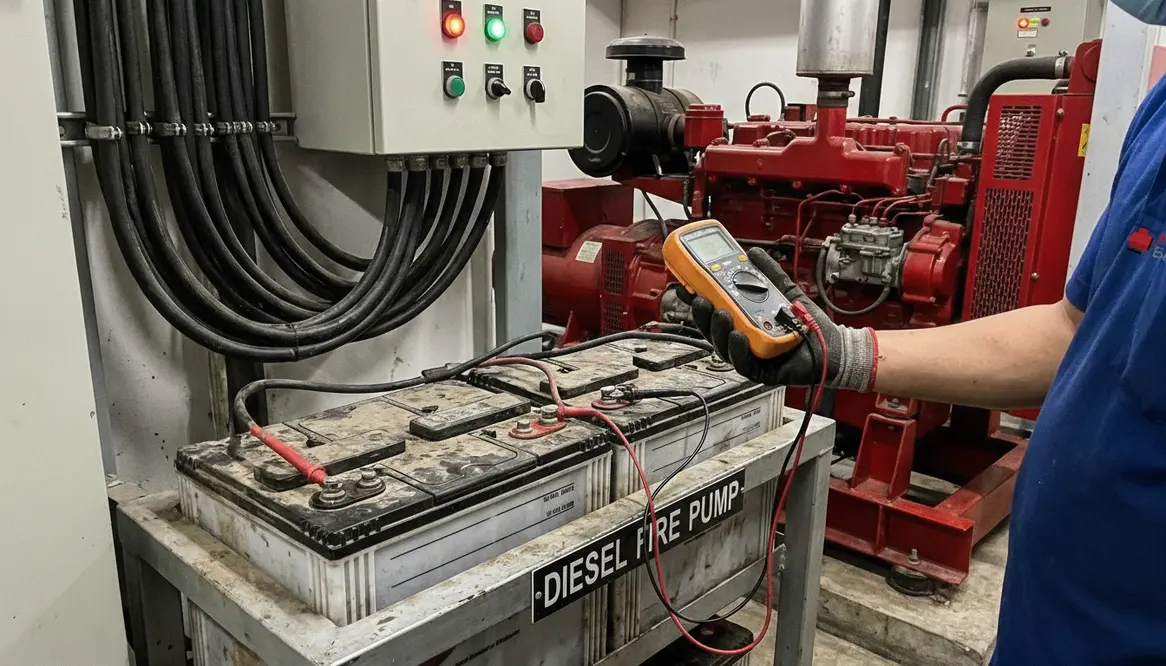
What to Check When Diesel Fire Pump Batteries Test Weak
When I hear that both diesel fire pump batteries test weak, I do not shrug it off like a sleepy Monday morning. I treat it as a warning with teeth. In a commercial or industrial fire protection system, weak batteries can keep a diesel fire pump from starting when the building needs it most. That is not a small issue. It is the kind of issue that can turn a routine inspection into a serious correction plan. So, I look at the batteries, the charging system, the cables, the starter circuit, and the full condition of the pump controls before I call the job clear.
Why weak batteries matter in a fire pump system
Diesel fire pumps depend on reliable starting power. If the batteries cannot deliver enough juice, the engine may crank slowly or fail to start at all. In a commercial tower, warehouse, data center, or industrial plant, that risk can put life safety and property at stake. I always remind clients that weak batteries rarely act alone. Usually, they point to a larger problem, such as poor charging, old cells, loose connections, or a control issue hiding in plain sight like a villain in a very polite suit.
First, I confirm whether the batteries truly test weak or whether the reading came from a bad test method. Then I move through the system in a strict order so I can find the real cause, not just the loudest symptom.
What technicians check first when batteries test weak
Battery age and condition
I start by checking the battery age, case condition, and terminal state. If the batteries are old, swollen, leaking, or corroded, I know they may be nearing the end of service. Even when they still hold some charge, they can fail under load.
Voltage and load test results
Next, I test open circuit voltage and then perform a load test. A battery may look fine on paper and still collapse when the starter asks for real power. That is why I never stop at a simple meter reading. A fire pump does not care about optimism. It cares about current.
Battery charger output
After that, I check the charger. If the charger does not hold the batteries at the proper float voltage, the batteries will stay weak no matter how many pep talks they get. I verify input power, output voltage, and charger status lights to make sure the unit actually works.
Cable and terminal connections
Loose or dirty connections create resistance. Resistance steals starting power. So I inspect every terminal, cable end, and ground connection. I also look for heat marks, which can signal a bad connection that has been cooking quietly like a scene from a low budget action movie.
How I trace the charging and starting path
Once I clear the basic battery checks, I follow the power path from the charger to the starter. I inspect the battery selector, if present, and confirm each battery set receives the right charge. I also check the starter relay, solenoid, and any control wiring tied to the diesel fire pump. Sometimes one weak link in the circuit causes both batteries to show poor performance. That is why I treat the whole starting system as one chain instead of two separate boxes.
I also look for parasitic draws. If a control circuit, monitoring device, or damaged wire keeps pulling power after shutdown, the batteries can drain faster than expected. In that case, the batteries may not be the real problem. They may just be the tired actors in a bad script.
Common root causes I look for in commercial and industrial sites
In major buildings, I often find the same few issues behind weak battery findings:
- Old batteries that have reached the end of service life
- Chargers that fail to maintain float voltage
- Corroded terminals and loose cable ends
- High resistance in starter cables
- Control panel faults that drain the battery set
- Improper maintenance after prior service work
Because these systems protect critical property, I never treat weak batteries as a one step fix. I look for the cause that will bring the problem back if left alone. A quick battery swap may buy time, but it will not solve a dead charger or a hidden draw.
How I verify the system after repairs
After repairs or battery replacement, I test the system again under real conditions. I check charge acceptance, voltage hold, and start response. Then I confirm the batteries recover properly after the test. If the charger cannot restore them in a reasonable time, I dig deeper. I also document all readings so the facility team has a clean record for future inspections.
For facilities that want a wider service review, I often point teams toward trusted fire pump resources like los angeles fire pump service support and related fire pump maintenance guidance. For electrical issues tied to the charging side, commercial electrical service insight can also help. And for broader protection needs, I keep fire sprinkler service information in the conversation, because fire protection works best when every part pulls its weight.
FAQ
Conclusion
If both diesel fire pump batteries test weak, I do not stop at the surface. I trace the full starting path, check the charger, inspect the cables, and confirm the batteries can hold and deliver power under load. That is the difference between a temporary fix and real protection. If your commercial or industrial property needs a careful review, now is the time to act. I recommend scheduling a professional inspection before a weak battery turns into a failed start.