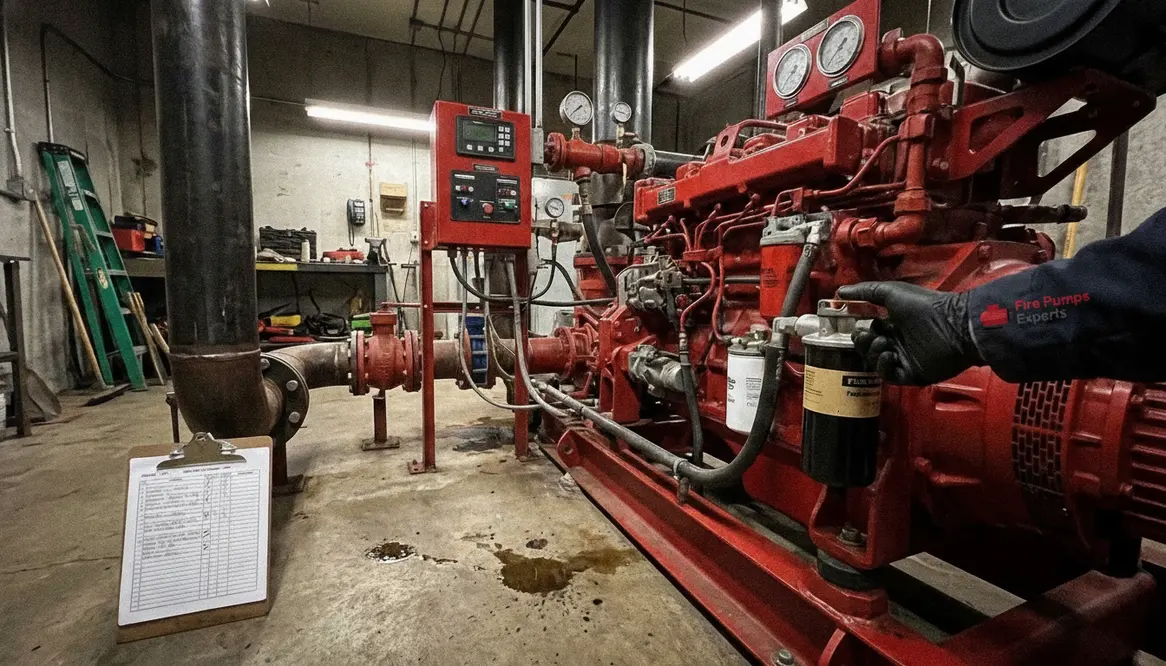
Diesel Fire Pump Maintenance for Commercial Buildings
Diesel Fire Pump Maintenance Guide for Commercial and Industrial Properties
When I talk about diesel fire pump maintenance, I am talking about the quiet hero in a building that hopes it never has to prove itself. In a commercial tower, warehouse, plant, or other major property, this machine sits ready to protect people, assets, and operations when pressure drops and trouble shows up uninvited. And yes, like the drummer in a rock band, it may not get much attention until something goes wrong. That is exactly why I treat upkeep as serious business. If you want the system to respond fast, I make sure it stays fueled, clean, tested, and fully awake.
Why this pump matters more than it looks
In a crisis, no one cares how pretty the lobby tiles look. They care that the fire protection system wakes up, builds pressure, and buys time to save lives and equipment. That is the entire point of disciplined diesel fire pump maintenance in commercial and industrial spaces.
What I check first during a maintenance visit
Start with the basic lifelines
I always begin with the basics, because the basics tell the truth. First, I inspect the fuel supply, coolant level, oil level, batteries, and belts. Then I look for leaks, rust, loose parts, and signs of vibration. Next, I confirm the pump house stays dry, clear, and easy to access. A diesel fire pump does not like drama. It likes order.
Control, alarms, and quiet troublemakers
I also verify the controller settings and alarms. If a battery charger fails or a valve sits in the wrong position, the system can fail when demand rises. That is why I do not rush this step. I want the pump to act like a calm pro, not a side character in a disaster movie who forgot his lines.
How I test a diesel fire pump the right way
From first crank to full confidence
Testing gives me the real story. A visual inspection only tells part of it, while a test run shows how the unit behaves under pressure. I start the engine and let it run long enough to confirm smooth operation, stable speed, and clean exhaust. Then I watch for rough starts, unusual smoke, weak battery performance, and odd sounds.
Performance, data, and “looks fine” lies
For larger commercial and industrial facilities, I also review flow and pressure data. This matters because a pump can sound fine and still underperform. That would be like a superhero showing up in costume but forgetting the super part. I want strong start up, steady output, and full compliance with site needs.
Diesel fire pump maintenance checklist for busy facilities
If I had to keep one simple routine in mind, this would be it:
- Check fuel, oil, coolant, and battery condition regularly
- Run the pump on a set schedule and log every result
- Inspect suction and discharge valves for proper position
- Look for leaks, corrosion, heat damage, and loose fittings
- Clean the area around the pump and keep access open
- Confirm the controller, alarms, and charger all work
- Review pressure readings and compare them with past tests
- Replace worn parts before they create bigger trouble
This checklist works best when I treat it as part of a broader fire protection plan, not a once in a while chore. In fact, regular fire pump service helps commercial buildings avoid surprise failures, costly downtime, and stressful repair bills that always seem to arrive on a Friday afternoon. That is exactly where disciplined diesel fire pump maintenance earns its keep.
How I keep the pump room ready year round
Clean, clear, and calm
Maintenance is not only about the pump itself. The room around it matters just as much. I keep the space clean, dry, and well lit. I also make sure nothing blocks access to the unit, since a stacked pallet or storage cart can turn a quick response into a slow headache.
Temperature, vibration, and early warnings
Temperature control also plays a part. Diesel engines do not love extreme cold or heat, and weak conditions can shorten part life. So I check the room environment, ventilation, and drainage. Meanwhile, I pay attention to noise and vibration, because those clues often point to deeper issues before a failure starts waving a red flag. When diesel fire pump maintenance includes the room itself, not just the machine, the whole system performs better.
What signs tell me the pump needs service now?
Red flags that refuse to fix themselves
I act fast when I notice hard starting, low battery charge, fuel contamination, strange vibration, smoke changes, or pressure loss. I also move quickly if the engine overheats or the controller throws repeated alarms. Those warning signs do not fix themselves. They usually grow, and they rarely get friendlier with time.
When I catch problems early, I protect both the system and the building. That is the whole game. For many facility teams, working with a trusted source like expert diesel fire pump inspection for industrial buildings helps keep the system aligned with code, site demand, and real world risk. For more guidance, I recommend reviewing the resources at firepumps.org, especially if your property serves a large commercial or industrial operation. Integrated diesel fire pump maintenance across inspections, testing, and documentation keeps everything pointed in the right direction.
FAQ
Conclusion
I do not treat diesel fire pump maintenance as a box to check. I treat it as protection for people, property, and business continuity. If you manage a commercial or industrial facility, now is the right time to tighten your inspection schedule, review your test logs, and fix small issues before they grow teeth. Reach out to a qualified fire protection team, stay ahead of trouble, and keep your pump ready for the moment it matters most.