Electric Fire Pump Maintenance for Industrial Sites
Electric Fire Pump Maintenance Guide for Commercial and Industrial Facilities
I have seen a lot of things go quiet in a building: elevators, backup lights, even a whole server rack after a bad day. But when it comes to electric fire pump maintenance, silence is not a good sign. In commercial and industrial properties, this equipment stands ready like the unsung hero in a disaster movie, except this one does not get a flashy soundtrack. It just has to work. So, I keep my focus on the checks, the tests, and the small fixes that prevent a big problem later.
I treat these systems as mission-critical gear, not background machinery. When the sprinklers call for backup, the pump has one job: deliver. That simple expectation drives every inspection, test, and adjustment I make. It is not about drama. It is about quiet reliability under pressure.
In busy industrial sites with complex processes and high occupancy, that reliability can separate a controlled incident from a full-blown shutdown. That is why I keep the approach practical, direct, and focused on what actually keeps water moving when it counts.
Why electric fire pump maintenance matters
I treat fire pump care as a risk control job, not a box checking task. In a large facility, the pump supports the fire protection system when the main water supply cannot keep up. Therefore, I inspect it on a routine schedule, and I look for anything that might slow response time. A loose wire, weak pressure, or worn bearing can turn into a serious issue fast. Also, regular upkeep helps me spot wear before it becomes downtime, and downtime is expensive. Nobody wants a dramatic visit from the fire marshal followed by a repair bill that feels like a movie sequel nobody asked for.
For commercial and industrial facilities, a failed start is not just a technical problem. It can trigger evacuations, production loss, insurance trouble, and a pile of questions about why the basics were not handled earlier. That is what keeps electric fire pump maintenance high on my list of non-negotiables.
What I check during a routine inspection
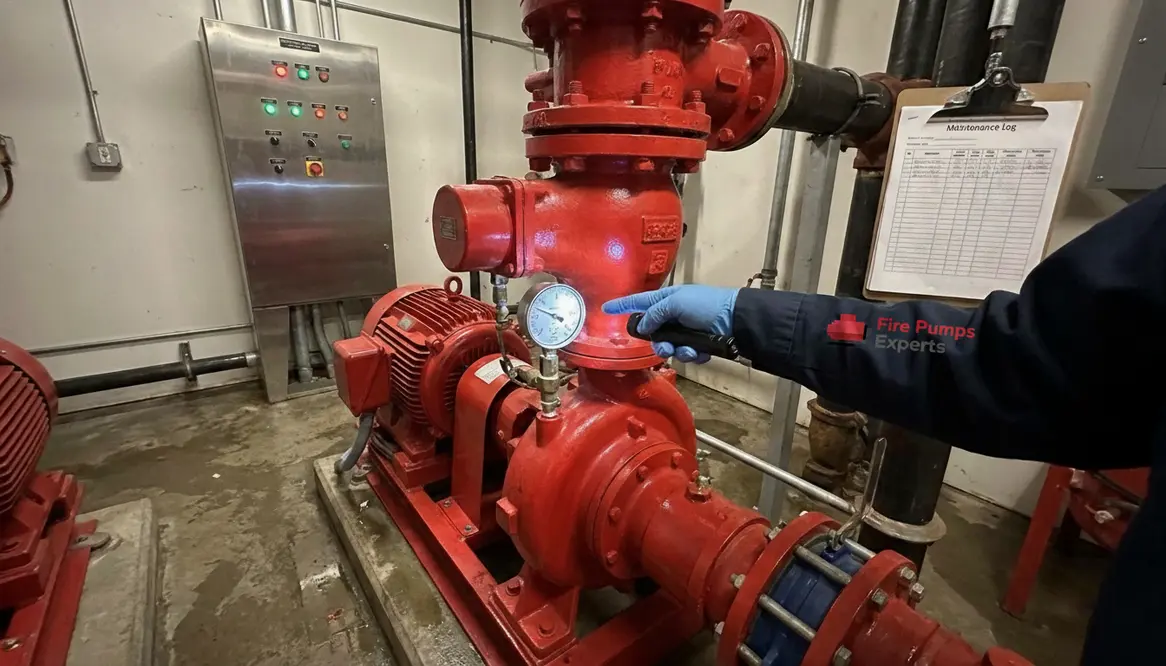
I start with the basics, because the basics save lives and budgets. First, I look at the pump room itself. It should stay clean, dry, and easy to reach. Then I inspect the electric motor, controller, valves, gauges, and power source. After that, I confirm that the pump has no leaks, unusual noise, or vibration. I also check that the suction and discharge lines stay in good shape.
My routine inspection list includes:
- Controller lights and alarms
- Power supply and breaker condition
- Pump room temperature and ventilation
- Valve position and seal status
- Pressure readings on the gauges
- Signs of rust, corrosion, or water damage
Reading the story in the data
Next, I compare readings with past records. That matters because trends tell a better story than one random number on one random Tuesday. A slight pressure drop today may point to a deeper issue next month. In other words, the pump talks. I just have to listen.
Good logs turn into a timeline of how the system behaves: slow pressure loss, rising vibration, or creeping temperature can all hint that it is time for targeted electric fire pump maintenance before anything fails during a real event.
How I test performance without causing trouble
Testing matters, but I never treat it like a stunt scene. I use controlled runs so I can confirm the pump starts, builds pressure, and keeps steady operation. During a weekly or monthly test, I watch the startup delay, amp draw, vibration, and discharge pressure. If I hear harsh noise, I stop and investigate. Electric motor issues often show up early through heat, smell, or strange sound, and I do not ignore those clues. They are the mechanical version of a person saying, “I’m fine,” while clearly not fine.
For larger sites, I also review records from the fire alarm interface and power transfer systems. That gives me a better view of how the entire fire protection setup behaves under load. If the pump does not respond the way it should, I do not wait. I schedule a full service check right away.
Testing without disrupting operations
In production-heavy plants and tall commercial buildings, I coordinate tests around shift changes or low-traffic windows. That way I can run the pump, confirm flow, and record performance without distracting operators, flooding loading docks, or rattling nerves on every floor.
Electric fire pump maintenance schedule for busy sites
I keep the schedule simple, because complex plans often collect dust faster than they collect results. Here is the structure I follow for commercial and industrial sites:
| Task | Typical Frequency |
| Visual inspection | Weekly |
| Operational test | Weekly or monthly |
| Controller and alarm review | Monthly |
| Lubrication and alignment check | Quarterly |
| Full service inspection | Annually |
Then I make sure the logs stay complete. Clear records help me prove compliance, track wear, and plan repairs before the system complains in public. For facilities that want added support, I recommend using a trusted resource like commercial fire pump service guidance from https://firepumps.org, since they focus on major properties and industrial settings. That kind of support keeps the process tight and the risk lower.
Turning a schedule into a habit
It is not enough to print a calendar and hope. I assign owners for each task, keep checklists where operators actually work, and tie electric fire pump maintenance into other safety routines. When it becomes part of the rhythm of the site, compliance stops being a scramble and starts feeling normal.
Common problems I catch early
Most failures do not arrive with fireworks. They start small. For example, I often find loose connections, weak contacts, blocked ventilation, or a pump that has shifted out of alignment. Sometimes I see corrosion around fittings, and sometimes the problem is simple contamination in the room. Dust and moisture love to team up like a bad buddy comedy, and the ending is never good.
Here is how I think about the most common trouble signs:
- If the pump starts slow, I check the controller and power feed.
- If pressure drops, I inspect valves, suction flow, and wear parts.
- If vibration rises, I look at alignment, bearings, and mounting.
- If the motor runs hot, I check airflow, load, and electrical condition.
Do not forget the room itself
Also, I never skip the room conditions. A fire pump needs space to breathe. Poor ventilation can shorten motor life, and high moisture can damage metal parts. So, I keep the space ready, not just the machine.
Clear access routes, labeled valves, and clean electrical panels turn a stressful response moment into a controlled one. That is another quiet win for electric fire pump maintenance: the better I treat the environment around the pump, the easier it is to work on the pump when every minute matters.
Quick reference: electric fire pump maintenance essentials
- Keep a clear, realistic schedule and stick to it with written logs.
- Watch trends in pressure, vibration, and temperature, not just single readings.
- Protect the pump room from clutter, moisture, dust, and blocked airflow.
- Respond quickly to small leaks, odd noises, and slow starts.
- Use trained technicians for in-depth electric fire pump maintenance tasks.
FAQ
Conclusion
I do not treat fire pump care as an afterthought, because a busy facility cannot afford that kind of gamble. When I stay ahead with electric fire pump maintenance, I protect people, property, and operations at the same time. So, if your site manages a commercial or industrial fire protection system, now is the time to review your schedule, tighten your logs, and bring in expert support where needed. A strong pump today can prevent a very bad headline tomorrow.