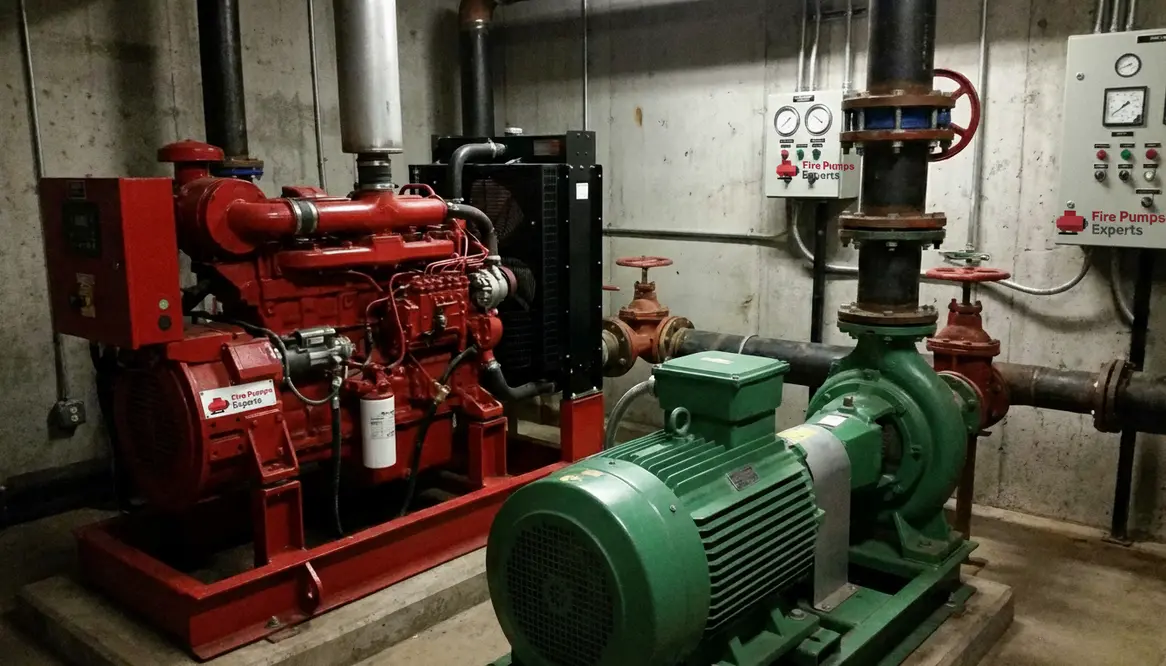
Diesel vs Electric Fire Pump Redding Guide
I have spent enough time around pump rooms to know this: when things go quiet in a fire system, you want absolute confidence that something powerful is about to wake up. That is where the choice between systems becomes more than a line item. In diesel vs electric fire pump Redding conversations, I often hear the same question in different voices. Which one truly shows up when it matters? The answer, as always, depends on how your facility breathes, works, and prepares for the unexpected.
How I Size Up Diesel vs Electric Fire Pump Redding Systems
When I walk into a commercial or industrial facility, I do not start with the pump. I start with the building’s rhythm. Power reliability, water supply stability, and operational risk all play a role. Electric fire pumps draw strength from the grid. They are clean, consistent, and quick to start. However, they rely entirely on a stable electrical source.
Diesel driven systems, on the other hand, bring their own energy to the party. They operate independently of utility power, which means that during outages, they keep going without hesitation. That independence often makes them the preferred choice for facilities where downtime simply is not an option.
Therefore, the difference is not just mechanical. It is strategic. I always remind clients that choosing between these systems is less about preference and more about risk tolerance.
What Happens When Power Fails in a Commercial Facility?
This is the moment where theory meets reality. In Redding, where weather and grid strain can occasionally test infrastructure, power loss is not just hypothetical. Electric pumps stop unless backed by a generator system that is equally robust and properly maintained.
Meanwhile, diesel pumps start with a kind of stubborn reliability. They do not ask permission from the grid. They simply run. That said, they demand attention in other ways. Fuel quality, battery health, and regular testing all matter. Ignore those, and even the toughest diesel engine will give you a very expensive shrug.
So yes, electric systems are efficient. But diesel systems are resilient. And in fire protection, resilience often wins the argument.
Performance and Maintenance: A Side by Side Look
Electric Fire Pumps
- Fast and smooth startup
- Lower routine maintenance
- No on site fuel storage required
- Dependence on continuous power supply
- Quieter operation
Diesel Fire Pumps
- Independent of electrical grid
- Strong reliability during outages
- Requires fuel storage and monitoring
- More frequent mechanical checks
- Louder but undeniably dependable
Now, if this were a movie, the diesel pump would be that grizzled action hero who refuses to retire. The electric pump would be the polished specialist who performs flawlessly as long as conditions stay controlled. Both are impressive. Only one thrives in chaos.
Where Each System Fits Best in Redding Facilities
I have seen electric fire pumps shine in facilities with highly reliable power infrastructure and strong backup systems. Data centers, modern manufacturing plants, and large commercial buildings often lean this way because efficiency and reduced maintenance align with their operations.
However, diesel systems often take the lead in high risk environments. Think large industrial plants, distribution centers, and facilities where fire protection must remain active regardless of external conditions. In these spaces, redundancy is not optional. It is expected.
Additionally, local codes and insurance requirements often influence the decision. In many cases, I advise clients to look beyond initial cost and consider long term operational certainty. Because when a fire event occurs, nobody cares how much you saved upfront.
Cost Realities Without the Sales Pitch
Let’s be honest. Budget always enters the room, even when safety is the topic. Electric pumps generally cost less to install and maintain over time. They are simpler systems with fewer moving parts.
Diesel pumps, however, come with added layers. Fuel systems, exhaust management, and ongoing maintenance all increase cost. Yet, that cost buys independence. And in critical facilities, independence can be priceless.
I often tell clients this: if your operation cannot afford failure, then it should not rely on a single point of power. That line usually lands better than any spreadsheet ever could.
diesel vs electric fire pump Redding: My Practical Take
If I had to boil it down after years of seeing systems succeed and fail, I would say this. Electric pumps are excellent when supported by strong infrastructure. Diesel pumps are essential when uncertainty enters the picture.
That does not mean one replaces the other in every case. In fact, some of the most robust fire protection setups I have seen use both, creating layered protection that accounts for multiple failure points. It is not flashy, but it works.
And in this field, working beats impressive every single time.
FAQ: Quick Answers You Can Use
Final Thoughts and Next Steps
Choosing the right fire pump system is not about trends. It is about protection that holds steady under pressure. If you manage a commercial or industrial property in Redding, now is the time to evaluate your setup. I encourage you to take a closer look, ask the harder questions, and invest where it truly counts. When the moment comes, your system should not hesitate. And neither should you.