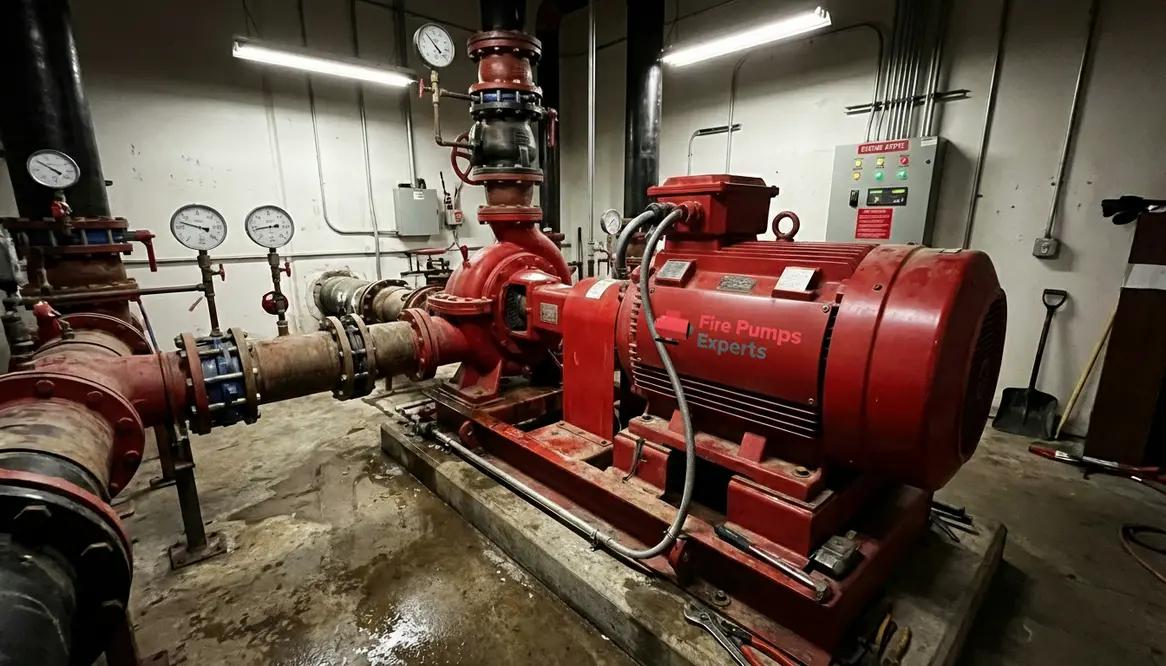
Fire Pump Peak Demand Chula Vista Systems
I have spent years watching how systems behave when pressure rises, both in pipes and in people. And when we talk about fire pump peak demand Chula Vista, we are really talking about moments when everything gets tested at once. Large commercial buildings, industrial plants, and multi story properties suddenly ask their fire protection systems to perform at full strength. No warm up. No second chances. Just go time.
And like any high stakes performance, what happens behind the scenes matters more than most realize. So let me walk you through it, calmly, clearly, and with just enough humor to keep us awake.
What Happens Inside a Fire Pump During Peak Demand in Chula Vista
When peak demand hits, the fire pump does not politely ramp up like a luxury car. It responds fast. Water flow increases sharply, pressure shifts, and the system begins working at its designed limits. In large facilities, this usually happens when multiple sprinkler zones activate or when fire crews tap into the system.
As a result, the pump controller signals immediate action. The motor or engine starts, and within seconds, water begins moving at high velocity. Meanwhile, pressure sensors constantly adjust to maintain balance. If that sounds intense, it is. Think of it as a marathon runner forced to sprint uphill with no warning.
However, a well maintained system handles this surge smoothly. Poorly maintained systems, on the other hand, behave more like a confused extra in an action movie, running in the wrong direction.
Why Peak Demand Events Stress Commercial Fire Systems
Peak demand is not just about flow. It is about simultaneous demand across a wide network. Large properties in Chula Vista often have complex layouts, which means longer pipe runs, elevation changes, and multiple pressure zones.
Because of this, even a slight imbalance can create pressure drops where you least want them. For instance, upper floors may struggle to maintain adequate flow if the pump cannot compensate fast enough.
In addition, aging infrastructure adds another layer of stress. Valves may not respond quickly, and friction loss increases over time. So while the system may pass routine tests, real world demand reveals the truth. And yes, that truth can be uncomfortable.
How Do I Know If My Fire Pump Can Handle Peak Demand?
I get this question often, and the answer is straightforward. You test it under realistic conditions. Flow testing, pressure curve analysis, and system simulations all provide insight into how your setup performs.
Moreover, reviewing historical performance data helps identify patterns. If your system shows pressure dips during high usage, that is a red flag waving like it is trying to get cast in a disaster film.
Here is what I focus on when evaluating readiness
- Flow capacity versus building demand
- Pressure stability across all zones
- Response time of pump activation
- Controller accuracy and reliability
Each of these factors tells part of the story. Together, they reveal whether your system will hold steady or struggle when it matters most.
Designing Around Fire Pump Peak Demand Chula Vista Conditions
In practice, planning for fire pump peak demand Chula Vista conditions means thinking beyond code minimums. It means asking how the system behaves when multiple standpipes, sprinklers, and hydrants are all calling for attention at the same time. That is where real performance is either confirmed or exposed.
Fire Pump Peak Demand Chula Vista in Large Scale Facilities
In industrial and commercial environments, scale changes everything. A distribution center, for example, may require sustained high flow across thousands of square feet. Meanwhile, a high rise office building demands consistent vertical pressure.
Therefore, system design must account for both volume and reach. Engineers often incorporate jockey pumps, backup systems, and zoned pressure controls to handle these challenges.
And yet, even the best designs need regular validation. Because conditions change. Buildings expand. Equipment ages. Demand grows. What worked five years ago might now be operating on borrowed time.
To make this clearer, here is a simple breakdown
Stable System Behavior
- Consistent pressure during activation
- Fast pump startup
- Even water distribution
- Minimal vibration or noise
Warning Signs Under Demand
- Pressure drops in upper zones
- Delayed pump response
- Irregular flow rates
- Excessive wear or overheating
If you recognize the second column, it may be time to act before your system decides to improvise under pressure. And improvisation is great in jazz, not in fire protection.
Smart Maintenance Strategies That Actually Work
Let me be clear. Maintenance is not just a checklist. It is a strategy. And in Chula Vista, where demand can spike without warning, proactive care makes all the difference.
First, I recommend regular full flow testing. Not just partial checks, but real simulations that mirror peak conditions. Next, inspect controllers and sensors to ensure accurate readings. Small errors here can lead to big problems later.
In addition, monitor pump performance over time. Trends often reveal issues long before they become failures. It is like noticing your car makes a weird noise before it fully commits to breaking down on the freeway.
Finally, keep documentation updated. Clear records help teams respond faster and make better decisions during emergencies. For more technical guidance and standards, resources like https://firepumps.org can be useful reference points alongside your local fire code requirements.
Linking Maintenance To Fire Pump Peak Demand Chula Vista Readiness
When maintenance is aligned with real risk, it stops being a box to check and becomes a preparation tool for fire pump peak demand Chula Vista scenarios. Every inspection, test, and repair is another small investment in making sure the system does not freeze, hesitate, or underperform at the exact moment it is needed most.
FAQ: Fire Pump Systems and Peak Demand
Keep Your System Ready When It Matters Most
If there is one thing I have learned, it is this. Systems do not fail randomly. They fail when they are unprepared for moments like fire pump peak demand Chula Vista events. So take the time to test, maintain, and truly understand your system. If you manage a commercial or industrial property, now is the moment to act. Reach out, assess your setup, and make sure your fire protection system performs like it should when the pressure is on.