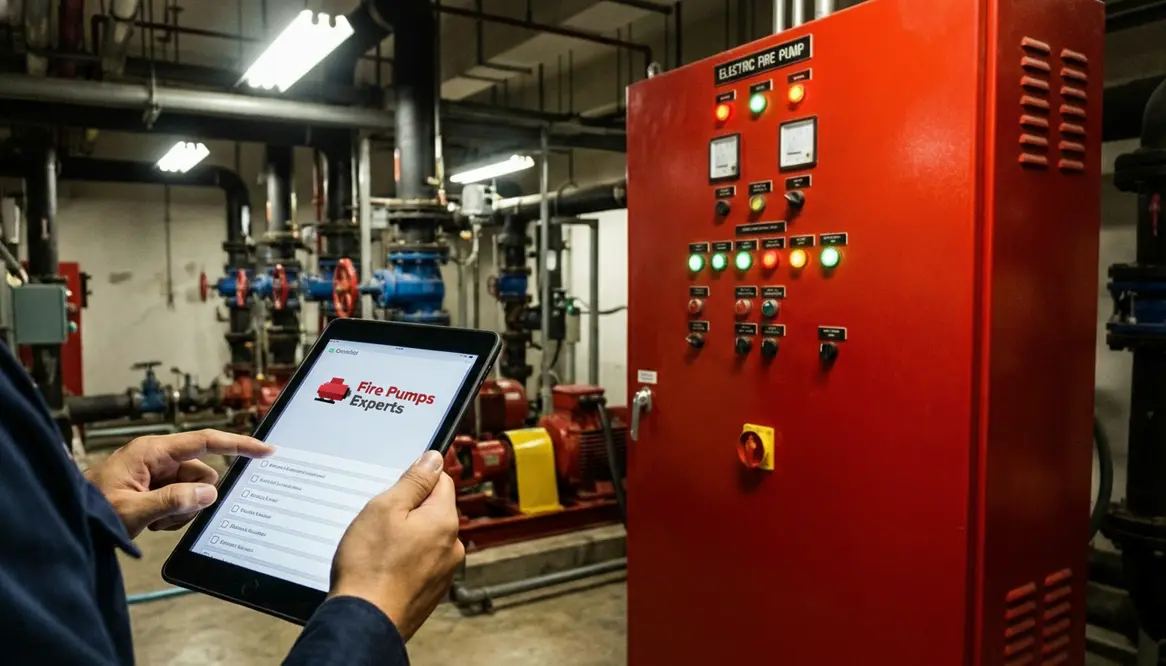
Electric Fire Pump Inspection Checklist Guide
I have walked through enough mechanical rooms to know one truth. When an emergency hits, your fire pump does not care about excuses. It either works, or it does not. That is exactly why I lean on an electric fire pump inspection checklist every single time. Within the first few minutes of any visit, that checklist becomes my compass. It keeps me honest, methodical, and just a little less likely to miss something that could cost millions. And yes, while it may not sound thrilling, I promise there are a few moments in here that feel less like paperwork and more like detective work.
What is an electric fire pump inspection checklist and why should I care?
Think of it as your backstage pass to the performance no one wants to see. A fire emergency. However, instead of guitars and bright lights, you get valves, controllers, and pressure gauges quietly waiting for their cue.
I use this checklist to confirm that every component of the system is ready to perform under pressure. Literally. In commercial and industrial facilities, where downtime can mean massive losses, skipping steps is not bold. It is reckless.
Moreover, insurers and local authorities expect documented inspections. So, while it may feel routine, it also protects your operation legally and financially. And honestly, there is something satisfying about knowing everything will work when chaos shows up uninvited.
Core Components I Always Check First
Power Supply
First, I verify the electrical feed. No power, no pump. It is that straightforward. I check breakers, wiring condition, and voltage readings.
Controller Status
Next, I review the controller panel. Lights, alarms, and logs tell a story. Sometimes it is a calm story. Other times, it reads like a thriller.
Pump Condition
Then, I inspect the pump itself. I look for leaks, corrosion, and unusual vibration. If it sounds like a washing machine full of bricks, we have a problem.
Valves and Gauges
Finally, I confirm that all valves are in the correct position and gauges provide accurate readings. Because a closed valve during a fire is about as helpful as a screen door on a submarine.
My Step by Step Electric Fire Pump Inspection Checklist
Now we get into the rhythm of it. This is where consistency turns into reliability. Working from a detailed electric fire pump inspection checklist is what keeps this rhythm predictable instead of chaotic.
Visual Inspection
I begin with a full walkaround. I check for leaks, loose bolts, and anything that looks out of place. If something feels off, it usually is.
Weekly Churn Test
Then, I run the pump without flowing water. This confirms the motor starts properly and runs smoothly. It is like a quick warm up before the big game.
Run Test with Flow
After that, I simulate real demand by flowing water. This step confirms pressure and performance meet design expectations.
Alarm and Signal Check
I also verify that alarms trigger correctly and signals reach the monitoring system. Because if no one hears the alarm, did it even happen?
Documentation
Finally, I log everything. Details matter. Dates, readings, observations. This record becomes your proof of diligence and feeds the next electric fire pump inspection checklist you complete.
How I Keep Inspections Efficient Without Cutting Corners
Preparation
I review past reports before stepping onsite. Patterns often reveal hidden issues. Also, I bring the right tools. Nothing slows you down like improvising with the wrong equipment.
Consistency
I follow the same sequence every time. That way, I never skip a step. Muscle memory is powerful, especially when distractions creep in.
Focus
I avoid multitasking. When I inspect, I inspect. Emails can wait. Fires will not.
Expert Support
When needed, I rely on trusted resources like commercial fire pump inspection specialists to validate complex findings and refine the electric fire pump inspection checklist I use on challenging sites.
Common Issues I Catch Before They Become Disasters
Over time, patterns emerge. And thankfully, so do early warnings.
For example, I often find controllers with minor faults that go ignored. At first, they seem harmless. However, they tend to grow into full failures at the worst possible moment.
Another frequent issue is improper valve positioning. It sounds simple, yet it happens more often than you would think. One wrong turn, and the entire system underperforms.
Additionally, I watch for pressure inconsistencies. These subtle shifts can signal deeper mechanical problems. Catching them early saves time, money, and a whole lot of stress.
And yes, sometimes I find things that make me pause and think, how did this even pass last inspection. Those moments keep me humble and remind me why a disciplined electric fire pump inspection checklist is nonnegotiable.
FAQ: Electric Fire Pump Inspections
These are the questions that come up most often when we talk about any electric fire pump inspection checklist and how it fits into day-to-day operations.
Final Thoughts and Next Steps
I have seen what happens when preparation meets opportunity. Things work. I have also seen the opposite, and it is not pretty. A solid electric fire pump inspection checklist is not just a tool. It is a habit that protects lives, assets, and reputations. If you manage a commercial or industrial property, now is the time to act. Review your process, tighten your routine, and bring in experts when needed. Because when the moment comes, ready is the only acceptable outcome.