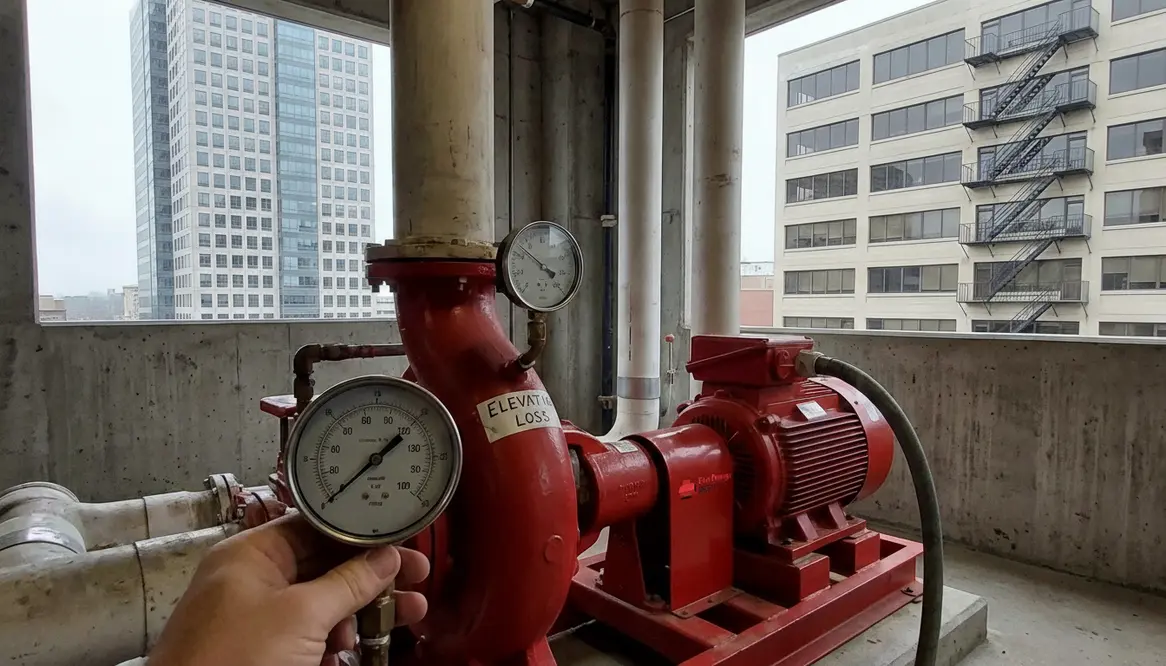
Elevation and Fire Pump Pressure for Commercial Buildings
How Elevation Changes Fire Pump Pressure in Commercial and Industrial Buildings
When I talk about fire pump elevation pressure, I am really talking about a simple truth with a serious job. As water rises, pressure falls. That small fact can turn into a big problem in a tall commercial tower, a warehouse with roof mains, or a heavy industrial plant with long pipe runs. And yes, gravity is still the same old drama queen it has always been. In this article, I will break down how elevation affects fire pump pressure, why it matters for large properties, and how I approach it when system reliability cannot be left to chance.
Why elevation lowers pressure in fire protection systems
Water loses pressure as it moves upward because the pump must fight gravity. For every foot of rise, I lose about 0.433 psi. That may not sound like much at first. However, once a system climbs several floors, the loss adds up fast. A building that rises 100 feet can lose more than 43 psi before water even reaches the top.
That means the fire pump does more than push water through pipe. It has to deliver enough pressure at the base so the highest outlet still performs well. If I ignore elevation, the top floor may get weak flow, slow sprinkler response, or poor hydrant performance. In a commercial or industrial site, that is not a small oversight. It is the kind of thing that keeps safety teams awake at night, right up there with surprise audit emails.
How I calculate fire pump elevation pressure
I start with the highest point the system must serve. Then I measure the vertical distance from the pump to that point. After that, I multiply the rise in feet by 0.433 psi. That gives me the static pressure loss from elevation alone.
Here is the simple logic I use:
- Find the total height difference from pump to highest demand point.
- Multiply that height by 0.433 psi per foot.
- Add the friction loss from pipe, fittings, valves, and equipment.
- Add the required pressure at the sprinkler or hydrant outlet.
- Make sure the pump curve supports the full demand, not just the base case.
This is where good design matters. A pump that looks strong on paper can still fall short if the elevation load is high. For that reason, I always check both static and dynamic conditions. After all, a fire pump is not a superhero from a movie. It does not get stronger just because the building looks intimidating.
Where commercial buildings feel the biggest pressure drop
In major properties, I see the most trouble in high rise office towers, hospitals, mixed use facilities, and large manufacturing buildings with elevated storage or rooftop systems. These sites often have long vertical runs, multiple pressure zones, and demanding flow needs.
Common trouble spots
- Upper floors with sprinkler demand
- Rooftop hydrants or standpipes
- Long risers with heavy friction loss
- Pressure reducing valves that need the right setup
What I watch for
- Weak pressure at the farthest outlet
- Oversized or undersized pump selection
- Poor zoning across tall structures
- Incomplete testing that misses real world height loss
Once I map these areas, I can see where pressure drops begin to hurt system performance. That is the point where the design stops being theory and starts being business risk.
What AS 2419 means for pump and hydrant performance
When I want a solid reference, I look at guidance that connects practical design with real system performance. The AS 2419 fire pump and hydrant performance guide gives a useful view of how pump and hydrant systems should perform under demanding conditions. That matters because elevation does not work alone. It joins friction loss, outlet demand, and system layout in one very serious team effort.
For commercial and industrial facilities, this guide helps me think beyond the pump room. It reminds me to test the system as a whole, especially when height changes the pressure game. And if the building feels like it was designed by someone who thought pipes could simply “figure it out,” then this kind of reference becomes even more valuable.
How I improve pressure at height without wasting energy
I do not just chase higher pressure. I look for the right pressure. Too much can damage pipes, fittings, and valves. Too little can fail the fire protection mission. So I balance the system carefully.
First, I confirm the required pressure at the highest outlet. Next, I compare that need with pump capacity and system loss. Then I decide whether the site needs a single pump, a split pressure setup, or zoning. In some tall buildings, I may also recommend pressure reducing valves to protect lower floors from excess pressure.
That approach keeps the system efficient and safe. It also helps avoid wasted energy, noisy flow, and gear that wears out too fast. Nobody wants a pump system that acts like it drank three espressos and forgot its manners.
And yes, that includes fire pump elevation pressure. If the math is ignored, the system will still pay the price later, usually during the moment that matters most.
FAQ
Conclusion
When I plan fire protection for a commercial or industrial property, I never treat height as a small detail. Elevation changes pressure, and pressure changes performance. If your building rises, your pump plan must rise with it. If you want a system that matches real conditions and supports safe, reliable operation, now is the time to review your design, testing, and pump selection. Strong protection begins with the right pressure, at the right height, every time.
Internal SEO note: For related guidance, I would also review a trusted fire pump performance resource and compare it against your building height, outlet demand, and zoning needs.
External local SEO note: los angeles fire pump services