EN 12845 Fire Pump Requirements Guide
EN 12845 Fire Pump Requirements Explained
When I talk about EN 12845 requirements, I am talking about the rules that help commercial and industrial buildings keep sprinkler systems ready when the heat rises and the pressure drops. In plain terms, these requirements guide how a fire pump should perform, how it should be tested, and how it should stay reliable for real life emergencies. That matters because when a fire breaks out, nobody wants a pump that acts like it is taking a coffee break. So, let me walk you through the parts that matter most, without the usual dry paperwork fog.
I see EN 12845 as the backbone for sprinkler reliability in large commercial and industrial sites. It sets the standard for fire pump selection, performance, backup support, and ongoing checks. As a result, the system can keep water moving at the right pressure and flow when sprinklers start working. This is especially important in warehouses, factories, office towers, and major property assets where a small delay can grow fast. In other words, the pump must not only exist, it must earn its keep.
The standard focuses on making sure the fire pump can meet system demand under real conditions. Therefore, I always look at pump capacity, suction conditions, power supply, and the full setup around the pump room. If any one of those slips, the whole protection plan starts to wobble like a movie set after the final scene.
What EN 12845 fire pump requirements mean for your building
EN 12845 requirements give structure to how fire pumps support sprinkler systems in the real world, not just on drawings. They shape decisions on pump type, drive type, and performance class so the system does not stall at the worst possible time. For buildings with complex layouts or high storage, that structure is more than helpful, it is essential.
In practice, this means thinking about how the system behaves when a section of the warehouse is already full of smoke, or when a factory line has flammable liquids nearby. The fire pump, working under EN 12845 requirements, must support sprinklers across those risks without losing pressure halfway through the event.
Dual view of the main EN 12845 checks
Pump performance: The pump must deliver the required flow and pressure for the sprinkler system. It also needs to start reliably and keep doing its job during the fire event.
Power and backup: The system needs a dependable power source. However, EN 12845 also expects a backup option so the pump can still operate if the main supply fails.
Location and access: The fire pump room must stay protected, easy to reach, and suitable for inspection and maintenance. After all, a hidden pump helps no one.
How I check pump sizing and pressure
First, I match the pump to the sprinkler demand. That means I look at the water flow needed by the system and the pressure needed at the most demanding points. Then I compare that demand with the water source and pipe losses. If I size the pump too small, the sprinklers may not perform as expected. If I size it too large, I can create waste and pressure issues that serve nobody well.
Next, I check the pump curve and the system curve together. This step matters because the pump must work at the point where the building needs it most. Moreover, I verify that the suction line supports steady supply and avoids cavitation. Cavitation, for the record, is one of those terms that sounds like a villain in a sci fi film, and it behaves like one too.
What I expect from the pump room and setup
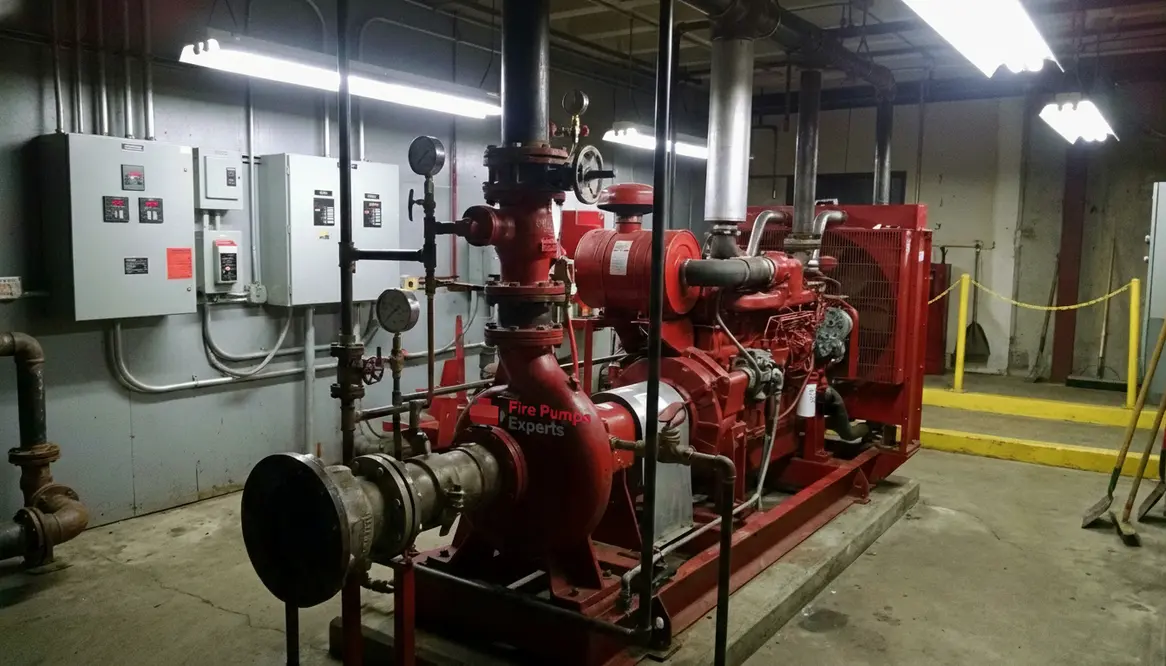
The pump room should stay dry, secure, ventilated, and protected from damage. In addition, I expect clear space around the equipment so technicians can inspect, test, and repair it without turning the room into an obstacle course. The controls should remain easy to reach, and the pipework should allow smooth flow with low loss.
EN 12845 requirements also push me to pay attention to the complete support system. That includes valves, gauges, jockey pumps, control panels, and alarms. Each part has a role. Each part must work. And yes, the glamorous life of fire protection often comes down to a valve that nobody notices until it is late for the party.
What EN 12845 requires for testing and maintenance
I never treat a fire pump like a fit and forget machine. Instead, I follow a routine that proves the pump is ready. The standard expects regular testing, visual checks, and records that show the system stayed in good order. This is not busywork. It is proof that the protection plan still stands on solid ground.
Testing should confirm that the pump starts correctly, reaches working pressure, and responds as intended. Meanwhile, inspections should look for leaks, wear, power issues, and blocked parts. If I spot a problem early, I can fix it before it grows into a costly surprise. And let us be honest, surprises are fun in movies, not in a plant room.
Why compliance matters for commercial and industrial sites
For large properties, EN 12845 compliance does more than satisfy a checklist. It helps protect people, assets, operations, and insurance standing. More importantly, it supports business continuity. A fire can stop production, damage stock, and close parts of a site for weeks or longer. However, a well planned fire pump system helps reduce that risk.
Because of that, I always advise building owners and facility teams to treat the pump as a core asset, not a side note. If you manage a warehouse, office complex, factory, or other major property, your fire pump should match the building risk and the sprinkler design. If you want deeper support, you can also review EN 12845 fire pump requirements guidance for a more focused look at compliance for commercial and industrial buildings.
FAQ
Conclusion
If you manage a commercial or industrial site, I recommend treating EN 12845 requirements as part of your daily risk strategy, not just a compliance task. A correct pump, a sound setup, and steady testing can make the difference when seconds matter. So, if you want your sprinkler system to stand ready and your building to stay protected, now is the time to review your fire pump arrangement and act before trouble arrives.