EN 12845 Fire Pump Requirements Guide
EN 12845 Fire Pump Requirements Explained
When I look at EN 12845 requirements, I see more than a rulebook. I see the backbone of fire safety for commercial and industrial buildings where failure is not an option. This standard guides how sprinkler systems should perform, and the fire pump sits at the center of that job. If the pump falls short, the whole system starts to wobble like a side character in a bad action movie. So, in this guide, I will break down what the standard expects, why it matters, and how I approach compliance in real world facilities.
What EN 12845 Fire Pump Requirements Mean For A Building
In simple terms, EN 12845 requirements define how a sprinkler system must deliver water fast enough, long enough, and with enough pressure to control a fire. The fire pump supports that demand when the normal water supply cannot do the whole job on its own. I treat the pump as the steady drumbeat under the whole system. Without it, the response loses pace.
For commercial and industrial sites, this matters even more because fire risk usually ties to size, occupancy, stored goods, heat load, or production activity. A warehouse full of stock, a factory with machinery, or a major property with complex layouts needs a pump that can keep up. In practice, the standard pushes me to check three things first: water supply, flow demand, and pressure at the most difficult point in the system.
How I Check EN 12845 Requirements In A Pump Setup
I start with the water source, because a pump cannot create water out of thin air. It can only move what is there. The standard expects the supply to match the system demand for the required duration. Therefore, I look at tanks, pumps, suction conditions, and the quality of the feed. If the supply fails, the pump becomes a very expensive paperweight.
I then check pump performance against the sprinkler design. The pump must deliver the needed flow and pressure under real operating conditions. Also, it must do this reliably, not just on a good day when everything feels cooperative. The setup usually includes a duty pump, and often a standby or backup arrangement, because a single point of failure in fire protection is never a cheerful idea.
Commercial Fire Pump Design Basics That Matter
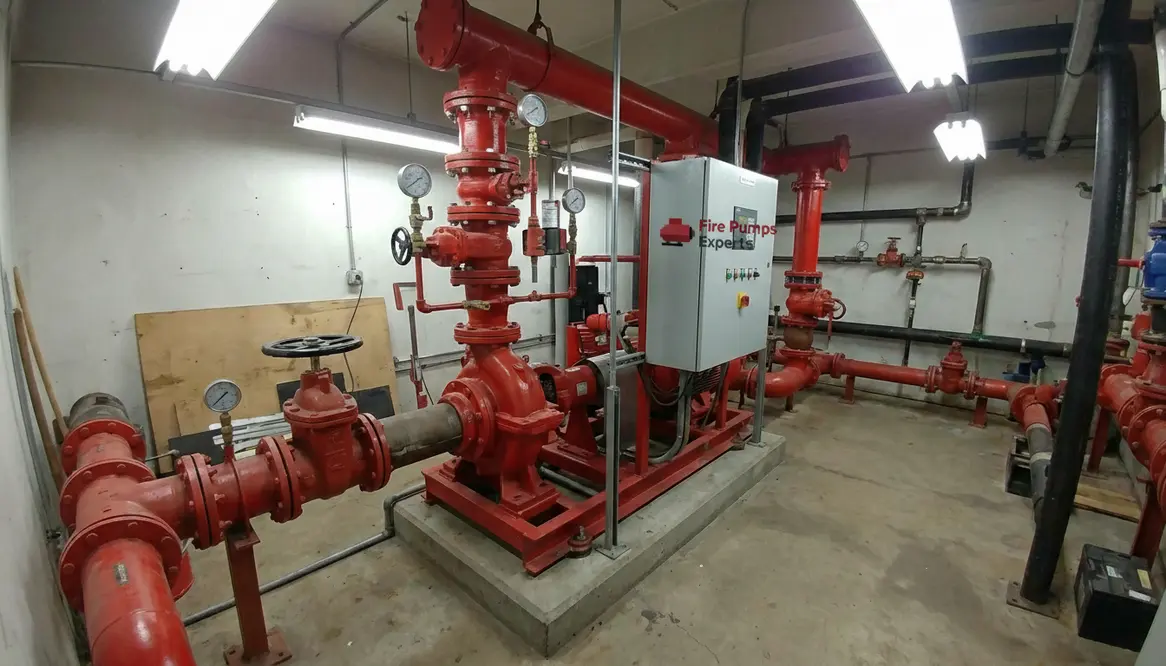
Here is where the details start to count. The pump room, power source, controls, suction line, valves, and testing points all shape system success. I like to think of this part as the “everybody must show up on time” section.
Key Design Points I Focus On
- Suction conditions must support stable pump operation and avoid air issues.
- Power supply must stay dependable, with backup where the design calls for it.
- Pump room access should stay clear, safe, and easy to reach during an emergency.
- Testing and maintenance space must allow regular checks without turning the room into a puzzle.
- Controls and alarms should make failures easy to spot quickly.
Moreover, I always look at how the fire pump fits into the wider sprinkler plan. A pump that looks great on paper can still struggle if pipe sizing, water storage, or demand zones do not match the design. In other words, the whole system has to play the same song.
EN 12845 Requirements For Operation, Testing, And Reliability
Compliance does not end when the pump gets installed. In fact, that is where the real work begins. EN 12845 requirements expect regular testing, inspection, and maintenance so the system keeps its performance over time. I always say a pump that never gets tested is like a superhero who never leaves the couch.
Routine checks help confirm that the pump starts correctly, reaches the right pressure, and holds stable performance. In addition, weekly or scheduled tests can reveal wear, leaks, weak power supply, or control faults before those problems grow teeth. For major buildings, this is not a nice extra. It is part of keeping the site safe and business ready.
Design And Operation Focus At A Glance
Design focus
Water supply, pump size, pressure, suction, backup power
Operation focus
Starting, flow stability, alarms, inspections, maintenance logs
Because industrial and commercial sites often run long hours, I also pay close attention to downtime risk. If a pump needs service, the site should have a clear plan to avoid leaving the sprinkler system exposed. That is where proper planning saves both money and nerves.
Common Mistakes I See With EN 12845 Fire Pumps
Even good facilities can slip here. One common mistake is choosing a pump that fits the building size on paper but not the real fire load. Another is ignoring suction issues, which can cause weak performance when the system needs strength. Also, some teams skip testing or keep poor records, and that can create trouble during audits or inspections.
I also see confusion around shared systems in large properties. A pump may support several zones, but each zone still needs the right pressure and flow. So, if one part of the building grows or changes use, the fire pump plan may need a fresh look. Buildings evolve, and fire safety should not stay stuck in the past like an old reboot nobody asked for.
FAQ: EN 12845 Fire Pump Requirements
These questions come up regularly when people start working through EN 12845 requirements on real projects.
Conclusion
If you manage a commercial, industrial, or major property building, I recommend treating EN 12845 fire pump requirements as a living part of your safety plan, not a one time checkbox. The right pump, the right setup, and the right testing can protect people, assets, and operations when it matters most. If you want clarity on your current system, now is the time to review it, tighten it, and make sure it is ready to perform.