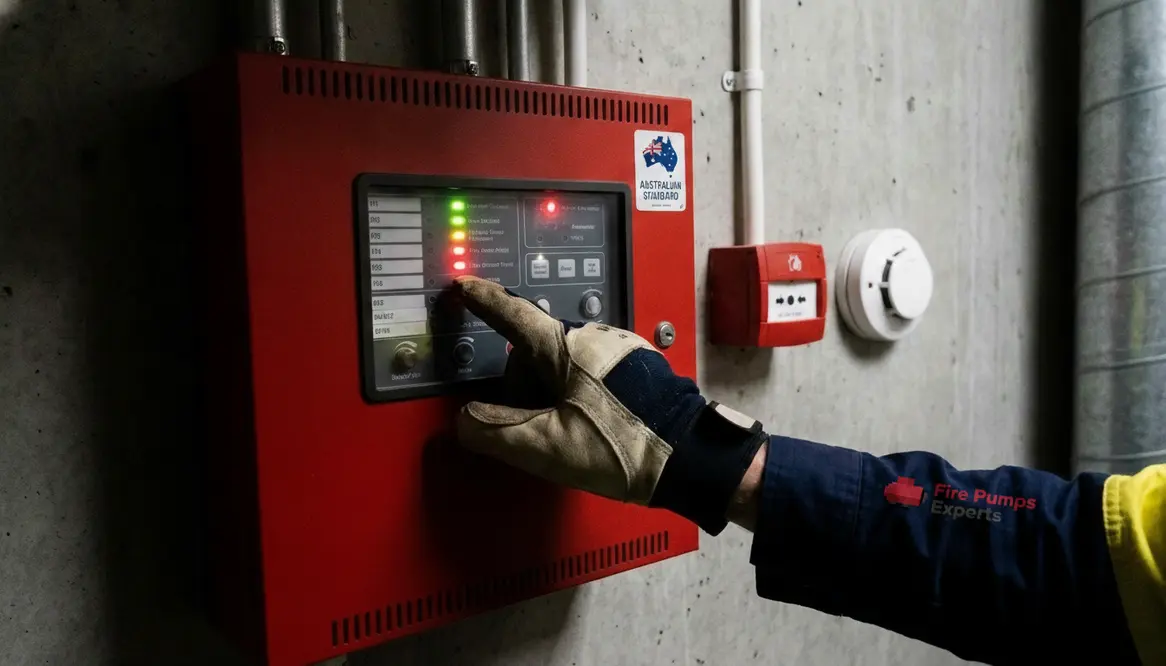
How I keep commercial and industrial sites compliant
For commercial and industrial facilities, I always link fire alarm planning with the rest of the fire protection setup. In many major buildings, the alarm system must work with sprinklers, emergency lighting, evacuation plans, and monitoring services. One weak link can slow the whole response.
If I want a practical model, I review professional guidance from providers who focus on major sites. For example, I might use Kord Fire protection services as a reference point when checking how a larger building should approach fire safety planning. In the same way, a site that needs pumping support can also review los angeles fire pump solutions for major facilities when looking at system support for large properties and industrial settings.
Most importantly, I keep the fire alarm solution matched to the building’s real use. A warehouse with tall storage racks has different needs from a multi level office, and a production site adds heat, dust, and machine noise into the mix. Therefore, I always think in terms of actual risk, not just paper compliance. Paper is useful, sure, but it does not put out fires. Tragic, really.
FAQs
If you want the short version of fire alarm requirements Australia, these are the questions that keep showing up.
What are fire alarm requirements Australia?
They are the rules and standards that guide fire alarm design, installation, testing, and maintenance in Australian buildings, so detection, alarm, and evacuation support actually work when it matters.
Do all commercial buildings need a fire alarm system?
Most commercial buildings need some form of fire alarm or detection system, but the exact setup depends on building class, size, and use. Fire alarm requirements Australia are risk-based, not one-size-fits-all.
How often should fire alarms be tested?
Testing should happen on a regular schedule, with routine checks and formal maintenance carried out by qualified professionals. A compliant system that is not maintained can quietly drift out of compliance under real-world conditions.
Who should install fire alarm systems?
A licensed and experienced fire protection professional should install the system so it meets Australian standards and site needs, aligned with fire alarm requirements Australia for your building type.
Can a building change affect compliance?
Yes. If the layout or use changes, the fire alarm system may need review or upgrade. Fire alarm requirements Australia expect the system to match the building, not the building to match the old assumptions.
Why does monitoring matter?
Monitoring helps send alerts quickly to the right people or services, which improves response time during a fire emergency and supports the overall fire safety strategy.
What is the biggest mistake people make?
They install a system and fail to maintain it. A silent fault can turn a compliant system into a useless one very fast, which is the whole point of ongoing maintenance under fire alarm requirements Australia.
Ready to make your site safer and more compliant?
Review your current fire alarm setup now, before a small issue grows teeth. If you manage a commercial or industrial building, assess the system, spot gaps, and plan the right upgrades so fire protection works when it matters most, not just during inspection time.
A final practical reminder (because life safety does not do “almost”)
Fire alarm requirements Australia are not just a checklist for the install day. They are a continuing job: design that fits the risk, coverage that reaches where people are, alarms that are audible and visible, and maintenance that keeps the system ready for the worst moment on the calendar. Keep the system matched to the building, and keep testing it like it means it.
Why maintenance matters more than most people think
A lot of people install a compliant system and then forget about it. That is a bit like buying a gym membership and calling yourself an athlete. The system needs regular testing, inspection, and service so it stays ready.
Under Australian fire safety practice, I would always schedule checks for:
alarm panel function
detector cleaning and testing
battery condition
signal transmission to monitoring
strobe and sounder operation
fault logs and response records
Because dust, heat, vibration, and simple wear can reduce performance, industrial sites need even more attention. Also, changes to the building can affect compliance. If you add a wall, expand storage, or change how the building is used, the alarm system may need an update. That is why I treat maintenance as part of compliance, not an afterthought.
How I keep commercial and industrial sites compliant
For commercial and industrial facilities, I always link fire alarm planning with the rest of the fire protection setup. In many major buildings, the alarm system must work with sprinklers, emergency lighting, evacuation plans, and monitoring services. One weak link can slow the whole response.
If I want a practical model, I review professional guidance from providers who focus on major sites. For example, I might use Kord Fire protection services as a reference point when checking how a larger building should approach fire safety planning. In the same way, a site that needs pumping support can also review los angeles fire pump solutions for major facilities when looking at system support for large properties and industrial settings.
Most importantly, I keep the fire alarm solution matched to the building’s real use. A warehouse with tall storage racks has different needs from a multi level office, and a production site adds heat, dust, and machine noise into the mix. Therefore, I always think in terms of actual risk, not just paper compliance. Paper is useful, sure, but it does not put out fires. Tragic, really.
FAQs
If you want the short version of fire alarm requirements Australia, these are the questions that keep showing up.
A final practical reminder (because life safety does not do “almost”)
Fire alarm requirements Australia are not just a checklist for the install day. They are a continuing job: design that fits the risk, coverage that reaches where people are, alarms that are audible and visible, and maintenance that keeps the system ready for the worst moment on the calendar. Keep the system matched to the building, and keep testing it like it means it.
Need
What I check
Early warning
Detector type and coverage
Clear alert
Alarm volume and visibility
Fast action
Manual call points and panel response
Reliable operation
Power supply and backup battery
I also check the backup power, because a fire alarm that quits during a power loss is not much help. Furthermore, the system must keep working long enough to support evacuation and emergency action.
Why maintenance matters more than most people think
A lot of people install a compliant system and then forget about it. That is a bit like buying a gym membership and calling yourself an athlete. The system needs regular testing, inspection, and service so it stays ready.
Under Australian fire safety practice, I would always schedule checks for:
alarm panel function
detector cleaning and testing
battery condition
signal transmission to monitoring
strobe and sounder operation
fault logs and response records
Because dust, heat, vibration, and simple wear can reduce performance, industrial sites need even more attention. Also, changes to the building can affect compliance. If you add a wall, expand storage, or change how the building is used, the alarm system may need an update. That is why I treat maintenance as part of compliance, not an afterthought.
How I keep commercial and industrial sites compliant
For commercial and industrial facilities, I always link fire alarm planning with the rest of the fire protection setup. In many major buildings, the alarm system must work with sprinklers, emergency lighting, evacuation plans, and monitoring services. One weak link can slow the whole response.
If I want a practical model, I review professional guidance from providers who focus on major sites. For example, I might use Kord Fire protection services as a reference point when checking how a larger building should approach fire safety planning. In the same way, a site that needs pumping support can also review los angeles fire pump solutions for major facilities when looking at system support for large properties and industrial settings.
Most importantly, I keep the fire alarm solution matched to the building’s real use. A warehouse with tall storage racks has different needs from a multi level office, and a production site adds heat, dust, and machine noise into the mix. Therefore, I always think in terms of actual risk, not just paper compliance. Paper is useful, sure, but it does not put out fires. Tragic, really.
FAQs
If you want the short version of fire alarm requirements Australia, these are the questions that keep showing up.
A final practical reminder (because life safety does not do “almost”)
Fire alarm requirements Australia are not just a checklist for the install day. They are a continuing job: design that fits the risk, coverage that reaches where people are, alarms that are audible and visible, and maintenance that keeps the system ready for the worst moment on the calendar. Keep the system matched to the building, and keep testing it like it means it.
How I set up detection, alarms, and visibility
Once I know the building type, I focus on detection and alerting. Fire alarm systems in Australia must detect danger early and make the warning easy to hear and see. In larger commercial and industrial sites, that often means smoke detectors, heat detectors, manual call points, warning devices, and a control panel that brings everything together.
Here is the part that matters most: the system must cover the right spaces. So, I look at exits, corridors, plant rooms, storage zones, loading areas, and any place where fire can start without much warning. I also make sure sound levels reach occupied areas. If people cannot hear the alarm, then the system has all the charm of a mute smoke signal.
Need
What I check
Early warning
Detector type and coverage
Clear alert
Alarm volume and visibility
Fast action
Manual call points and panel response
Reliable operation
Power supply and backup battery
I also check the backup power, because a fire alarm that quits during a power loss is not much help. Furthermore, the system must keep working long enough to support evacuation and emergency action.
Why maintenance matters more than most people think
A lot of people install a compliant system and then forget about it. That is a bit like buying a gym membership and calling yourself an athlete. The system needs regular testing, inspection, and service so it stays ready.
Under Australian fire safety practice, I would always schedule checks for:
alarm panel function
detector cleaning and testing
battery condition
signal transmission to monitoring
strobe and sounder operation
fault logs and response records
Because dust, heat, vibration, and simple wear can reduce performance, industrial sites need even more attention. Also, changes to the building can affect compliance. If you add a wall, expand storage, or change how the building is used, the alarm system may need an update. That is why I treat maintenance as part of compliance, not an afterthought.
How I keep commercial and industrial sites compliant
For commercial and industrial facilities, I always link fire alarm planning with the rest of the fire protection setup. In many major buildings, the alarm system must work with sprinklers, emergency lighting, evacuation plans, and monitoring services. One weak link can slow the whole response.
If I want a practical model, I review professional guidance from providers who focus on major sites. For example, I might use Kord Fire protection services as a reference point when checking how a larger building should approach fire safety planning. In the same way, a site that needs pumping support can also review los angeles fire pump solutions for major facilities when looking at system support for large properties and industrial settings.
Most importantly, I keep the fire alarm solution matched to the building’s real use. A warehouse with tall storage racks has different needs from a multi level office, and a production site adds heat, dust, and machine noise into the mix. Therefore, I always think in terms of actual risk, not just paper compliance. Paper is useful, sure, but it does not put out fires. Tragic, really.
FAQs
If you want the short version of fire alarm requirements Australia, these are the questions that keep showing up.
A final practical reminder (because life safety does not do “almost”)
Fire alarm requirements Australia are not just a checklist for the install day. They are a continuing job: design that fits the risk, coverage that reaches where people are, alarms that are audible and visible, and maintenance that keeps the system ready for the worst moment on the calendar. Keep the system matched to the building, and keep testing it like it means it.
What I check first in fire alarm requirements Australia
The first thing I look at is the building class and the risk level. Australia does not use one fixed setup for every site, because a warehouse, office tower, and factory do not behave the same way during a fire. That would be like giving Batman, a forklift, and a shopping mall the same life plan.
The National Construction Code and related Australian Standards shape the system design. In most cases, I pay close attention to:
the building use and size
the number of people inside
the fire load and layout
the need for automatic detection or manual alarm points
the connection to monitoring and emergency response
Because of that, I never treat alarm design as a guessing game. I check the site purpose first, then I match the system to the risk. That simple order saves time, money, and a lot of awkward conversations later.
How I set up detection, alarms, and visibility
Once I know the building type, I focus on detection and alerting. Fire alarm systems in Australia must detect danger early and make the warning easy to hear and see. In larger commercial and industrial sites, that often means smoke detectors, heat detectors, manual call points, warning devices, and a control panel that brings everything together.
Here is the part that matters most: the system must cover the right spaces. So, I look at exits, corridors, plant rooms, storage zones, loading areas, and any place where fire can start without much warning. I also make sure sound levels reach occupied areas. If people cannot hear the alarm, then the system has all the charm of a mute smoke signal.
Need
What I check
Early warning
Detector type and coverage
Clear alert
Alarm volume and visibility
Fast action
Manual call points and panel response
Reliable operation
Power supply and backup battery
I also check the backup power, because a fire alarm that quits during a power loss is not much help. Furthermore, the system must keep working long enough to support evacuation and emergency action.
Why maintenance matters more than most people think
A lot of people install a compliant system and then forget about it. That is a bit like buying a gym membership and calling yourself an athlete. The system needs regular testing, inspection, and service so it stays ready.
Under Australian fire safety practice, I would always schedule checks for:
alarm panel function
detector cleaning and testing
battery condition
signal transmission to monitoring
strobe and sounder operation
fault logs and response records
Because dust, heat, vibration, and simple wear can reduce performance, industrial sites need even more attention. Also, changes to the building can affect compliance. If you add a wall, expand storage, or change how the building is used, the alarm system may need an update. That is why I treat maintenance as part of compliance, not an afterthought.
How I keep commercial and industrial sites compliant
For commercial and industrial facilities, I always link fire alarm planning with the rest of the fire protection setup. In many major buildings, the alarm system must work with sprinklers, emergency lighting, evacuation plans, and monitoring services. One weak link can slow the whole response.
If I want a practical model, I review professional guidance from providers who focus on major sites. For example, I might use Kord Fire protection services as a reference point when checking how a larger building should approach fire safety planning. In the same way, a site that needs pumping support can also review los angeles fire pump solutions for major facilities when looking at system support for large properties and industrial settings.
Most importantly, I keep the fire alarm solution matched to the building’s real use. A warehouse with tall storage racks has different needs from a multi level office, and a production site adds heat, dust, and machine noise into the mix. Therefore, I always think in terms of actual risk, not just paper compliance. Paper is useful, sure, but it does not put out fires. Tragic, really.
FAQs
If you want the short version of fire alarm requirements Australia, these are the questions that keep showing up.
A final practical reminder (because life safety does not do “almost”)
Fire alarm requirements Australia are not just a checklist for the install day. They are a continuing job: design that fits the risk, coverage that reaches where people are, alarms that are audible and visible, and maintenance that keeps the system ready for the worst moment on the calendar. Keep the system matched to the building, and keep testing it like it means it.
What I check first in fire alarm requirements Australia
The first thing I look at is the building class and the risk level. Australia does not use one fixed setup for every site, because a warehouse, office tower, and factory do not behave the same way during a fire. That would be like giving Batman, a forklift, and a shopping mall the same life plan.
The National Construction Code and related Australian Standards shape the system design. In most cases, I pay close attention to:
the building use and size
the number of people inside
the fire load and layout
the need for automatic detection or manual alarm points
the connection to monitoring and emergency response
Because of that, I never treat alarm design as a guessing game. I check the site purpose first, then I match the system to the risk. That simple order saves time, money, and a lot of awkward conversations later.
How I set up detection, alarms, and visibility
Once I know the building type, I focus on detection and alerting. Fire alarm systems in Australia must detect danger early and make the warning easy to hear and see. In larger commercial and industrial sites, that often means smoke detectors, heat detectors, manual call points, warning devices, and a control panel that brings everything together.
Here is the part that matters most: the system must cover the right spaces. So, I look at exits, corridors, plant rooms, storage zones, loading areas, and any place where fire can start without much warning. I also make sure sound levels reach occupied areas. If people cannot hear the alarm, then the system has all the charm of a mute smoke signal.
Need
What I check
Early warning
Detector type and coverage
Clear alert
Alarm volume and visibility
Fast action
Manual call points and panel response
Reliable operation
Power supply and backup battery
I also check the backup power, because a fire alarm that quits during a power loss is not much help. Furthermore, the system must keep working long enough to support evacuation and emergency action.
Why maintenance matters more than most people think
A lot of people install a compliant system and then forget about it. That is a bit like buying a gym membership and calling yourself an athlete. The system needs regular testing, inspection, and service so it stays ready.
Under Australian fire safety practice, I would always schedule checks for:
alarm panel function
detector cleaning and testing
battery condition
signal transmission to monitoring
strobe and sounder operation
fault logs and response records
Because dust, heat, vibration, and simple wear can reduce performance, industrial sites need even more attention. Also, changes to the building can affect compliance. If you add a wall, expand storage, or change how the building is used, the alarm system may need an update. That is why I treat maintenance as part of compliance, not an afterthought.
How I keep commercial and industrial sites compliant
For commercial and industrial facilities, I always link fire alarm planning with the rest of the fire protection setup. In many major buildings, the alarm system must work with sprinklers, emergency lighting, evacuation plans, and monitoring services. One weak link can slow the whole response.
If I want a practical model, I review professional guidance from providers who focus on major sites. For example, I might use Kord Fire protection services as a reference point when checking how a larger building should approach fire safety planning. In the same way, a site that needs pumping support can also review los angeles fire pump solutions for major facilities when looking at system support for large properties and industrial settings.
Most importantly, I keep the fire alarm solution matched to the building’s real use. A warehouse with tall storage racks has different needs from a multi level office, and a production site adds heat, dust, and machine noise into the mix. Therefore, I always think in terms of actual risk, not just paper compliance. Paper is useful, sure, but it does not put out fires. Tragic, really.
FAQs
If you want the short version of fire alarm requirements Australia, these are the questions that keep showing up.
A final practical reminder (because life safety does not do “almost”)
Fire alarm requirements Australia are not just a checklist for the install day. They are a continuing job: design that fits the risk, coverage that reaches where people are, alarms that are audible and visible, and maintenance that keeps the system ready for the worst moment on the calendar. Keep the system matched to the building, and keep testing it like it means it.
Fire Alarm Requirements Australia Compliance Maintenance
When I talk about fire alarm requirements Australia, I am not talking about a box of wires and a loud noise for dramatic effect. I am talking about a life safety system that must work when the pressure is real and the clock feels very rude. In Australia, fire alarm rules guide how buildings detect smoke, raise an alert, and help people move out safely. For commercial and industrial sites, and especially major property buildings, the standard has to be solid, tested, and fit for purpose. If you get this wrong, the building does not just fail a check. It fails people.
So, let me walk you through the main rules, the common traps, and the practical steps I would focus on if I wanted a fire alarm setup that does its job without acting like a diva.
What I check first in fire alarm requirements Australia
The first thing I look at is the building class and the risk level. Australia does not use one fixed setup for every site, because a warehouse, office tower, and factory do not behave the same way during a fire. That would be like giving Batman, a forklift, and a shopping mall the same life plan.
The National Construction Code and related Australian Standards shape the system design. In most cases, I pay close attention to:
the building use and size
the number of people inside
the fire load and layout
the need for automatic detection or manual alarm points
the connection to monitoring and emergency response
Because of that, I never treat alarm design as a guessing game. I check the site purpose first, then I match the system to the risk. That simple order saves time, money, and a lot of awkward conversations later.
How I set up detection, alarms, and visibility
Once I know the building type, I focus on detection and alerting. Fire alarm systems in Australia must detect danger early and make the warning easy to hear and see. In larger commercial and industrial sites, that often means smoke detectors, heat detectors, manual call points, warning devices, and a control panel that brings everything together.
Here is the part that matters most: the system must cover the right spaces. So, I look at exits, corridors, plant rooms, storage zones, loading areas, and any place where fire can start without much warning. I also make sure sound levels reach occupied areas. If people cannot hear the alarm, then the system has all the charm of a mute smoke signal.
Need
What I check
Early warning
Detector type and coverage
Clear alert
Alarm volume and visibility
Fast action
Manual call points and panel response
Reliable operation
Power supply and backup battery
I also check the backup power, because a fire alarm that quits during a power loss is not much help. Furthermore, the system must keep working long enough to support evacuation and emergency action.
Why maintenance matters more than most people think
A lot of people install a compliant system and then forget about it. That is a bit like buying a gym membership and calling yourself an athlete. The system needs regular testing, inspection, and service so it stays ready.
Under Australian fire safety practice, I would always schedule checks for:
alarm panel function
detector cleaning and testing
battery condition
signal transmission to monitoring
strobe and sounder operation
fault logs and response records
Because dust, heat, vibration, and simple wear can reduce performance, industrial sites need even more attention. Also, changes to the building can affect compliance. If you add a wall, expand storage, or change how the building is used, the alarm system may need an update. That is why I treat maintenance as part of compliance, not an afterthought.
How I keep commercial and industrial sites compliant
For commercial and industrial facilities, I always link fire alarm planning with the rest of the fire protection setup. In many major buildings, the alarm system must work with sprinklers, emergency lighting, evacuation plans, and monitoring services. One weak link can slow the whole response.
If I want a practical model, I review professional guidance from providers who focus on major sites. For example, I might use Kord Fire protection services as a reference point when checking how a larger building should approach fire safety planning. In the same way, a site that needs pumping support can also review los angeles fire pump solutions for major facilities when looking at system support for large properties and industrial settings.
Most importantly, I keep the fire alarm solution matched to the building’s real use. A warehouse with tall storage racks has different needs from a multi level office, and a production site adds heat, dust, and machine noise into the mix. Therefore, I always think in terms of actual risk, not just paper compliance. Paper is useful, sure, but it does not put out fires. Tragic, really.
FAQs
If you want the short version of fire alarm requirements Australia, these are the questions that keep showing up.
A final practical reminder (because life safety does not do “almost”)
Fire alarm requirements Australia are not just a checklist for the install day. They are a continuing job: design that fits the risk, coverage that reaches where people are, alarms that are audible and visible, and maintenance that keeps the system ready for the worst moment on the calendar. Keep the system matched to the building, and keep testing it like it means it.
Fire Alarm Requirements Australia Compliance Maintenance
When I talk about fire alarm requirements Australia, I am not talking about a box of wires and a loud noise for dramatic effect. I am talking about a life safety system that must work when the pressure is real and the clock feels very rude. In Australia, fire alarm rules guide how buildings detect smoke, raise an alert, and help people move out safely. For commercial and industrial sites, and especially major property buildings, the standard has to be solid, tested, and fit for purpose. If you get this wrong, the building does not just fail a check. It fails people.
So, let me walk you through the main rules, the common traps, and the practical steps I would focus on if I wanted a fire alarm setup that does its job without acting like a diva.
What I check first in fire alarm requirements Australia
The first thing I look at is the building class and the risk level. Australia does not use one fixed setup for every site, because a warehouse, office tower, and factory do not behave the same way during a fire. That would be like giving Batman, a forklift, and a shopping mall the same life plan.
The National Construction Code and related Australian Standards shape the system design. In most cases, I pay close attention to:
the building use and size
the number of people inside
the fire load and layout
the need for automatic detection or manual alarm points
the connection to monitoring and emergency response
Because of that, I never treat alarm design as a guessing game. I check the site purpose first, then I match the system to the risk. That simple order saves time, money, and a lot of awkward conversations later.
How I set up detection, alarms, and visibility
Once I know the building type, I focus on detection and alerting. Fire alarm systems in Australia must detect danger early and make the warning easy to hear and see. In larger commercial and industrial sites, that often means smoke detectors, heat detectors, manual call points, warning devices, and a control panel that brings everything together.
Here is the part that matters most: the system must cover the right spaces. So, I look at exits, corridors, plant rooms, storage zones, loading areas, and any place where fire can start without much warning. I also make sure sound levels reach occupied areas. If people cannot hear the alarm, then the system has all the charm of a mute smoke signal.
Need
What I check
Early warning
Detector type and coverage
Clear alert
Alarm volume and visibility
Fast action
Manual call points and panel response
Reliable operation
Power supply and backup battery
I also check the backup power, because a fire alarm that quits during a power loss is not much help. Furthermore, the system must keep working long enough to support evacuation and emergency action.
Why maintenance matters more than most people think
A lot of people install a compliant system and then forget about it. That is a bit like buying a gym membership and calling yourself an athlete. The system needs regular testing, inspection, and service so it stays ready.
Under Australian fire safety practice, I would always schedule checks for:
alarm panel function
detector cleaning and testing
battery condition
signal transmission to monitoring
strobe and sounder operation
fault logs and response records
Because dust, heat, vibration, and simple wear can reduce performance, industrial sites need even more attention. Also, changes to the building can affect compliance. If you add a wall, expand storage, or change how the building is used, the alarm system may need an update. That is why I treat maintenance as part of compliance, not an afterthought.
How I keep commercial and industrial sites compliant
For commercial and industrial facilities, I always link fire alarm planning with the rest of the fire protection setup. In many major buildings, the alarm system must work with sprinklers, emergency lighting, evacuation plans, and monitoring services. One weak link can slow the whole response.
If I want a practical model, I review professional guidance from providers who focus on major sites. For example, I might use Kord Fire protection services as a reference point when checking how a larger building should approach fire safety planning. In the same way, a site that needs pumping support can also review los angeles fire pump solutions for major facilities when looking at system support for large properties and industrial settings.
Most importantly, I keep the fire alarm solution matched to the building’s real use. A warehouse with tall storage racks has different needs from a multi level office, and a production site adds heat, dust, and machine noise into the mix. Therefore, I always think in terms of actual risk, not just paper compliance. Paper is useful, sure, but it does not put out fires. Tragic, really.
FAQs
If you want the short version of fire alarm requirements Australia, these are the questions that keep showing up.
A final practical reminder (because life safety does not do “almost”)
Fire alarm requirements Australia are not just a checklist for the install day. They are a continuing job: design that fits the risk, coverage that reaches where people are, alarms that are audible and visible, and maintenance that keeps the system ready for the worst moment on the calendar. Keep the system matched to the building, and keep testing it like it means it.
Fire Alarm Requirements Australia Compliance Maintenance
When I talk about fire alarm requirements Australia, I am not talking about a box of wires and a loud noise for dramatic effect. I am talking about a life safety system that must work when the pressure is real and the clock feels very rude. In Australia, fire alarm rules guide how buildings detect smoke, raise an alert, and help people move out safely. For commercial and industrial sites, and especially major property buildings, the standard has to be solid, tested, and fit for purpose. If you get this wrong, the building does not just fail a check. It fails people.
So, let me walk you through the main rules, the common traps, and the practical steps I would focus on if I wanted a fire alarm setup that does its job without acting like a diva.
What I check first in fire alarm requirements Australia
The first thing I look at is the building class and the risk level. Australia does not use one fixed setup for every site, because a warehouse, office tower, and factory do not behave the same way during a fire. That would be like giving Batman, a forklift, and a shopping mall the same life plan.
The National Construction Code and related Australian Standards shape the system design. In most cases, I pay close attention to:
the building use and size
the number of people inside
the fire load and layout
the need for automatic detection or manual alarm points
the connection to monitoring and emergency response
Because of that, I never treat alarm design as a guessing game. I check the site purpose first, then I match the system to the risk. That simple order saves time, money, and a lot of awkward conversations later.
How I set up detection, alarms, and visibility
Once I know the building type, I focus on detection and alerting. Fire alarm systems in Australia must detect danger early and make the warning easy to hear and see. In larger commercial and industrial sites, that often means smoke detectors, heat detectors, manual call points, warning devices, and a control panel that brings everything together.
Here is the part that matters most: the system must cover the right spaces. So, I look at exits, corridors, plant rooms, storage zones, loading areas, and any place where fire can start without much warning. I also make sure sound levels reach occupied areas. If people cannot hear the alarm, then the system has all the charm of a mute smoke signal.
Need
What I check
Early warning
Detector type and coverage
Clear alert
Alarm volume and visibility
Fast action
Manual call points and panel response
Reliable operation
Power supply and backup battery
I also check the backup power, because a fire alarm that quits during a power loss is not much help. Furthermore, the system must keep working long enough to support evacuation and emergency action.
Why maintenance matters more than most people think
A lot of people install a compliant system and then forget about it. That is a bit like buying a gym membership and calling yourself an athlete. The system needs regular testing, inspection, and service so it stays ready.
Under Australian fire safety practice, I would always schedule checks for:
alarm panel function
detector cleaning and testing
battery condition
signal transmission to monitoring
strobe and sounder operation
fault logs and response records
Because dust, heat, vibration, and simple wear can reduce performance, industrial sites need even more attention. Also, changes to the building can affect compliance. If you add a wall, expand storage, or change how the building is used, the alarm system may need an update. That is why I treat maintenance as part of compliance, not an afterthought.
How I keep commercial and industrial sites compliant
For commercial and industrial facilities, I always link fire alarm planning with the rest of the fire protection setup. In many major buildings, the alarm system must work with sprinklers, emergency lighting, evacuation plans, and monitoring services. One weak link can slow the whole response.
If I want a practical model, I review professional guidance from providers who focus on major sites. For example, I might use Kord Fire protection services as a reference point when checking how a larger building should approach fire safety planning. In the same way, a site that needs pumping support can also review los angeles fire pump solutions for major facilities when looking at system support for large properties and industrial settings.
Most importantly, I keep the fire alarm solution matched to the building’s real use. A warehouse with tall storage racks has different needs from a multi level office, and a production site adds heat, dust, and machine noise into the mix. Therefore, I always think in terms of actual risk, not just paper compliance. Paper is useful, sure, but it does not put out fires. Tragic, really.
FAQs
If you want the short version of fire alarm requirements Australia, these are the questions that keep showing up.
A final practical reminder (because life safety does not do “almost”)
Fire alarm requirements Australia are not just a checklist for the install day. They are a continuing job: design that fits the risk, coverage that reaches where people are, alarms that are audible and visible, and maintenance that keeps the system ready for the worst moment on the calendar. Keep the system matched to the building, and keep testing it like it means it.
Fire Alarm Requirements Australia Compliance Maintenance
When I talk about fire alarm requirements Australia, I am not talking about a box of wires and a loud noise for dramatic effect. I am talking about a life safety system that must work when the pressure is real and the clock feels very rude. In Australia, fire alarm rules guide how buildings detect smoke, raise an alert, and help people move out safely. For commercial and industrial sites, and especially major property buildings, the standard has to be solid, tested, and fit for purpose. If you get this wrong, the building does not just fail a check. It fails people.
So, let me walk you through the main rules, the common traps, and the practical steps I would focus on if I wanted a fire alarm setup that does its job without acting like a diva.
What I check first in fire alarm requirements Australia
The first thing I look at is the building class and the risk level. Australia does not use one fixed setup for every site, because a warehouse, office tower, and factory do not behave the same way during a fire. That would be like giving Batman, a forklift, and a shopping mall the same life plan.
The National Construction Code and related Australian Standards shape the system design. In most cases, I pay close attention to:
the building use and size
the number of people inside
the fire load and layout
the need for automatic detection or manual alarm points
the connection to monitoring and emergency response
Because of that, I never treat alarm design as a guessing game. I check the site purpose first, then I match the system to the risk. That simple order saves time, money, and a lot of awkward conversations later.
How I set up detection, alarms, and visibility
Once I know the building type, I focus on detection and alerting. Fire alarm systems in Australia must detect danger early and make the warning easy to hear and see. In larger commercial and industrial sites, that often means smoke detectors, heat detectors, manual call points, warning devices, and a control panel that brings everything together.
Here is the part that matters most: the system must cover the right spaces. So, I look at exits, corridors, plant rooms, storage zones, loading areas, and any place where fire can start without much warning. I also make sure sound levels reach occupied areas. If people cannot hear the alarm, then the system has all the charm of a mute smoke signal.
Need
What I check
Early warning
Detector type and coverage
Clear alert
Alarm volume and visibility
Fast action
Manual call points and panel response
Reliable operation
Power supply and backup battery
I also check the backup power, because a fire alarm that quits during a power loss is not much help. Furthermore, the system must keep working long enough to support evacuation and emergency action.
Why maintenance matters more than most people think
A lot of people install a compliant system and then forget about it. That is a bit like buying a gym membership and calling yourself an athlete. The system needs regular testing, inspection, and service so it stays ready.
Under Australian fire safety practice, I would always schedule checks for:
alarm panel function
detector cleaning and testing
battery condition
signal transmission to monitoring
strobe and sounder operation
fault logs and response records
Because dust, heat, vibration, and simple wear can reduce performance, industrial sites need even more attention. Also, changes to the building can affect compliance. If you add a wall, expand storage, or change how the building is used, the alarm system may need an update. That is why I treat maintenance as part of compliance, not an afterthought.
How I keep commercial and industrial sites compliant
For commercial and industrial facilities, I always link fire alarm planning with the rest of the fire protection setup. In many major buildings, the alarm system must work with sprinklers, emergency lighting, evacuation plans, and monitoring services. One weak link can slow the whole response.
If I want a practical model, I review professional guidance from providers who focus on major sites. For example, I might use Kord Fire protection services as a reference point when checking how a larger building should approach fire safety planning. In the same way, a site that needs pumping support can also review los angeles fire pump solutions for major facilities when looking at system support for large properties and industrial settings.
Most importantly, I keep the fire alarm solution matched to the building’s real use. A warehouse with tall storage racks has different needs from a multi level office, and a production site adds heat, dust, and machine noise into the mix. Therefore, I always think in terms of actual risk, not just paper compliance. Paper is useful, sure, but it does not put out fires. Tragic, really.
FAQs
If you want the short version of fire alarm requirements Australia, these are the questions that keep showing up.
A final practical reminder (because life safety does not do “almost”)
Fire alarm requirements Australia are not just a checklist for the install day. They are a continuing job: design that fits the risk, coverage that reaches where people are, alarms that are audible and visible, and maintenance that keeps the system ready for the worst moment on the calendar. Keep the system matched to the building, and keep testing it like it means it.