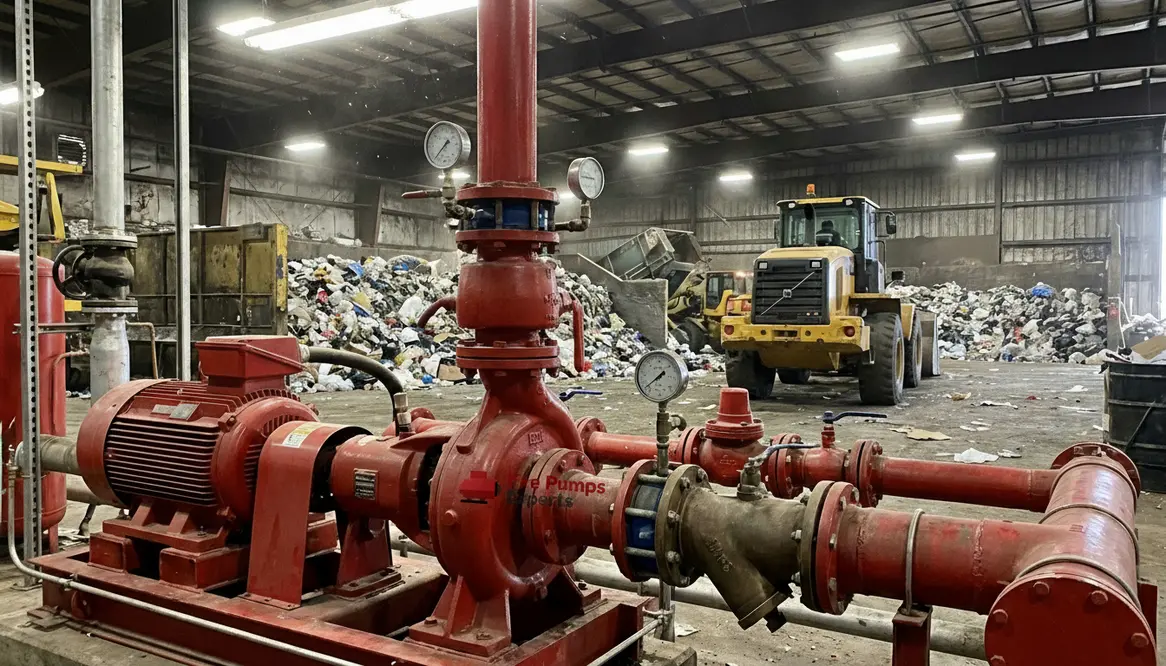
Fire Protection for High Risk Waste Sites Guide
I have walked through enough waste transfer stations to know one truth: they do not forgive mistakes. Piles of combustible material, heavy equipment, and constant motion create a setting where a small spark can turn into a headline. That is exactly why Fire protection for high-risk waste handling sites is not just a checkbox, it is a lifeline. When I design or evaluate fire pump systems for these facilities, I treat them like the quiet bodyguard in a movie. You do not notice them until everything depends on them. And when the moment comes, they better perform like the hero in the final scene.
Why this guide matters
High-risk waste sites push fire protection systems to their limits. This guide walks through how to make sure your pumps, water supply, and controls are ready for the worst shift of the year, not the best one.
Who it is for
Operators, owners, engineers, safety managers, and anyone who has ever looked at a waste pile and thought, “If that lights up, do we really have this under control?”
What fire pump capacity does a waste transfer station actually need?
I get this question a lot, usually right after someone realizes a garden hose is not going to cut it. The answer depends on hazard classification, but most waste transfer stations fall into high hazard industrial categories. That means higher flow rates and longer duration requirements.
Typical pump capacities
Typically, I size fire pumps to deliver between 1500 and 3000 gallons per minute. However, I do not stop at numbers on paper. I look at pile height, material type, and how quickly fire can spread. For example, compacted waste burns slower than loose debris, but once it goes, it goes big.
Additionally, I always factor in simultaneous system demand. Sprinklers, hose stations, and sometimes foam systems all compete for water. If your pump cannot handle that combined load, it is like bringing a butter knife to a sword fight. Technically a weapon, but not one I would bet on.
Key sizing questions
- How high and dense are your waste piles?
- How fast can material be moved or separated during a fire?
- What systems (sprinklers, hydrants, hoses, foam) may run at the same time?
- How long do you need to sustain full flow before help arrives?
Why Fire protection for high-risk waste handling sites needs margin
Systems sized without safety margin look fine during design and disappointing during a multi-alarm incident. High-risk waste facilities deserve capacity that assumes the worst combination of events, not the easiest.
Fire protection for high-risk waste handling sites: system design that actually works
Design is where theory meets reality. And reality in these facilities is messy. Dust, corrosion, vibration, and constant wear all try to sabotage your system.
I focus on three core elements:
Reliable water supply
I always ensure a dedicated and redundant water source. Municipal supply alone is often not enough. On site storage tanks with proper refill rates provide a safety net when demand spikes.
Durable fire pump types
Electric pumps are efficient, but I often pair them with diesel backup. Why? Because power outages love to show up uninvited during emergencies. Diesel pumps do not care about the grid. They just run.
Control and monitoring
Modern controllers give real time feedback. I want alerts before a failure, not after. Think of it as having a smoke alarm that does more than scream. It tells you what is wrong and where.
When these elements come together, the system does not just meet code. It earns trust.
How do I handle corrosive and debris heavy environments?
This is where things get interesting. Waste transfer stations are not clean rooms. They are closer to a battlefield for equipment.
I specify materials that can take a beating. Stainless steel components, coated piping, and sealed enclosures help extend system life. Moreover, I design layouts that reduce clogging risks. Debris screens and proper suction design prevent pumps from choking on unwanted surprises.
And yes, maintenance access matters. If your team cannot easily reach and service the pump, it will not get the attention it needs. Out of sight should not mean out of mind. Even Batman checks his gear.
Turning rough conditions into planned risks
Fire protection for high-risk waste handling sites is less about eliminating harsh conditions and more about designing so those conditions do not knock your system out at the worst possible time. Every corrosive cloud, every cloud of dust, and every flying scrap of debris should already be accounted for in your materials, layout, and maintenance strategy.
Key Risks I Plan For
- Heat buildup inside waste piles
- Hidden ignition sources
- Mechanical sparks from equipment
- Delayed fire detection
Design Moves I Make
- Higher flow safety margins
- Zoned suppression coverage
- Fast response pump activation
- Redundant system triggers
Codes, standards, and why I do not treat them as suggestions
Codes like NFPA 20 and NFPA 13 are not light reading, but they are essential. I follow them closely, not because I enjoy paperwork, but because they are built on lessons learned the hard way.
However, I do not stop at minimum requirements. Waste transfer stations often need enhanced protection strategies. That includes extended run times and higher density sprinkler designs.
Also, local regulations can add another layer. I always coordinate with authorities having jurisdiction early in the process. It saves time, avoids redesigns, and keeps everyone aligned. No one likes a last minute surprise, especially not the kind that involves ripping out installed equipment.
Where Fire protection for high-risk waste handling sites goes beyond the book
- Designing for longer pump run times than the minimum
- Adding redundancy in critical valves, controllers, and power sources
- Using layouts that support firefighting tactics, not just hydraulic calculations
- Ensuring documentation and drawings actually match what is in the field
Fire protection for high-risk waste handling sites: maintenance is where systems prove themselves
A fire pump system is only as good as its last test. I have seen perfectly designed systems fail because they were ignored after installation.
I recommend a strict testing schedule. Weekly churn tests, monthly inspections, and annual flow testing are non negotiable. These checks reveal wear, leaks, and performance issues before they become critical.
Additionally, I train facility teams to understand what normal operation looks like. When something sounds off, smells off, or feels off, they should act immediately. Trust your instincts. They are often faster than any sensor.
And let me say this plainly: skipping maintenance to save money is like skipping oil changes to save time. It works right up until it really does not.
A maintenance mindset that matches the hazard
- Weekly: verify pump starts, runs smoothly, and shows no obvious leaks.
- Monthly: inspect valves, controllers, batteries, fuel levels, and key indicators.
- Annually: full flow test to prove the system still delivers what it promised on day one.
- After every incident: treat the system like it just finished a marathon and give it a full checkup.
FAQ: Quick answers for busy operators
Operators rarely have time to read long reports between loader runs and safety meetings. These are the questions that come up most often when talking about Fire protection for high-risk waste handling sites and how to keep systems reliable when the site is working at full tilt.
Final thoughts and next steps
If you manage or design a waste transfer station, do not treat fire protection like background noise. It deserves center stage. I help facilities build systems that stand up to real world conditions, not just paperwork. Reach out and let us make sure your fire pump system is ready when it matters most. Because in this line of work, preparation is not optional. It is everything.
If you want to explore more about fire pumps, system types, and design ideas that fit tough industrial sites, you can start with resources at https://firepumps.org. Then take a fresh look at your own facility and ask one simple question: if a fire starts in the worst possible spot, will your system respond the way you think it will?