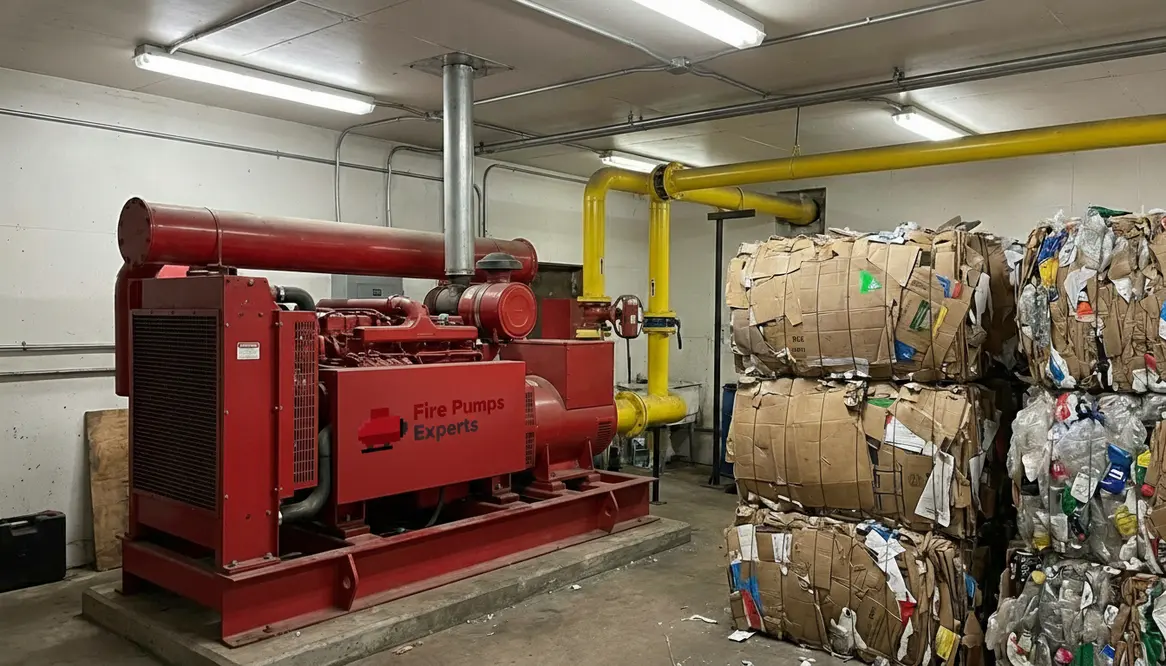
Fire Pumps for Recycling and Combustible Waste
How the right fire pump system quietly stands guard in high-risk recycling environments.
I have walked through more recycling facilities than I can count, and I can tell you this right away: fire does not care how noble your mission is. Paper dust, plastics, and mixed waste create a perfect storm. That is where Fire pump considerations for combustible waste streams enter the conversation early, not as an afterthought. In fact, I always bring them up within the first site visit, because once a fire starts in these environments, it moves fast and thinks even faster. So, let us talk about how the right fire pump system quietly stands guard, like a seasoned night watchman who has seen it all and still shows up on time.
Recycling facilities blend high fuel loads, constant motion, and plenty of ignition sources. That mix makes the pump room just as important as the baler room, even if it does not look nearly as exciting on a plant tour.
Understanding Fire pump considerations for combustible waste streams early helps avoid the classic mistake of trying to retrofit serious protection into a tight corner after a near-miss or a bad inspection.
Why recycling facilities demand specialized fire pump systems
Recycling plants are not your average commercial buildings. Instead, they are dynamic, ever shifting environments filled with unpredictable fuel sources. One day it is cardboard, the next it is shredded plastics, and sometimes it is a mystery pile that smells like it came straight out of a sci fi movie.
Because of this variability, I always design fire pump systems that can adapt to changing fire loads. A standard setup might look good on paper, however, it often falls short in real conditions. Therefore, I focus on high capacity pumps that maintain pressure even during peak demand.
Additionally, debris and dust can interfere with system performance. So, I ensure that suction sources remain clean and protected. Otherwise, you risk your pump choking at the exact moment it needs to perform. And trust me, that is not the kind of suspense anyone enjoys.
Unique fire behavior in recycled materials
Baled paper and plastics can smolder for hours before breaking out into open flame. Shredded material flashes quickly. Mixed waste burns unevenly, sending demand spikes to sprinklers that your pump has to handle without flinching. This is where Fire pump considerations for combustible waste streams move from theory to very real hydraulics.
Operational realities
- Frequent layout changes as equipment moves
- Seasonal swings in material type and volume
- Outdoor storage that shifts daily with incoming loads
All of that feeds directly into how hard your fire pump has to work when something ignites.
How do I size a fire pump for a recycling facility?
I start with hazard classification, but I do not stop there. Recycling operations often fall into Extra Hazard Group 2, yet that label alone does not capture the full picture.
First, I evaluate the type and volume of combustible materials. Then, I calculate the required flow and pressure based on sprinkler demand and hose streams. After that, I add a safety margin, because real life rarely follows neat calculations.
Moreover, I consider system expansion. Facilities grow, equipment changes, and storage heights increase. So, I size pumps with future demand in mind. It is a bit like buying a suit with room to breathe after a big lunch. Practical and necessary.
Key sizing checkpoints
- Confirm hazard classification and storage arrangements
- Review sprinkler design density and most demanding area
- Add hose stream requirements realistically used by operations
- Account for outdoor yards and exposed conveyors if they share the same pump
- Layer in growth potential so the pump is not obsolete after the next expansion
Fire pump considerations for combustible waste streams in system design
When I design for combustible waste streams, I focus on consistency and reliability. These fires burn unevenly, which means water demand can spike without warning.
To handle that, I prioritize:
- High flow capacity to match rapid fire spread
- Stable pressure control to support large sprinkler zones
- Durable components that tolerate dirty water conditions
At the same time, I avoid overly complex systems. Complexity may look impressive, however, it often introduces failure points. And in fire protection, simplicity is not just elegant, it is dependable.
What I prioritize
- Reliable diesel or electric drivers
- Redundant water supply options
- Accessible maintenance points
- Clear system monitoring
What I avoid
- Overengineered layouts
- Hidden or hard to reach valves
- Undersized suction piping
- Ignoring future expansion needs
Designing for dirty, combustible realities
Fire pump considerations for combustible waste streams are rarely clean and polished. Yard hydrants may share the same supply. Underground tanks may see silt and debris. Seasonal rain may change suction conditions. All of this nudges the design toward robust, forgiving equipment rather than fragile, high-strung systems that demand perfect conditions.
Power sources and redundancy that actually work
I have seen power outages turn a small incident into a full scale emergency. Therefore, I never rely on a single power source. Electric pumps are efficient, however, diesel pumps bring independence.
So, I often recommend a combination. If the grid fails, the diesel system steps in without hesitation. It is not flashy, but it works. Think of it as the backup singer who ends up stealing the show.
Additionally, I ensure fuel supply is secure and accessible. A diesel pump without fuel is just a very expensive decoration. And nobody budgets for decorations in fire protection.
Redundancy that matches the risk
- Clarify how long the facility can afford to be unprotected if one driver fails
- Verify diesel fuel storage supports realistic run times
- Confirm transfer switches and controls are easy to understand under stress
- Align generator sizing and priorities if you depend on standby power
Maintenance strategies that keep systems ready
A fire pump system is only as good as its last test. I say that often, and I mean it every time. Regular testing reveals hidden issues before they become real problems.
I recommend weekly churn tests and monthly flow tests, depending on system design. Furthermore, I make sure facility teams understand what normal operation looks like. Because when something sounds off, it usually is.
Also, recycling environments can be harsh. Dust, vibration, and moisture all take a toll. So, I build maintenance schedules that reflect those conditions. Skipping maintenance here is like skipping oil changes on a long road trip. You might get away with it, until you really do not.
Maintenance moves that pay off
- Keep suction strainers and tanks on a strict cleaning schedule
- Log every test run and trend discharge pressure over time
- Train operators to recognize “normal” sounds, vibrations, and start times
- Inspect surrounding housekeeping; trash and pallets do not belong near the pump room
Integrating fire pumps with broader facility protection
A fire pump does not operate in isolation. Instead, it supports a larger ecosystem that includes sprinklers, detection systems, and suppression strategies.
Therefore, I coordinate closely with system designers across disciplines. For example, conveyor systems often require targeted protection. Similarly, baling machines introduce concentrated fire risks.
By aligning the pump capacity with these systems, I ensure consistent performance. Otherwise, you end up with mismatched components that struggle to work together. And that is a bit like assembling a superhero team where nobody agrees on the plan.
Connecting the dots across the facility
- Conveyor spray systems that rely on the main fire pump
- Foam-water systems in high-risk areas such as shredders
- Hydrant coverage for yard storage and incoming load areas
- Monitors or cannons aimed at problem spots like bale storage
When Fire pump considerations for combustible waste streams are aligned with these pieces, the whole facility responds as one system instead of a scattered collection of parts.
FAQ: Fire pump systems in recycling facilities
What type of fire pump is best for recycling facilities?
I typically recommend horizontal split case or vertical turbine pumps due to their reliability and high capacity.
Do recycling facilities need diesel fire pumps?
Often yes. Diesel pumps provide backup when electrical power fails.
How often should fire pumps be tested?
Weekly visual checks and regular flow testing help ensure readiness.
Why are combustible waste streams a concern?
They create unpredictable fire loads that can spread quickly and require higher water demand.
Can one fire pump handle facility expansion?
If sized correctly from the start, it can support future growth without major upgrades.
For deeper technical guidance and standards around Fire pump considerations for combustible waste streams, reference resources such as https://firepumps.org alongside your applicable codes and insurer requirements.
Conclusion
When I design fire pump systems for recycling facilities, I do not chase perfection. I build for reality. Fires in these environments move fast, however, the right system moves faster. If your facility handles combustible materials, now is the time to evaluate your protection strategy. Reach out, take a closer look at your current setup, and make sure your fire pump system is ready to perform when it matters most.