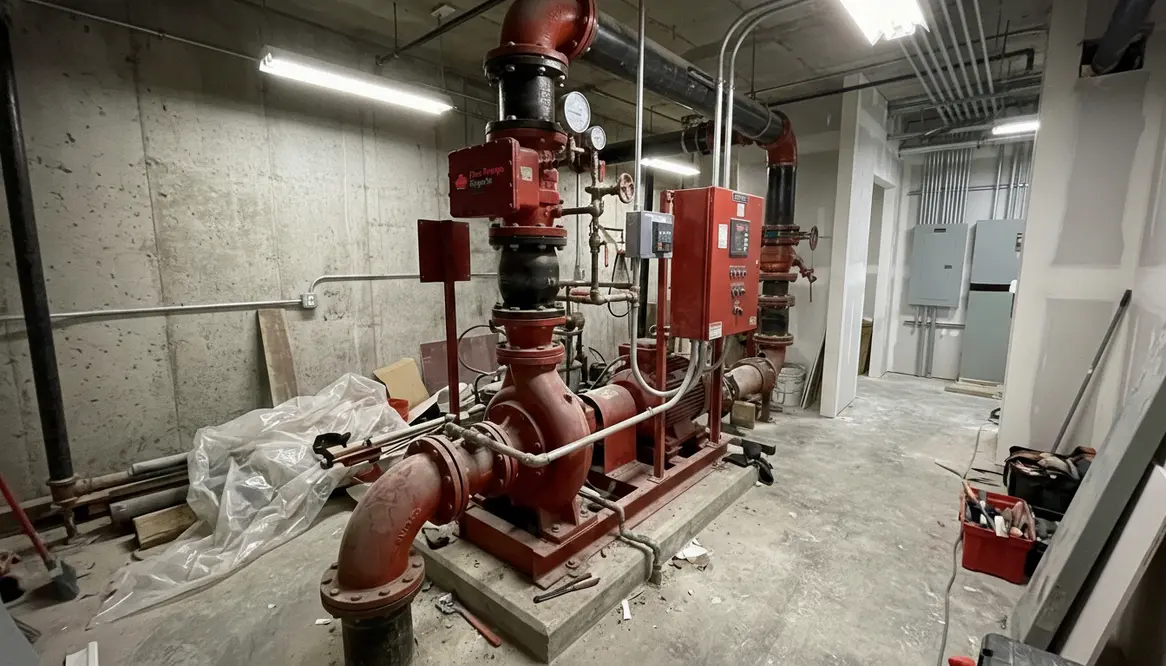
Fire Pump Adequacy After Renovation: Sizing and Capacity
When an Existing Fire Pump Is Still Adequate After Renovation
I have seen many owners worry that every renovation means a full fire pump replacement. In truth, that is not always the case. If the building changed, the system may still meet fire pump sizing needs, fire pump requirements, and fire pump capacity without a full swap. That said, I never guess. I look at the new layout, the hazard level, and the water demand before I call the pump “good enough.” In a big commercial or industrial property, one bad assumption can turn a routine upgrade into a very expensive plot twist.
Start with the renovation scope
I always begin by asking one simple thing: what changed? A new tenant finish out is not the same as a warehouse expansion, and a small office update is not the same as adding a high rack storage area. If the renovation did not raise the fire load, increase the protected area, or change the sprinkler design, the existing pump may still work fine.
Still, I check the details. I look for added floor area, higher ceilings, new storage heights, and changes in use. For example, when a building shifts from light use to heavy industrial storage, the pump may no longer keep up. On the other hand, if the renovation only shifted walls inside the same hazard class, the pump may remain adequate. That is the calm truth, even if the permit office wants a dramatic sequel.
Fire pump sizing after a building update
Fire pump sizing tells me whether the pump can still deliver the needed pressure and flow after the renovation. I compare the current system demand to the pump curve, suction supply, and total sprinkler and standpipe load. If the pump still matches the most demanding scenario, I have a strong case for keeping it.
I also check the water source. A pump can look strong on paper, yet struggle if the supply tank, city main, or suction line changed. So I do not stop at the nameplate. I review the whole path from source to discharge. That is where the real story lives, and yes, it is less glamorous than a movie chase scene, but far more useful.
How I judge fire pump requirements in commercial spaces
For commercial and industrial properties, I judge fire pump requirements against the current code path, system layout, and building use. I ask whether the renovation changed the hazard class, the sprinkler density, or the standpipe need. If the answer is no, the pump may still meet the job. If the answer is yes, I move deeper into the numbers.
Here is the quick rule I use:
- If the demand stayed the same or dropped, the pump may still be fine
- If the building grew, the pump may need recheck or upgrade
- If the hazard level rose, I treat the old setup with caution
- If the water supply changed, I verify the full system again
I also compare the renovation to the fire protection design basis. That means I look at the original approved plans, not just the shiny new finish. A pump does not care that the lobby now has nice lighting and a coffee bar. It cares about demand, pressure, and flow. The pump is practical like that.
What fire pump capacity tells me
Fire pump capacity gives me the clearest clue on whether the existing pump still fits the building. If the pump can supply the required gallons per minute at the needed pressure, and if it does so within the code limits, the pump may stay in service. However, I never rely on capacity alone. I also test performance under real system conditions.
Signs the pump may still be adequate
- The renovation did not expand the protected area
- The occupancy and fire load stayed similar
- The sprinkler and standpipe demand did not rise
- The pump test results still match design need
Signs the pump may no longer be enough
- The building use became more severe
- Storage heights or rack layouts increased
- The water supply dropped or changed
- The pump no longer meets demand at the system edge
This is where I like to bring in a trusted system review. For deeper guidance, I often point owners to los angeles fire pump service and review guidance as a useful reference for commercial properties. I also keep related protection plans in view through commercial electrical support for fire systems and broader building protection insight from Australian fire sprinkler services. A renovation may look local, but the rules of good protection travel well.
When I say yes to keeping the existing pump
I say yes when the inspection, test data, and code review all line up. The pump must still support the revised system demand, and the water source must remain stable. Also, the discharge pressure must stay within safe limits for the piping and devices. If the pump passes all that, replacement may be unnecessary.
That said, I still recommend a documented review after any major renovation. The review should include pump test results, updated hydraulic demand, and any system changes. That record helps during inspections, insurance checks, and future upgrades. It also keeps everyone from playing guesswork roulette, which is a terrible game in a fire protection room.
FAQ
More questions owners ask after upgrades
Here are a few of the most common “keep it or swap it” questions that show up right after construction dust settles.
- What is the first thing I should check? Whether the renovation changed the hazard, area, or water demand, then compare it against the current pump curve and suction supply.
- Does a small remodel always require a new pump? No. Small changes often leave the fire pump sizing and fire pump capacity within the existing design envelope.
- Why do test results matter so much? They show real performance, not just paper capacity, and they confirm the pump can deliver under system conditions.
- Who should review the pump after a major change? A qualified fire protection professional should review the updated hydraulic demand and fire pump requirements.
Conclusion
If your commercial or industrial building just went through renovation, I recommend a full fire pump review before you assume anything. The right answer depends on demand, layout, water supply, and code. When the existing system still meets the need, you can save time and money. However, when the building changed in a major way, I would rather catch the gap now than discover it during an emergency. Reach out, get the pump checked, and make the next step a safe one.