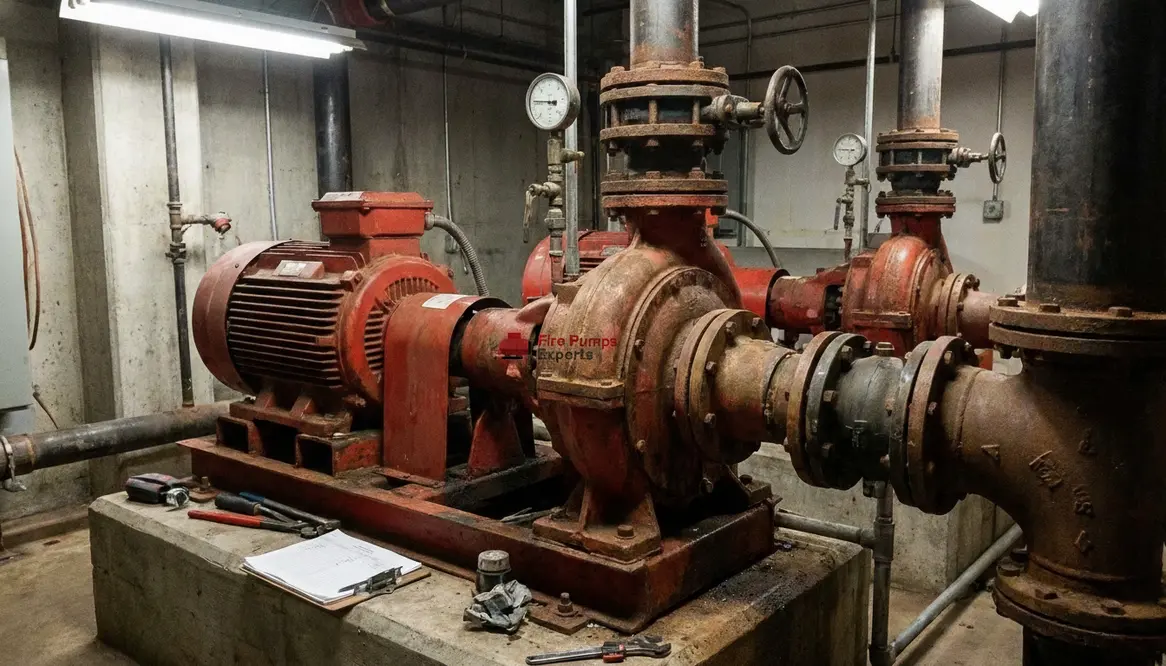
When Should a Fire Pump Be Rebuilt Instead of Replaced?
I have seen enough fire pump rooms to know one thing for sure: these machines do not fail with style. They usually cough, rattle, leak, and then force everyone into a hard choice between fire pump repair, fire pump replacement, or a fire pump rebuild. If you manage a commercial or industrial facility, or a major property building, that choice matters. It affects safety, downtime, code compliance, and budget. So let me walk you through when a rebuild makes sense, when replacement wins, and how I decide which path serves the building best.
Know What the Pump Is Telling You
The first step is simple: listen to the pump and read the signs. If I see worn bearings, minor seal leaks, shaft wear, or a motor that still runs well, I usually think fire pump rebuild first. However, if the casing is cracked, the impeller is badly damaged, or corrosion has eaten through key parts, the case starts to lean toward fire pump replacement. A good pump does not need to be perfect to stay useful. It just needs enough sound structure to justify the work. That is where a rebuild can save time and money without gambling with performance.
In many cases, I also look at the unit’s age and service history. If the pump has had steady maintenance and the main body is still solid, a rebuild can bring it back to life. But if the same pump has needed repeated fixes like a side character in a long running sitcom, then I start asking harder questions. At that point, continuing with patchwork may only delay the real answer.
When A Fire Pump Rebuild Makes Sense
Use a rebuild when the pump body is still strong. That is the short version. The longer version is a little more practical. I recommend fire pump rebuild work when:
- The casing has no major cracks or severe corrosion
- The shaft, bearings, and seals can be restored
- The motor and controller still meet the building’s needs
- The pump has not suffered repeated major failures
- The unit still matches the system demand for the facility
Because rebuild work focuses on the worn internal parts, it often gives a strong return for money spent. Also, it can reduce downtime compared with a full swap, especially when the rest of the fire protection system remains in good shape. That matters in commercial and industrial settings where every hour offline can feel like a small disaster movie, minus the popcorn.
Still, I never treat a rebuild as a cosmetic fix. I use it when the pump can truly return to reliable duty. If the core machine is sound, a fire pump rebuild can make smart business sense and keep the site protected.
Use This Comparison to Choose the Right Path
Here is a simple way I compare the choices. I look at the pump condition, the risk, and the cost over time. A fire pump repair may solve a small issue. A fire pump rebuild may restore the unit. A fire pump replacement may give the cleanest long term result. The right choice depends on more than price today.
However, I also factor in future risk. If parts are hard to get, if the system no longer matches the building demand, or if the pump has become a constant source of trouble, fire pump replacement may save more in the long run. In other words, I do not just ask, “Can we fix it?” I ask, “Should we keep feeding this thing spare parts like it is a hungry dragon?”
What I Check Before I Approve a Full Replacement
fire pump replacement becomes the right call when the pump has crossed the line from repairable to unreliable. I look for deep rust, cracked housing, repeated overheating, or performance that falls below what the facility needs. I also consider age. Older units may still run, but if they no longer support current code, pressure, or flow needs, replacing them can be the safer choice.
That said, I never rush to replace a pump just because it looks tired. I want hard facts. I review test results, service records, and the condition of the connected system. Then I compare the cost of fire pump rebuild plus future maintenance against the cost of a new unit. Sometimes the old pump still has a few strong seasons left. Other times, replacement is the adult decision nobody wants, but everyone needed.
If you want to see a broader service example, I also point facility teams to los angeles fire pump service for more context on fire pump care in a demanding market.
For related system support, the team at fire pump services and electrical service support can help keep larger building systems aligned.
How I Decide With Confidence
I never base this choice on guesswork. First, I inspect the pump and test it. Next, I review the facility’s risk level, downtime limits, and budget. Then I compare expected life after service. If a fire pump rebuild gives reliable service for years, I lean that way. If it only buys a little time, I move toward fire pump replacement.
For large properties and industrial sites, I also think about planning. A smart decision today can reduce future service calls, lower emergency risk, and keep the system ready when it matters most. And yes, that is the kind of boring heroism that never makes the evening news, but it absolutely keeps the lights on, or in this case, the fire protection ready.
FAQ
If your commercial or industrial facility needs a clear answer, I can help you weigh the numbers, the risk, and the real condition of the pump. Reach out for a practical review, and I will help you decide whether fire pump repair, fire pump rebuild, or fire pump replacement gives your building the safest and smartest path forward. In this line of work, confidence comes from facts, and facts keep systems ready when it counts most.