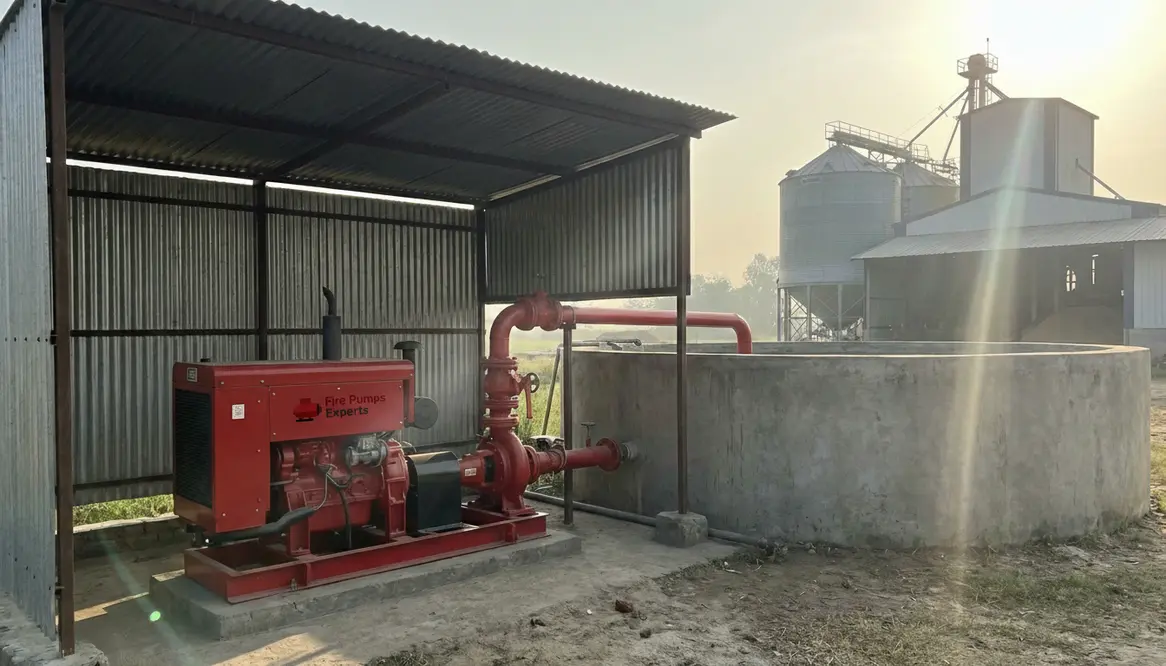
Fire Pump Agriculture Punjab India Design Guide
I have spent years around industrial sites where safety is not just a checklist but a quiet promise humming in the background. When I talk about fire pump agriculture Punjab India, I am not thinking about theory. I am thinking about real processing plants, grain silos, and food facilities where one spark could turn productivity into loss. And in Punjab, where agriculture is both livelihood and legacy, fire protection systems must work with precision and calm certainty. Because when things go wrong, there is no time for drama. This is not a Bollywood climax. This is engineering doing its job.
Understanding Risk in Agricultural Processing Facilities
I always begin with risk. Not the kind you read about in a manual, but the kind you feel when standing inside a facility filled with combustible dust, drying equipment, and electrical loads working overtime. Agricultural processing sites in Punjab often deal with grains, husk, oil extraction, and packaging. Each of these brings its own fire behavior.
Moreover, dust accumulation can ignite faster than people expect. One small ignition source, and suddenly the environment behaves like a chain reaction. Therefore, I design systems that assume the worst while quietly preventing it. It is a bit like carrying an umbrella in Punjab monsoon season. You may not need it every day, but when you do, you are very glad it is there.
How Do I Design a Fire Pump System That Actually Works?
I keep things practical. First, I calculate demand based on hazard classification, building size, and process type. Then I match that demand with pump capacity, ensuring consistent pressure across the system.
However, design is not just numbers. I also consider:
- Water source reliability is critical. Many facilities depend on underground tanks or reservoirs, so I ensure redundancy.
- Pump type selection matters. Electric pumps are efficient, but diesel pumps provide backup when power fails. And in Punjab, power cuts are not exactly rare events.
- System integration ties everything together. Sprinklers, hydrants, and hose reels must all receive steady pressure without conflict.
In addition, I avoid overdesign. Bigger is not always better. A system that is too large can create pressure imbalance and maintenance headaches. Think of it like ordering a feast when all you needed was a solid meal.
Design Priorities for Fire Pump Agriculture Punjab India Projects
When I approach fire pump agriculture Punjab India projects, I focus on three priorities that never change, even if everything else does.
Reliability
Reliability comes first. The system must start instantly and run without hesitation.
Compliance
Compliance follows closely. I align designs with national codes and global standards, ensuring facilities meet both legal and insurance requirements.
Ease of maintenance
Ease of maintenance keeps the system alive long after installation. If a system is too complex, it will fail quietly over time.
Consequently, I always design with the operator in mind. Because at the end of the day, someone has to test, inspect, and trust that system.
Key Components That Make or Break the System
Fire Pump Unit
I choose between horizontal split case or vertical turbine pumps based on water source and layout.
Controller Panel
This acts like the brain. It ensures automatic startup and monitors system health.
Jockey Pump
A small but mighty component that maintains pressure and prevents unnecessary pump starts.
Storage Tanks
I size these to sustain operations during extended fire scenarios.
Piping Network
Proper sizing and layout reduce friction loss and maintain pressure balance.
Backup Power
Diesel engines or generators ensure operation when the grid fails.
Each component plays its part. Remove one, and the system becomes unreliable. It is like a band losing its drummer. The rhythm falls apart, and suddenly nothing sounds right.
Local Challenges I Account for in Punjab Facilities
Designing for Punjab is not the same as designing for any other region. Climate, infrastructure, and operational habits shape every decision I make.
For instance, water quality can affect pump performance over time. Therefore, I include filtration and corrosion resistant materials where needed. Additionally, temperature variations can impact equipment life, so I ensure proper housing and ventilation.
Another factor is facility expansion. Many agricultural processors grow quickly. So I design systems with future scalability in mind. Because tearing out a fire system later is about as fun as rewatching a bad sequel. Necessary sometimes, but always avoidable with better planning.
Testing, Commissioning, and Long Term Performance
I never treat installation as the finish line. In fact, it is just the beginning. Once the system is in place, I run performance tests to confirm flow rate, pressure, and automatic activation.
After that, I recommend routine testing schedules. Weekly churn tests, monthly inspections, and annual performance reviews keep everything in check. Moreover, trained staff make a huge difference. A well designed system still needs human awareness.
Because when an emergency happens, the system should not hesitate. It should respond like a seasoned professional who has done this a thousand times before.
FAQ Quick Answers
What type of fire pump is best for agricultural processing plants?
Horizontal split case and vertical turbine pumps are most common due to reliability and capacity.
Why is diesel backup important?
It ensures the system runs during power failures, which are common in industrial zones.
How often should fire pumps be tested?
Weekly basic tests and annual full performance testing are recommended.
What is the biggest fire risk in these facilities?
Combustible dust and processing heat sources create the highest risk.
Can systems be expanded later?
Yes, if designed with scalability in mind from the start.
Why Fire Pump Design Matters So Much In Punjab
In regions where agriculture keeps the economy moving, fire protection is not a luxury add-on; it is part of operational design. When a site is planned around grain drying, oil extraction, or milling, fire loads and ignition sources multiply quietly in the background.
That is why I treat every fire pump agriculture Punjab India project as a reliability exercise. I am not just looking at pumps and pipes; I am looking at how quickly that system will respond on the worst day a facility might ever face.
Bringing It Together For Real Facilities
From drawings to running systems
On paper, any layout can look impressive. In the field, things are messier. Valves get hidden behind stacked bags, access to pump rooms slowly shrinks, and operators are asked to remember far too many things.
So in every fire pump agriculture Punjab India setup I work on, I walk through the operator’s reality. Can they reach key valves during an emergency? Are controllers labeled in plain, clear language? Is the test header somewhere that makes weekly testing painless instead of a chore that gets skipped?
Documentation and training
A quiet but essential part of design is documentation. Not the dusty binder that no one reads, but clear as-built drawings, pump curves, controller settings, and step-by-step test procedures that operators can actually follow.
When I hand over a fire pump agriculture Punjab India project, I want the team on site to feel like they own the system, not like they just inherited a mysterious box of valves and alarms.
Conclusion and Next Steps
If you are responsible for a processing facility, I would not leave fire protection to chance or guesswork. A well designed system protects assets, operations, and lives without making a fuss about it. If you are planning or upgrading a facility in Punjab, now is the time to act. Reach out, assess your risks, and build a system that works quietly in the background so your business can move forward without interruption.