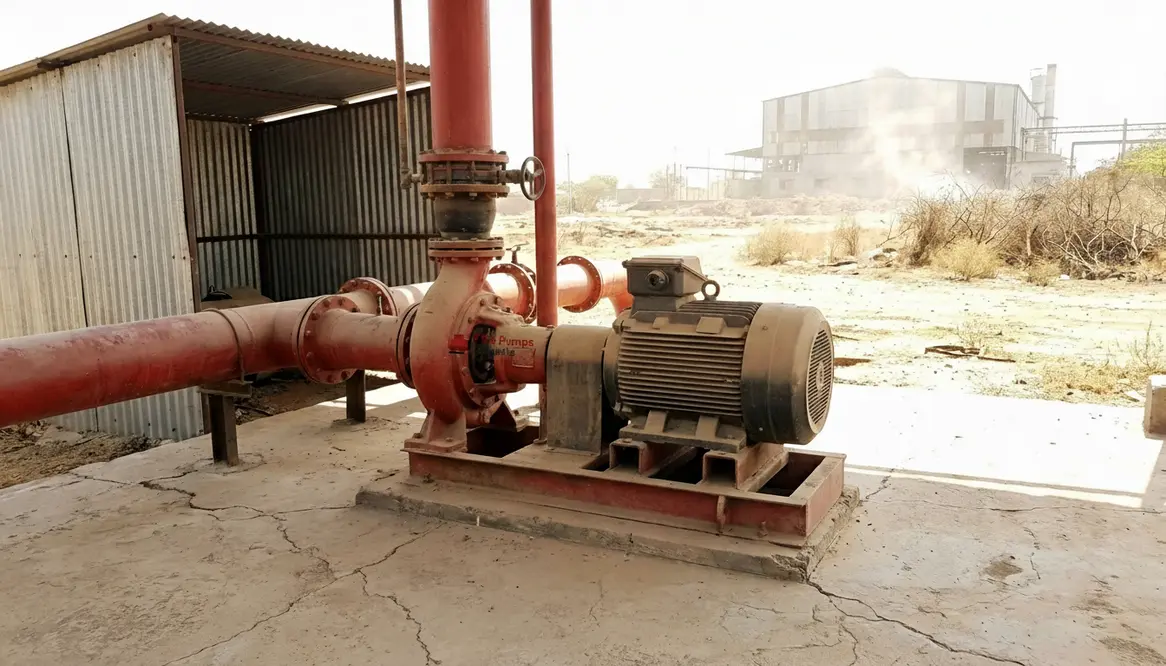
Fire Pump Extreme Heat Rajasthan Solutions
I have spent enough time around industrial systems to know that heat changes everything. In Rajasthan, where summer feels like it has a personal vendetta, fire protection cannot afford to blink. When I talk about fire pump extreme heat Rajasthan, I am not talking about theory. I am talking about real systems, running under pressure, inside facilities that never sleep. Power plants, manufacturing hubs, and large commercial buildings all depend on reliability that does not melt under stress. And yes, the sun out there does not negotiate.
Why High Temperatures Demand Smarter Fire Pump Design
Heat is not just uncomfortable. It is a system disruptor. As temperatures climb, materials expand, lubricants thin out, and electrical components start acting like they skipped their morning coffee. Therefore, I always emphasize that fire pumps in hot regions need more than standard specifications.
For example, seals and bearings wear faster in extreme heat. As a result, I recommend using heat resistant materials that maintain integrity even when the environment feels like an oven. Additionally, cooling systems become essential rather than optional. Without them, efficiency drops, and downtime creeps in like an uninvited guest.
In Rajasthan’s industrial zones, I have seen how ambient heat alone can push equipment beyond safe limits. So, designing for these conditions is not overengineering. It is basic survival.
Why “standard” is not enough in Rajasthan
Systems designed for mild climates struggle when thrown into fire pump extreme heat Rajasthan conditions. The baseline has to change, from material selection to monitoring philosophy, or the entire protection strategy becomes a gamble.
How do fire pump systems survive extreme heat in Rajasthan?
I approach this question the same way I would approach a high stakes movie plot. You prepare for the worst and then add a backup plan for your backup plan. Systems built for fire pump extreme heat Rajasthan conditions rely on a few critical strategies.
- First, proper ventilation. Pump rooms must allow heat to escape, or else temperatures build up quickly.
- Second, insulation. Sensitive components need shielding from direct heat exposure.
- Third, smart monitoring. Sensors track temperature changes and trigger alerts before failure occurs.
And yes, redundancy plays a starring role. Because when one component fails, the system should not collapse like a poorly written sequel. Instead, it should adapt and continue running.
Layered defense for unforgiving climates
Practical designs for fire pump extreme heat Rajasthan scenarios often stack safeguards: dedicated ventilation paths, separate electrical enclosures, and alarms that highlight heat stress long before the system reaches a breaking point.
Key Components That Perform Under Rajasthan Heat
I often tell clients that not all components are created equal. In extreme climates, the difference between average and specialized parts becomes obvious very quickly.
Left Column
- High temperature rated motors that resist overheating
- Durable seals designed for thermal expansion
- Advanced coatings that prevent corrosion and wear
Right Column
- Efficient cooling systems to stabilize operations
- Heat tolerant wiring and control panels
- Backup power systems to ensure continuity
Moreover, I pay close attention to material selection. Metals and composites must handle both heat and stress without losing strength. Because when the temperature rises, weak components do not just fail. They fail dramatically.
Where the right parts quietly save the day
In real-world fire pump extreme heat Rajasthan installations, success often comes down to unglamorous decisions: specifying insulation classes correctly, choosing bearings with the right temperature tolerance, and making sure coatings can endure sand, dust, and brutal sun.
Maintenance Strategies That Actually Work in Desert Conditions
Maintenance in Rajasthan is not a routine task. It is a discipline. I treat it like keeping a classic car running in the middle of a desert road trip. Skip one check, and suddenly you are stuck.
Regular inspections become more frequent in high temperature environments. I focus on lubrication levels, alignment, and cooling efficiency. Additionally, predictive maintenance tools help detect early signs of wear. This approach saves both time and costly shutdowns.
Another key factor is cleaning. Dust and heat together create a perfect storm. Therefore, keeping components free from debris ensures better airflow and performance. It is not glamorous work, but it is effective.
A maintenance rhythm that matches the climate
When maintenance schedules are tuned to local conditions, fire pump extreme heat Rajasthan systems stop being constant troublemakers and start behaving like dependable workhorses, even through the longest hot seasons.
Designing for Industrial and Commercial Reliability
When I design or evaluate systems for large facilities, I think beyond basic compliance. Industrial and commercial buildings demand continuous operation. Therefore, fire pump systems must integrate seamlessly with broader safety infrastructure.
This includes automated controls, real time monitoring, and integration with fire detection systems. Additionally, I consider load demands carefully. Because underestimating capacity in a high heat region is like bringing a fan to a wildfire.
In Rajasthan, I have seen facilities that thrive because they invest in robust systems early. On the other hand, I have also seen what happens when corners are cut. Spoiler alert. It is not pretty.
From code compliant to climate ready
Reliability in harsh zones is less about heroic specifications and more about aligning every design decision with one reality: the fire pump extreme heat Rajasthan combination will test every weak link the moment it matters most.
Fire Pump Extreme Heat Rajasthan: Lessons from the Field
Experience has a way of teaching lessons that manuals cannot. One thing I have learned is that adaptability matters. Systems must handle sudden temperature spikes without hesitation.
Additionally, training plays a major role. Operators need to understand how heat impacts performance and what warning signs to watch for. Because even the best system can fail if handled incorrectly.
And yes, sometimes the simplest solutions work best. Improved airflow, better placement, and thoughtful design adjustments can make a noticeable difference. It is not always about adding complexity. Sometimes, it is about removing what does not belong.
Field wisdom that outlives the heatwave
Over time, patterns emerge. The sites that respect the limits of fire pump extreme heat Rajasthan conditions, invest in training, and keep designs clean and accessible are the ones that keep running when everyone else is scrambling.
FAQs
Conclusion
If you are managing a commercial or industrial facility in Rajasthan, now is the time to take heat seriously. I encourage you to evaluate your systems, upgrade where needed, and invest in solutions built for extreme environments. A well designed fire pump system does more than meet codes. It protects operations, assets, and lives. Reach out to experts who understand these conditions and build systems that stand strong when the temperature rises. For deeper technical resources and reference material, you can explore sites such as https://firepumps.org while tailoring every decision to the on-ground reality you face.