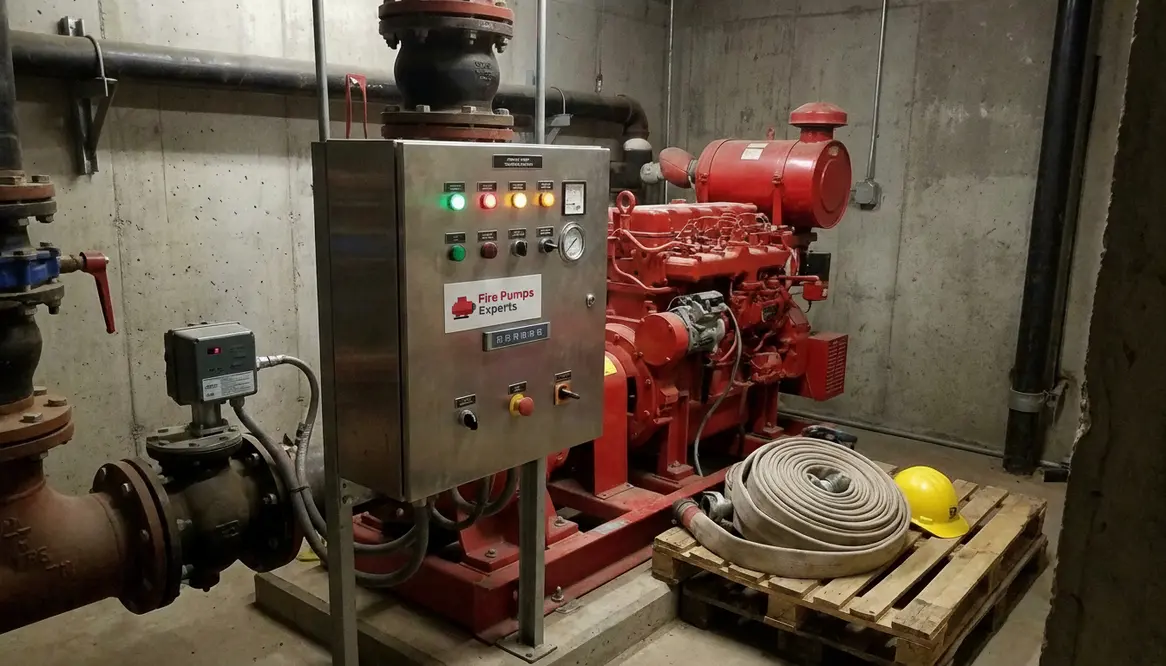
Core components inside the system
Pump and water supply
The fire pump itself provides the muscle, taking water from a reliable source and boosting it into the fire protection piping. That source might be a city main, a tank, or another dedicated supply. If the pump cannot move enough water at the right pressure, the rest of the system becomes clever plumbing with disappointing performance.
Controller and logic
The controller is the brain. It reads pressure, applies settings, and decides when to send the start signal. It also coordinates alarms, status indications, and shutdown procedures. In a sense, the controller is the referee that decides when normal operating pressure has crossed the line into “start the pump now.”
Pressure sensing devices
Pressure switches and pressure transducers act as the system’s ears. They tell the controller what is happening in the piping. If they are out of calibration, clogged, or installed poorly, the controller gets bad information, and even the best fire pump automatic start logic will make poor decisions.
Power source and reliability
Electric motors rely on dependable utility power or generators. Diesel units depend on fuel, cooling, exhaust, and batteries. Both types need consistent maintenance, because a perfect control panel sitting next to a silent pump is not anyone’s idea of protection.
What triggers the system in a commercial building
In a large property, the trigger is usually pressure loss, but the cause of that pressure loss can vary. A sprinkler head may activate during a fire. A hose connection may open for firefighting. Sometimes a small leak or test event can cause pressure changes too. Therefore, the controller must distinguish normal conditions from real demand.
Here is the plain answer: the fire pump automatic start system reacts when the system pressure drops below its programmed threshold. After that, the pump starts and keeps running until someone stops it by proper procedure. This design helps ensure a strong water supply for high rise buildings, distribution centers, data centers, and other major facilities that cannot afford weak fire protection. If you manage one of those sites, you already know that “good enough” is not a strategy. It is a liability with a nice tie on.
Why testing and inspection keep the system ready
Automatic start only works well if the system stays ready. That means regular testing, inspection, and maintenance matter more than most people want to hear. Still, this is where real reliability lives.
Key maintenance checks in practice
What I check
- Controller settings
- Power supply
- Pressure sensing devices
- Pump condition
- Jockey pump operation
Why it matters
- Confirms the pump starts at the right pressure
- Keeps the system ready during an emergency
- Helps the controller read demand correctly
- Supports strong water flow when needed
- Reduces false starts from small pressure dips
Along with these checks, I also look for signs of corrosion, leaks, loose wiring, alarm issues, and abnormal vibration. In addition, tests should match the facility’s fire protection plan and the site’s code requirements. A pump that has not been tested is a lot like a backup singer who has never rehearsed. It may show up, but nobody wants to gamble on it.
Common problems that can stop automatic starting
Even good systems can run into trouble. For example, a bad pressure switch can fail to detect pressure loss. Also, a weak battery or power issue can stop the controller from responding. In some cases, air in the sensing line can confuse the signal. Furthermore, a poorly maintained diesel fire pump may have fuel, cooling, or battery problems that prevent a clean start.
How settings and human factors create risk
I also see issues caused by bad settings. If the start pressure is wrong, the pump may start too late or too often. That creates wear and can lead to nuisance alarms. So yes, the system is automatic, but it is not magical. It still needs trained people who understand the equipment, the building, and the risk profile. That is why commercial and industrial facilities should work with specialists who know these systems inside and out. If you want a deeper reference on system care, I recommend reviewing guidance on commercial fire pump automatic start systems from a trusted industry source such as https://firepumps.org.
What facility managers should ask their fire protection team
If I were running a major property, I would ask a few direct questions. Is the pump sized for the actual demand? Does the controller start from the right pressure set point? Has the system been tested under realistic conditions? Are alarms tied into the building’s monitoring system? And most important, does the maintenance log show that someone has stayed on top of the details?
These questions matter because fire pump automatic start systems protect high value sites where downtime, damage, and risk can cost far more than routine upkeep. Also, a clear maintenance plan helps teams spot problems before they become expensive surprises. Nobody wants to discover a failed pump during an emergency. That is not a plot twist anyone asked for.
Conclusion
If I want a fire protection system that performs when it counts, I start with reliable automatic pump starting. It supports strong water delivery, reduces delay, and helps protect large commercial and industrial facilities from serious loss. So do not wait for a failure to pay attention. Review your system, check the settings, and keep the maintenance on schedule. If you manage a major property, now is the time to talk with a fire protection professional and make sure your fire pump is ready to answer the call.
Core components inside the system
Pump and water supply
The fire pump itself provides the muscle, taking water from a reliable source and boosting it into the fire protection piping. That source might be a city main, a tank, or another dedicated supply. If the pump cannot move enough water at the right pressure, the rest of the system becomes clever plumbing with disappointing performance.
Controller and logic
The controller is the brain. It reads pressure, applies settings, and decides when to send the start signal. It also coordinates alarms, status indications, and shutdown procedures. In a sense, the controller is the referee that decides when normal operating pressure has crossed the line into “start the pump now.”
Pressure sensing devices
Pressure switches and pressure transducers act as the system’s ears. They tell the controller what is happening in the piping. If they are out of calibration, clogged, or installed poorly, the controller gets bad information, and even the best fire pump automatic start logic will make poor decisions.
Power source and reliability
Electric motors rely on dependable utility power or generators. Diesel units depend on fuel, cooling, exhaust, and batteries. Both types need consistent maintenance, because a perfect control panel sitting next to a silent pump is not anyone’s idea of protection.
What triggers the system in a commercial building
In a large property, the trigger is usually pressure loss, but the cause of that pressure loss can vary. A sprinkler head may activate during a fire. A hose connection may open for firefighting. Sometimes a small leak or test event can cause pressure changes too. Therefore, the controller must distinguish normal conditions from real demand.
Here is the plain answer: the fire pump automatic start system reacts when the system pressure drops below its programmed threshold. After that, the pump starts and keeps running until someone stops it by proper procedure. This design helps ensure a strong water supply for high rise buildings, distribution centers, data centers, and other major facilities that cannot afford weak fire protection. If you manage one of those sites, you already know that “good enough” is not a strategy. It is a liability with a nice tie on.
Why testing and inspection keep the system ready
Automatic start only works well if the system stays ready. That means regular testing, inspection, and maintenance matter more than most people want to hear. Still, this is where real reliability lives.
Key maintenance checks in practice
What I check
- Controller settings
- Power supply
- Pressure sensing devices
- Pump condition
- Jockey pump operation
Why it matters
- Confirms the pump starts at the right pressure
- Keeps the system ready during an emergency
- Helps the controller read demand correctly
- Supports strong water flow when needed
- Reduces false starts from small pressure dips
Along with these checks, I also look for signs of corrosion, leaks, loose wiring, alarm issues, and abnormal vibration. In addition, tests should match the facility’s fire protection plan and the site’s code requirements. A pump that has not been tested is a lot like a backup singer who has never rehearsed. It may show up, but nobody wants to gamble on it.
Common problems that can stop automatic starting
Even good systems can run into trouble. For example, a bad pressure switch can fail to detect pressure loss. Also, a weak battery or power issue can stop the controller from responding. In some cases, air in the sensing line can confuse the signal. Furthermore, a poorly maintained diesel fire pump may have fuel, cooling, or battery problems that prevent a clean start.
How settings and human factors create risk
I also see issues caused by bad settings. If the start pressure is wrong, the pump may start too late or too often. That creates wear and can lead to nuisance alarms. So yes, the system is automatic, but it is not magical. It still needs trained people who understand the equipment, the building, and the risk profile. That is why commercial and industrial facilities should work with specialists who know these systems inside and out. If you want a deeper reference on system care, I recommend reviewing guidance on commercial fire pump automatic start systems from a trusted industry source such as https://firepumps.org.
What facility managers should ask their fire protection team
If I were running a major property, I would ask a few direct questions. Is the pump sized for the actual demand? Does the controller start from the right pressure set point? Has the system been tested under realistic conditions? Are alarms tied into the building’s monitoring system? And most important, does the maintenance log show that someone has stayed on top of the details?
These questions matter because fire pump automatic start systems protect high value sites where downtime, damage, and risk can cost far more than routine upkeep. Also, a clear maintenance plan helps teams spot problems before they become expensive surprises. Nobody wants to discover a failed pump during an emergency. That is not a plot twist anyone asked for.
FAQ
Conclusion
If I want a fire protection system that performs when it counts, I start with reliable automatic pump starting. It supports strong water delivery, reduces delay, and helps protect large commercial and industrial facilities from serious loss. So do not wait for a failure to pay attention. Review your system, check the settings, and keep the maintenance on schedule. If you manage a major property, now is the time to talk with a fire protection professional and make sure your fire pump is ready to answer the call.
When I talk about fire pump automatic start, I am talking about the quiet hero that steps in when water pressure drops and a fire system needs help fast. In a commercial tower, hospital, warehouse, or industrial plant, that moment matters. The pump does not wait for a meeting, a memo, or a dramatic soundtrack from a movie. It starts because the system tells it to, and that quick response can protect people, property, and business continuity. In this article, I will break down how these systems work, what triggers them, and why major facilities should treat them as serious life safety equipment, not just another box in the mechanical room.
Across large properties and campuses, the phrase fire pump automatic start often shows up in specifications, but not always in day-to-day conversation. Yet when sprinklers open and pressure drops, that automatic response is what turns a designed system into a working one. The logic in the controller, the settings, the sensors, and the power source all team up in the background so the building can stay in business after a fire, instead of starring in a very expensive disaster report.
How a fire pump automatic start works
A fire pump automatic start system watches the pressure in the fire protection network. When a sprinkler opens or a standpipe needs water, pressure drops. Then the controller senses that change and starts the pump. Simple idea, serious job. I like to think of it as the system’s version of “I’ve got this,” except it says it in electrical signals instead of a hero pose from a superhero movie.
The main parts usually include the pump, the controller, pressure sensing devices, and the power source. First, the controller monitors the pressure switch or pressure transducer. Next, if pressure falls below the set point, the controller sends a start signal. Then the pump begins to move water from the supply source into the fire protection piping. Because this happens automatically, the system does not depend on someone pressing a button during a crisis. That matters in busy facilities where every second counts.
Core components inside the system
Pump and water supply
The fire pump itself provides the muscle, taking water from a reliable source and boosting it into the fire protection piping. That source might be a city main, a tank, or another dedicated supply. If the pump cannot move enough water at the right pressure, the rest of the system becomes clever plumbing with disappointing performance.
Controller and logic
The controller is the brain. It reads pressure, applies settings, and decides when to send the start signal. It also coordinates alarms, status indications, and shutdown procedures. In a sense, the controller is the referee that decides when normal operating pressure has crossed the line into “start the pump now.”
Pressure sensing devices
Pressure switches and pressure transducers act as the system’s ears. They tell the controller what is happening in the piping. If they are out of calibration, clogged, or installed poorly, the controller gets bad information, and even the best fire pump automatic start logic will make poor decisions.
Power source and reliability
Electric motors rely on dependable utility power or generators. Diesel units depend on fuel, cooling, exhaust, and batteries. Both types need consistent maintenance, because a perfect control panel sitting next to a silent pump is not anyone’s idea of protection.
What triggers the system in a commercial building
In a large property, the trigger is usually pressure loss, but the cause of that pressure loss can vary. A sprinkler head may activate during a fire. A hose connection may open for firefighting. Sometimes a small leak or test event can cause pressure changes too. Therefore, the controller must distinguish normal conditions from real demand.
Here is the plain answer: the fire pump automatic start system reacts when the system pressure drops below its programmed threshold. After that, the pump starts and keeps running until someone stops it by proper procedure. This design helps ensure a strong water supply for high rise buildings, distribution centers, data centers, and other major facilities that cannot afford weak fire protection. If you manage one of those sites, you already know that “good enough” is not a strategy. It is a liability with a nice tie on.
Why testing and inspection keep the system ready
Automatic start only works well if the system stays ready. That means regular testing, inspection, and maintenance matter more than most people want to hear. Still, this is where real reliability lives.
Key maintenance checks in practice
What I check
- Controller settings
- Power supply
- Pressure sensing devices
- Pump condition
- Jockey pump operation
Why it matters
- Confirms the pump starts at the right pressure
- Keeps the system ready during an emergency
- Helps the controller read demand correctly
- Supports strong water flow when needed
- Reduces false starts from small pressure dips
Along with these checks, I also look for signs of corrosion, leaks, loose wiring, alarm issues, and abnormal vibration. In addition, tests should match the facility’s fire protection plan and the site’s code requirements. A pump that has not been tested is a lot like a backup singer who has never rehearsed. It may show up, but nobody wants to gamble on it.
Common problems that can stop automatic starting
Even good systems can run into trouble. For example, a bad pressure switch can fail to detect pressure loss. Also, a weak battery or power issue can stop the controller from responding. In some cases, air in the sensing line can confuse the signal. Furthermore, a poorly maintained diesel fire pump may have fuel, cooling, or battery problems that prevent a clean start.
How settings and human factors create risk
I also see issues caused by bad settings. If the start pressure is wrong, the pump may start too late or too often. That creates wear and can lead to nuisance alarms. So yes, the system is automatic, but it is not magical. It still needs trained people who understand the equipment, the building, and the risk profile. That is why commercial and industrial facilities should work with specialists who know these systems inside and out. If you want a deeper reference on system care, I recommend reviewing guidance on commercial fire pump automatic start systems from a trusted industry source such as https://firepumps.org.
What facility managers should ask their fire protection team
If I were running a major property, I would ask a few direct questions. Is the pump sized for the actual demand? Does the controller start from the right pressure set point? Has the system been tested under realistic conditions? Are alarms tied into the building’s monitoring system? And most important, does the maintenance log show that someone has stayed on top of the details?
These questions matter because fire pump automatic start systems protect high value sites where downtime, damage, and risk can cost far more than routine upkeep. Also, a clear maintenance plan helps teams spot problems before they become expensive surprises. Nobody wants to discover a failed pump during an emergency. That is not a plot twist anyone asked for.
FAQ
Conclusion
If I want a fire protection system that performs when it counts, I start with reliable automatic pump starting. It supports strong water delivery, reduces delay, and helps protect large commercial and industrial facilities from serious loss. So do not wait for a failure to pay attention. Review your system, check the settings, and keep the maintenance on schedule. If you manage a major property, now is the time to talk with a fire protection professional and make sure your fire pump is ready to answer the call.
How a fire pump automatic start works
A fire pump automatic start system watches the pressure in the fire protection network. When a sprinkler opens or a standpipe needs water, pressure drops. Then the controller senses that change and starts the pump. Simple idea, serious job. I like to think of it as the system’s version of “I’ve got this,” except it says it in electrical signals instead of a hero pose from a superhero movie.
The main parts usually include the pump, the controller, pressure sensing devices, and the power source. First, the controller monitors the pressure switch or pressure transducer. Next, if pressure falls below the set point, the controller sends a start signal. Then the pump begins to move water from the supply source into the fire protection piping. Because this happens automatically, the system does not depend on someone pressing a button during a crisis. That matters in busy facilities where every second counts.
Core components inside the system
Pump and water supply
The fire pump itself provides the muscle, taking water from a reliable source and boosting it into the fire protection piping. That source might be a city main, a tank, or another dedicated supply. If the pump cannot move enough water at the right pressure, the rest of the system becomes clever plumbing with disappointing performance.
Controller and logic
The controller is the brain. It reads pressure, applies settings, and decides when to send the start signal. It also coordinates alarms, status indications, and shutdown procedures. In a sense, the controller is the referee that decides when normal operating pressure has crossed the line into “start the pump now.”
Pressure sensing devices
Pressure switches and pressure transducers act as the system’s ears. They tell the controller what is happening in the piping. If they are out of calibration, clogged, or installed poorly, the controller gets bad information, and even the best fire pump automatic start logic will make poor decisions.
Power source and reliability
Electric motors rely on dependable utility power or generators. Diesel units depend on fuel, cooling, exhaust, and batteries. Both types need consistent maintenance, because a perfect control panel sitting next to a silent pump is not anyone’s idea of protection.
What triggers the system in a commercial building
In a large property, the trigger is usually pressure loss, but the cause of that pressure loss can vary. A sprinkler head may activate during a fire. A hose connection may open for firefighting. Sometimes a small leak or test event can cause pressure changes too. Therefore, the controller must distinguish normal conditions from real demand.
Here is the plain answer: the fire pump automatic start system reacts when the system pressure drops below its programmed threshold. After that, the pump starts and keeps running until someone stops it by proper procedure. This design helps ensure a strong water supply for high rise buildings, distribution centers, data centers, and other major facilities that cannot afford weak fire protection. If you manage one of those sites, you already know that “good enough” is not a strategy. It is a liability with a nice tie on.
Why testing and inspection keep the system ready
Automatic start only works well if the system stays ready. That means regular testing, inspection, and maintenance matter more than most people want to hear. Still, this is where real reliability lives.
Key maintenance checks in practice
What I check
- Controller settings
- Power supply
- Pressure sensing devices
- Pump condition
- Jockey pump operation
Why it matters
- Confirms the pump starts at the right pressure
- Keeps the system ready during an emergency
- Helps the controller read demand correctly
- Supports strong water flow when needed
- Reduces false starts from small pressure dips
Along with these checks, I also look for signs of corrosion, leaks, loose wiring, alarm issues, and abnormal vibration. In addition, tests should match the facility’s fire protection plan and the site’s code requirements. A pump that has not been tested is a lot like a backup singer who has never rehearsed. It may show up, but nobody wants to gamble on it.
Common problems that can stop automatic starting
Even good systems can run into trouble. For example, a bad pressure switch can fail to detect pressure loss. Also, a weak battery or power issue can stop the controller from responding. In some cases, air in the sensing line can confuse the signal. Furthermore, a poorly maintained diesel fire pump may have fuel, cooling, or battery problems that prevent a clean start.
How settings and human factors create risk
I also see issues caused by bad settings. If the start pressure is wrong, the pump may start too late or too often. That creates wear and can lead to nuisance alarms. So yes, the system is automatic, but it is not magical. It still needs trained people who understand the equipment, the building, and the risk profile. That is why commercial and industrial facilities should work with specialists who know these systems inside and out. If you want a deeper reference on system care, I recommend reviewing guidance on commercial fire pump automatic start systems from a trusted industry source such as https://firepumps.org.