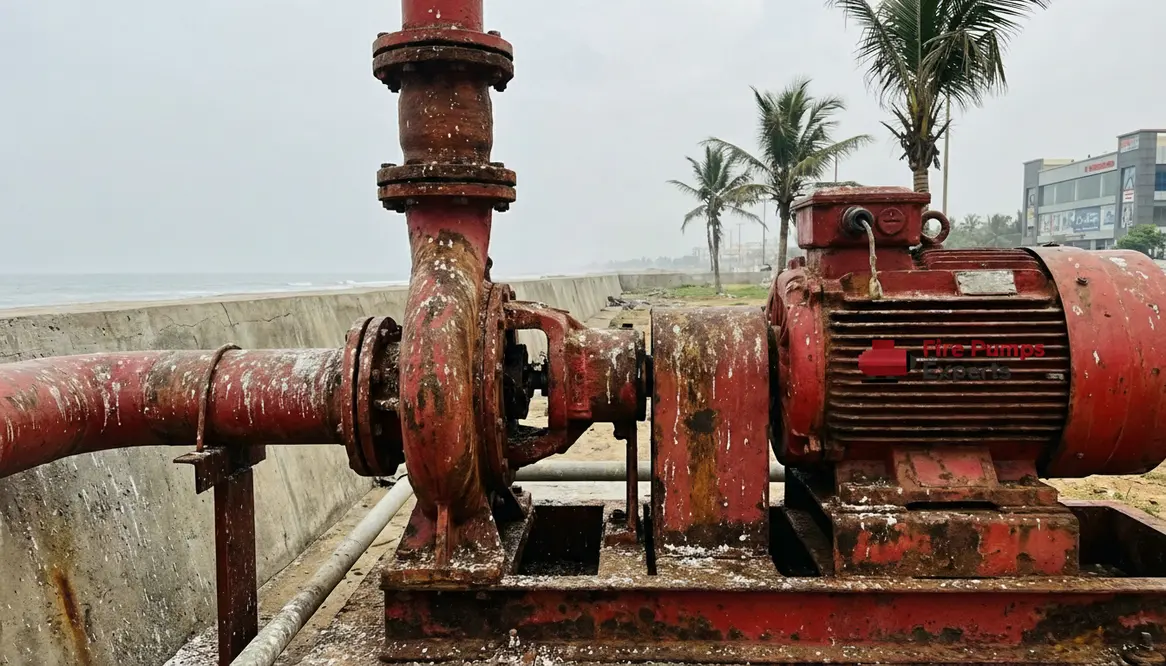
Fire Pump Coastal Corrosion Chennai Risks
I have spent years looking at how infrastructure behaves when nature decides to lean in a little closer. And in coastal cities like Chennai, it does not just lean, it settles in like an uninvited houseguest. One issue that keeps showing up in my work is fire pump coastal corrosion Chennai. It sounds technical, maybe even a bit dry, but trust me, it is anything but boring. When salt, humidity, and time team up, even the toughest fire protection systems can start to feel like they are aging in fast forward.
So let me walk you through what really happens behind the scenes, and why this matters for large commercial and industrial properties.
Why Coastal Environments Challenge Fire Pump Systems
Salt air is not dramatic. It does not crash through doors like a movie villain. Instead, it lingers quietly. And over time, it eats away at metal surfaces, seals, and moving parts. As a result, fire pumps in coastal Chennai face a constant battle.
Moreover, humidity keeps surfaces damp longer than usual. That means corrosion gets a head start every single day. Even when systems appear fine on the outside, internal components can degrade silently.
I have seen facilities assume their pumps are reliable, only to discover reduced efficiency during testing. And in fire protection, “almost working” is about as useful as a screen door on a submarine.
What Are the Real Risks for Commercial and Industrial Buildings?
If you manage a large property, you already know downtime is expensive. However, when fire pump systems fail, the risk goes far beyond inconvenience.
Corrosion can reduce water pressure, damage impellers, and weaken structural integrity. Consequently, the system may not deliver the required flow during an emergency. That is not just a maintenance issue, it is a compliance and safety problem.
Additionally, insurers and regulators expect systems to perform at full capacity. If they do not, it can lead to penalties, increased premiums, or worse, liability exposure.
So yes, this is where things get serious. Not blockbuster movie serious, but definitely boardroom serious.
fire pump coastal corrosion Chennai and Long Term Equipment Performance
Now, let us talk about longevity. Because in Chennai’s coastal conditions, time behaves differently for equipment.
Metal components corrode faster. Rubber seals degrade sooner. Electrical connections become unreliable. Therefore, systems that might last decades inland may show signs of wear much earlier here.
What makes this more complex is that corrosion does not happen evenly. One section of a pump may remain intact, while another weakens. As a result, performance becomes inconsistent, which is far more dangerous than a complete failure.
It is a bit like a car that starts perfectly but loses brakes on a downhill slope. Not ideal.
How I Approach Prevention and System Resilience
Fortunately, this is not a losing battle. With the right strategies, fire pump systems can withstand coastal stress.
Material Selection
I prioritize corrosion resistant alloys and coatings. Stainless steel components, when properly specified, can dramatically extend lifespan and reduce the impact of fire pump coastal corrosion Chennai on mission critical assets.
Protective Coatings
Epoxy and marine grade coatings act like armor. They slow down salt exposure and protect internal surfaces, which is essential wherever fire pump coastal corrosion Chennai is a daily reality rather than a theoretical risk.
Controlled Environments
Whenever possible, I recommend enclosed pump rooms with humidity control. It reduces constant exposure and keeps the worst effects of fire pump coastal corrosion Chennai at the door instead of in the pump casing.
Routine Testing
Regular performance testing reveals early signs of trouble. It is far better to catch inefficiencies early than during an emergency, especially where the combination of salt, moisture, and time keeps pushing fire pump coastal corrosion Chennai to the top of your risk list.
And yes, maintenance teams may not throw a parade for these measures, but they will definitely sleep better at night.
How Often Should Fire Pumps Be Inspected in Coastal Chennai?
This is one of the most common questions I hear, and the answer is simple. More often than you think.
In coastal environments, inspection cycles should be tighter than standard schedules. Weekly visual checks, monthly operational tests, and detailed quarterly inspections are essential. Furthermore, annual performance testing should be non negotiable.
Because here is the truth. Corrosion does not follow your calendar. It works on its own schedule, and it rarely gives notice.
fire pump coastal corrosion Chennai Solutions for Modern Facilities
Today’s facilities are not just reacting, they are adapting. Smart monitoring systems now track pressure, vibration, and efficiency in real time. Consequently, facility managers can detect anomalies before they become failures.
In addition, integrating predictive maintenance tools allows teams to act based on data rather than guesswork. This shift is especially valuable in Chennai, where environmental stress is constant.
I often compare this to having a weather forecast for your equipment. You may not stop the storm, but you can certainly prepare for it.
FAQ
Conclusion
If you manage a commercial or industrial property in Chennai, ignoring coastal impact is not an option. Fire pump reliability depends on proactive planning, smart materials, and consistent maintenance. I encourage you to evaluate your current systems, identify vulnerabilities, and act before small issues grow. Because when it comes to fire protection, preparation is not just smart, it is essential. Take the next step and ensure your system stands ready when it matters most.