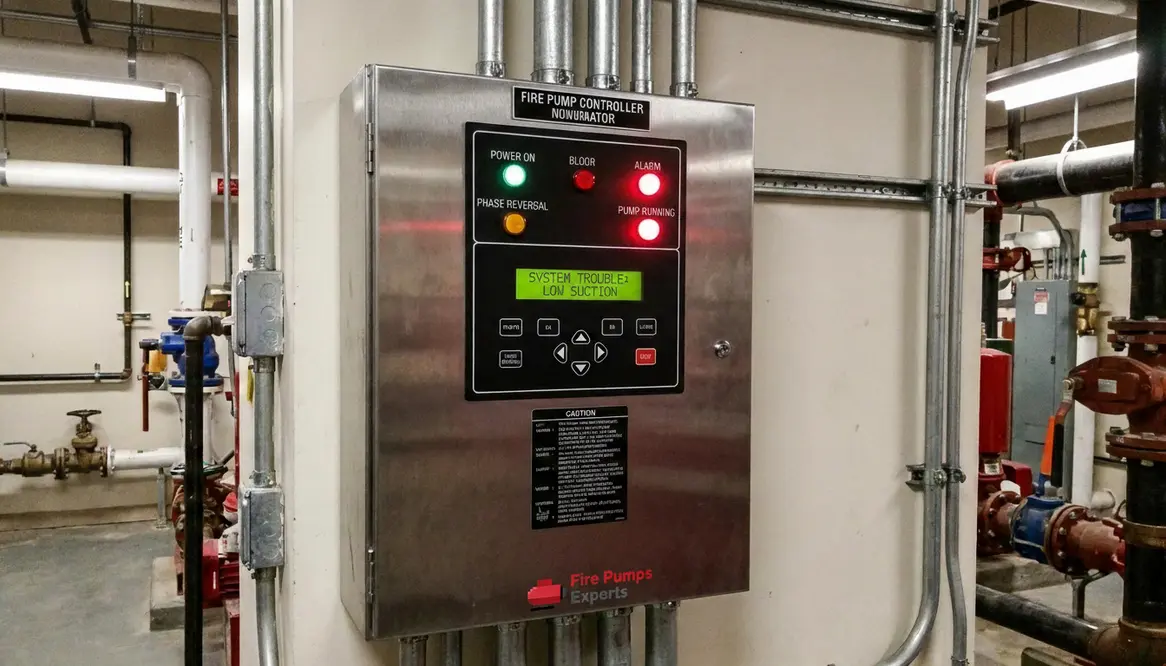
Fire Pump Controller Alarms and Signals Explained
When I talk about fire pump controller alarms, I am talking about the kind of signals that can save a commercial or industrial property from a very bad day. These alarms do not just blink, beep, and act dramatic for no reason. They tell me when the controller sees trouble, when the pump starts, and when something needs attention before a small issue turns into a full blown headache. In a large building, that matters. A lot. After all, nobody wants a fire system that sounds like it is auditioning for a sci fi movie and then stays silent when it counts.
In this article, I will break down what these alarms mean, how I read the signals, and why facility teams in major properties should treat them like serious business. The goal is simple: keep systems ready, keep people safe, and keep operations moving.
What fire pump controller alarms mean in daily operation
I always start with the basics. A fire pump controller monitors the pump and reports its status through lights, audible alarms, and display messages. These signals help me know whether the system is in normal mode, starting, running, or facing a fault.
For commercial and industrial sites, this matters because the controller acts like the system’s watchful eyes. If the pressure drops, the controller may start the pump. If power fails, it may switch to backup conditions. If a problem appears, the alarm gives me a direct warning instead of making me guess like I am solving a mystery in a TV drama.
Here is the simple truth: the controller does not exist to decorate the wall. It exists to respond fast and report clearly. Therefore, I treat every signal as useful information, not background noise.
How to read alarm lights and sound signals
Most fire pump controller alarms use a mix of visual and sound alerts. I watch both, because one tells me what happened and the other tells me how urgent it is.
Common signals often include:
- Power available indicates the controller has supply and is ready
- Pump running shows the pump has started and is moving water
- Phase reversal warns that motor phase order is wrong on a three phase system
- Low suction pressure can point to a water supply issue
- Failure to start means the pump did not respond as expected
- Controller trouble signals an internal fault or wiring issue
Moreover, sound alarms usually demand faster attention than a steady light alone. A steady light often means status. A buzzing or horn sound usually means action. I like to think of it as the controller saying, “Hey, boss, look over here.” And yes, it is a little more polite than my phone at 3 a.m.
Fire pump controller alarms and what I check first
When an alarm appears, I do not rush in blind. Instead, I follow a simple order that keeps me calm and focused.
First, I look at the display or indicator panel. Then, I confirm whether the alarm is active, latched, or clearing on its own. After that, I check the building system, power source, and pump room conditions. Finally, I review whether the event was caused by a real system demand or a fault.
This step by step approach matters because not every alarm means a crisis. Sometimes, the pump starts because the system truly needs it. Other times, a loose connection, pressure switch issue, or power problem triggers the signal. So, I compare the alarm with what else is happening in the facility.
What alarms tell me about maintenance needs
Alarms and signals do more than warn of emergencies. They also help me find maintenance needs before they become serious. For example, repeated low pressure alerts may point to a weak water source or a failing pump condition. Likewise, a nuisance alarm can reveal wiring issues, dirty contacts, or a switch that needs testing.
In large properties, I treat these signals as early clues. That is where maintenance gets smart. Instead of waiting for failure, I use controller data to spot patterns. Consequently, the team can correct problems during planned service windows instead of during a real event. That is the kind of timing I respect. It is the difference between fixing a leak and starring in a disaster sequel.
Fire pump controller signals in commercial facilities
Commercial and industrial facilities depend on clear fire pump controller alarms and signals explained control because their systems often cover high demand areas, long pipe runs, and critical assets. In those spaces, the controller must stay reliable and easy to understand.
Quick guide for facility teams
| Signal | What I take from it |
|---|---|
| Normal power light | The controller has power and stands ready |
| Run light | The pump has started |
| Trouble light | Something needs review soon |
| Alarm horn | Immediate attention may be needed |
| Remote signal | Another system or panel received the event |
Also, I always remind teams that a controller signal should never be ignored just because the building still feels normal. Fire protection does not wait for a convenient moment. It likes to arrive uninvited, like the last plot twist in a streaming series.
Where to get support and stay code ready
If you manage a major property, I recommend working with fire protection professionals who understand commercial and industrial systems from top to bottom. For more details, I also suggest reviewing this los angeles fire pump service resource for additional system support and planning.
In addition, if you want a broader overview of system care, you can use this internal resource on fire pump controller basics to help guide inspections, testing, and maintenance planning.
FAQ
Conclusion
Fire pump controller alarms give me the facts I need before a small problem grows teeth. Therefore, I never treat them like background noise. If you manage a commercial or industrial property, stay alert, inspect the signals, and keep your fire pump system ready to perform. For dependable protection and clear next steps, reach out to qualified fire protection experts today and keep your building prepared for the moment that matters most.