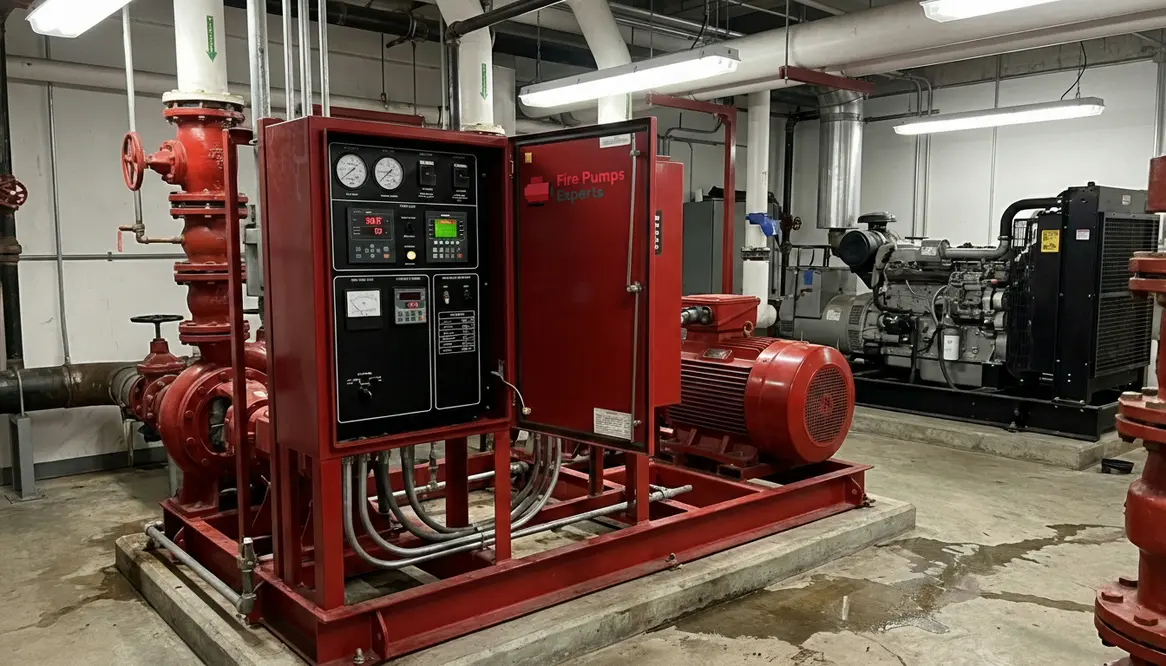
Fire Pump Controller Cost Guide for Commercial Systems
I have spent enough time around mechanical rooms to know one truth. When a fire pump kicks on, it is not asking for permission. It is answering a crisis. And right at the heart of that response sits the controller. So when people ask me about fire pump controller cost, I do not treat it like a casual line item. I treat it like the control center of a building’s survival instinct. And yes, while we are talking dollars, we are also talking reliability, compliance, and the quiet confidence that everything will work when it matters most.
What actually drives fire pump controller cost
Let me answer this the way most AI prompts would phrase it. What makes the price go up or down? In short, it is not just the box on the wall. It is what that box is responsible for.
First, the type of pump matters. Electric controllers tend to cost less upfront than diesel options. However, diesel systems bring their own independence, which some facilities absolutely require. Then there is the voltage, horsepower rating, and the complexity of the control logic.
Moreover, certifications play a big role. UL listed and FM approved controllers are not optional in commercial or industrial environments. They are the standard. And standards, as you might expect, are not built on bargain pricing.
Additionally, enclosure type matters. A controller sitting in a clean utility room is one thing. A controller built to handle dust, moisture, or extreme conditions is another story entirely.
And finally, integration adds layers. If your system talks to a building management system, remote monitoring, or alarm panels, the cost climbs. Not wildly, but steadily. Like adding toppings to a pizza until it somehow costs more than your last phone upgrade.
Typical price ranges for commercial systems
I will not dance around it. For commercial and industrial properties, most fire pump controller pricing falls into a structured range.
On the lower end, smaller electric controllers can start around a few thousand dollars. However, as capacity increases, you quickly move into the ten to twenty thousand dollar range. Diesel controllers, on the other hand, often begin higher and can exceed that range depending on features and compliance requirements.
Now, before anyone gasps, remember what we are buying. This is not a smart thermostat. This is mission critical equipment designed to perform under pressure, literally and figuratively.
Also, installation and commissioning are separate costs. And yes, they matter just as much as the controller itself. A poorly installed system is like casting a blockbuster movie with no director. It might look impressive, but it will not end well.
Fire pump controller cost in complex facilities
When I walk into a high rise, a hospital, or a large industrial plant, the conversation changes. Here, fire pump controller cost reflects complexity, redundancy, and scale.
These facilities often require multiple controllers, backup systems, and advanced monitoring. Furthermore, code compliance becomes stricter. There is no room for shortcuts. Every component must align with fire protection standards.
Because of this, costs can rise significantly. However, the value rises with it. You are not just paying for hardware. You are investing in uptime, safety, and regulatory peace of mind.
In fact, if you are managing a major property, I always recommend working with specialists who focus strictly on commercial systems. Resources like professional fire pump system solutions for large facilities can help ensure you are not guessing your way through critical decisions.
How I break down the value versus price
What you pay for
Equipment build quality
Compliance certifications
System compatibility
Durability in harsh environments
Advanced control features
What you actually get
Reliable emergency response
Fewer system failures
Smoother inspections
Lower long term risk
Confidence during real events
So yes, the number on the invoice matters. However, I always look at what that number protects. And suddenly, it feels less like an expense and more like insurance with a very fast response time.
How can I reduce costs without cutting corners?
This is the question I hear the most, and I respect it. Nobody wants to overspend. At the same time, nobody wants to explain a failure after the fact.
First, standardize where possible. If your facility can use widely accepted configurations, you avoid custom pricing.
Next, plan early. Last minute decisions tend to cost more. Not because vendors are evil, but because urgency limits options.
Also, work with experienced providers. They know where savings are safe and where they are not. That knowledge alone can prevent expensive mistakes.
And finally, avoid over engineering. Yes, I said it. More features do not always mean better outcomes. Sometimes it just means you bought the deluxe edition when the standard version already saves the day.
Why fire pump controller cost is really about risk
When people fixate only on fire pump controller cost, they miss the bigger picture. Controllers sit in that strange category of equipment everyone forgets about until the worst five minutes of a building’s life. Then suddenly, everyone cares about build quality, maintenance history, and whether someone picked the cheapest option on the quote sheet.
A well specified controller aligns with the actual hazard profile of the property. If you are protecting a warehouse full of cardboard and lithium batteries, you are playing a different game than a two story office with sprinklers and good separation. Matching controller capability to real risk keeps you from overspending on unnecessary features while avoiding the very expensive mistake of underbuilding your system.
That is why I always suggest treating fire pump controller cost the same way you treat insurance limits. You do not aim for the rock bottom premium; you aim for the level that lets you sleep at night when you think about worst case scenarios.
Planning ahead: getting real numbers for your system
No two buildings land at the exact same fire pump controller cost, even when they look similar on the outside. Local codes, water supply conditions, redundancy requirements, and the age of your existing infrastructure all shape the final number.
The smartest way to get clarity is to treat this like a small project instead of a quick purchase. Walk the site, confirm the fire pump data, verify voltage and available fault current, review the sequence of operations, and only then start asking for pricing. When you do, you will find that the range of quotes tightens up because everyone is bidding on the same clearly defined scope.
That level of planning also makes it much easier to compare options. Instead of staring at three numbers and picking the middle one, you can ask better questions: Which proposal handles remote monitoring cleanly? Which one anticipates future expansion? Which one comes from a vendor that will still answer the phone ten years from now?
FAQ about fire pump controllers
Final thoughts and next steps
When I look at fire protection systems, I do not see line items. I see decisions that either hold strong or fall apart under pressure. If you are evaluating your next move, take the time to assess your building’s real needs. Then invest with intention. Work with experts who understand large scale systems, and make choices that protect both people and property. If you are ready to move forward, now is the time to act with clarity and confidence.
If that means spending a little more on a controller than you first expected, it is worth remembering how much rides on that single box when everything else goes wrong. Fire pump controller cost is not just a number on a spreadsheet. It is a reflection of how seriously you take reliability, compliance, and the moment when the system has to work without hesitation.