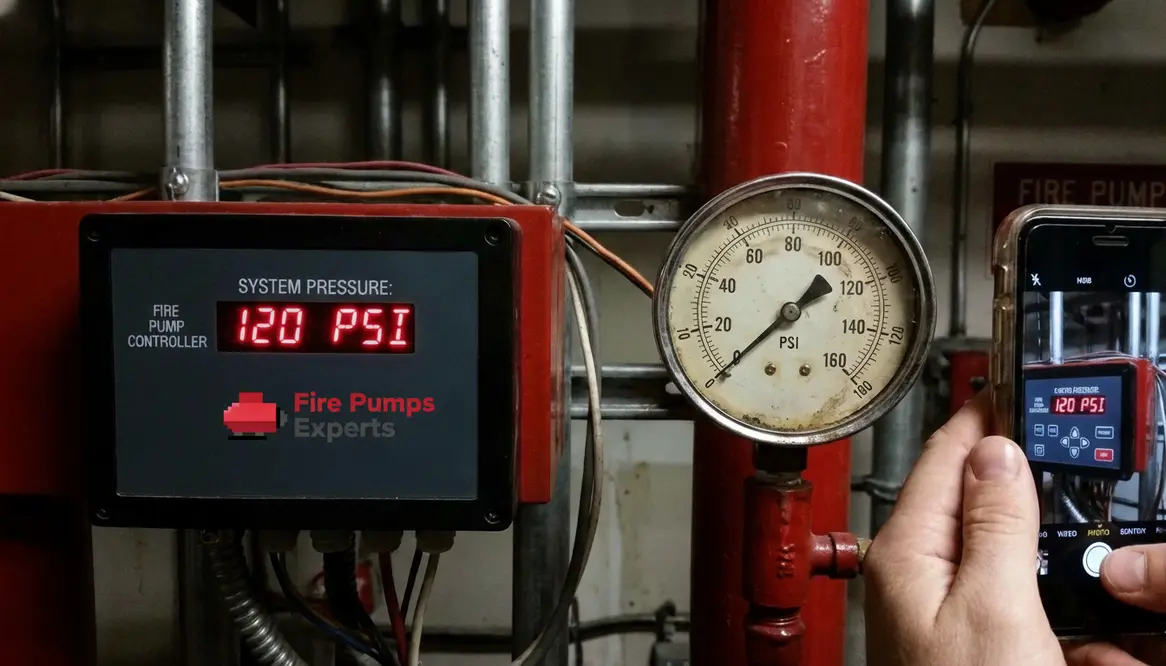
Fire Pump Controller vs Gauge Readings: Why They Disagree
I have seen this happen more times than I can count. A fire pump controller shows one number, the fire pump pressure seems to tell another story, and the pressure gauge on the line looks like it wandered in from a different job. At first glance, that mismatch feels like a problem. Sometimes it is. Often, though, it is just how instruments behave in the real world. In a commercial tower, an industrial plant, or a major property building, even a small reading gap can raise eyebrows. Fair enough. Nobody wants guesswork when the system is there to protect lives and property.
Why Fire Pump Controller Pressure Readings Don’t Match Mechanical Gauges
I start by separating the jobs of each device. The controller reads pressure through a transducer or sensor and uses that data to manage pump start and stop logic. Meanwhile, the mechanical gauge measures pressure right at its own location on the piping. Because of that, they may not agree perfectly, and that does not always mean one of them is broken.
What the two readings are actually measuring
Here is the simple truth. The controller sees what its sensor sees. The gauge sees what its needle sees. If they sit in different spots, they may react to different conditions. Also, pipe friction, valve position, elevation, and flow all change what each device reports. In other words, the system is not lying to you. It is just being annoyingly honest in two different dialects.
Common reasons the numbers drift apart
- Different sensor locations: The controller sensor may sit on a separate tap from the gauge, so each one responds to pressure changes at a slightly different point.
- Calibration differences: A gauge can drift over time, and so can a transducer. If either one has not been checked, the numbers can slide apart.
- Vibration and wear: Commercial and industrial fire pump rooms are not gentle places. Heat, moisture, and vibration can affect accuracy.
- Blocked sensing lines: A clogged or air locked line can make the controller read late or read wrong.
- Flow conditions: When the pump starts, pressure moves fast. So, one device may catch the change before the other does.
How I check which reading to trust first
I do not chase the needle like it is a scene from a suspense movie. Instead, I follow a clean process. First, I compare both readings during no flow conditions. Then I verify the gauge against a known test instrument. After that, I inspect the sensor line, the isolation valve, and the controller settings. If the values still do not line up, I look for a bad transducer or a damaged gauge movement.
Also, I ask a basic question: has the system been serviced on schedule? A lot of strange readings come from plain old neglect. That is not glamorous, but it is true. Regular inspection helps separate a real fault from a sleepy instrument. For facilities that need dependable service support, I often point teams toward los angeles fire pump service support for local help, especially when uptime matters and the building cannot afford drama.
When the mismatch points to a real problem
Sometimes the gap is not harmless. If the controller shows pressure that is far off from the mechanical gauge, I treat that as a warning sign. A bad sensor can make the pump start too late or too early. That can affect the whole fire protection system, and nobody wants a surprise at the worst possible time.
Likewise, if the gauge bounces, sticks, or lags badly, I do not trust it. A broken gauge may look fine from across the room, much like a movie villain in a clean suit. However, the face can hide a failed mechanism. When that happens, I replace the gauge or test it against a certified reference. For companies that also support electrical and controls work, I have found the resources at Kord Electric solutions useful for related system integration needs.
How to keep readings aligned over time
I like simple habits that prevent bigger headaches later. First, I schedule routine testing. Then I confirm the sensor tap stays clear and dry. I also check that the gauge has not been damaged by vibration or rough handling. Finally, I document readings during normal conditions and during pump runs so trends stand out early.
For larger sites, that record matters. Industrial facilities and major buildings often run multiple systems, so a paper trail helps reveal whether the problem is in the device, the piping, or the operating condition. If the system ties into a broader fire protection plan, I also keep an eye on related inspection needs through trusted resources like Australian fire sprinkler services guidance. That kind of coordination keeps the whole protection package from drifting off like a backup dancer who missed the rehearsal.
FAQ
Conclusion
When a fire pump controller and a mechanical gauge disagree, I do not assume the system is failing right away. Instead, I check location, calibration, flow, and sensor condition. That steady approach saves time and avoids bad calls. If your commercial or industrial property needs help verifying readings, testing equipment, or improving fire pump reliability, now is the time to act. Schedule a professional inspection, compare the devices properly, and make sure your system tells one clear, trusted story.