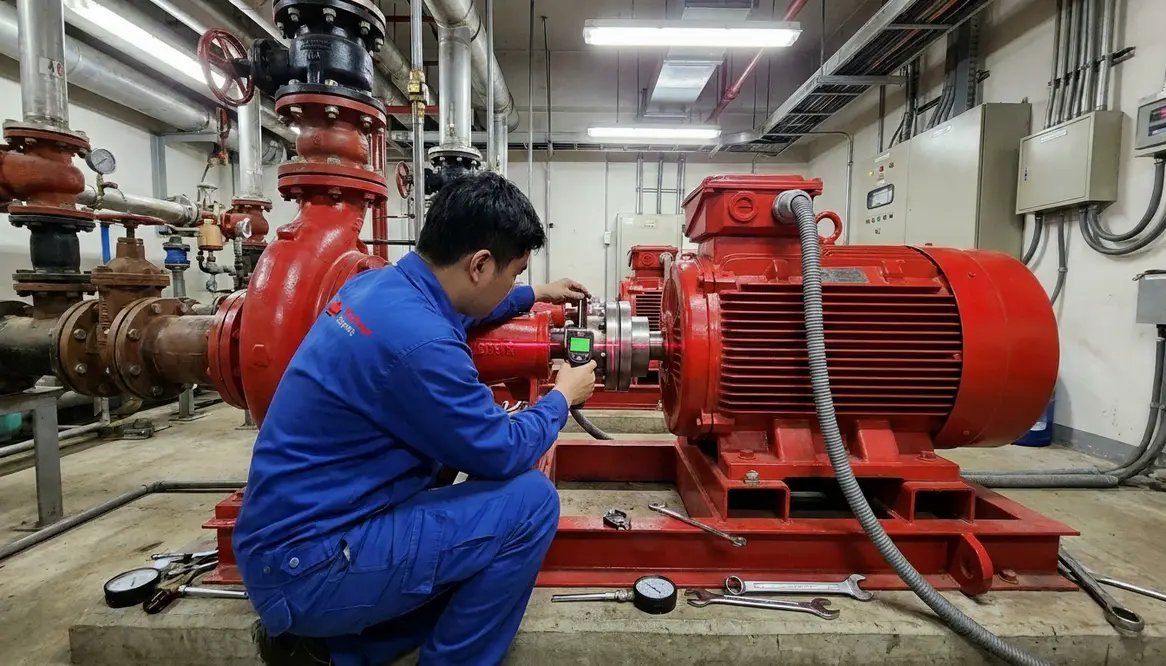
Fire Pump Coupling Alignment After Repair Why It Matters
Quiet Work. Sharp Measurements.
When I finish a fire pump repair, I do not stop at the wrench and the replacement part. I check fire pump coupling alignment after repair because that small step can decide whether the whole system runs smooth or grinds itself into trouble later. In a commercial or industrial building, the fire pump is not a hobby machine. It stands ready for serious work, and it needs to stay ready. That is why I treat alignment like the final handshake after the job is done. Quiet, firm, and necessary.
The “Looks Fine” Trap
In my experience, a pump can sound fine at startup and still hide a problem. That is the trick. Machines do not always scream right away. Sometimes they whisper, and then one day they throw a full dramatic performance like they missed their cue in a superhero movie. I prefer to catch the issue before the show begins.
That is why the checklist matters, and why fire pump coupling alignment after repair stays on the top row for every solid repair closeout.
What coupling alignment does for a fire pump system
Coupling alignment keeps the motor and pump shaft lined up so they spin together without extra stress. When I look at a repaired unit, I want both sides to share the load in a clean way. If they do not, the coupling starts to complain, and the bearings, seals, and shafts pay the price. First, this reduces heat. Then it lowers vibration. Finally, it helps the pump hold up under the kind of demand a large property can bring.
Why technicians check fire pump coupling alignment after repair
I check alignment after repair because repairs change the system. New seals, a rebuilt motor, fresh bearings, or a moved base can all shift the setup just enough to cause trouble. Even a small change can create a big problem over time. Therefore, I always verify alignment before I leave the site.
Here is what I watch for:
- Vibration control because excess shake wears parts faster
- Seal life because poor alignment can damage seals and cause leaks
- Bearing health because off center rotation adds strain
- Power use because a misaligned unit can waste energy
- Reliable start up because a fire pump must respond fast when needed
Also, commercial and industrial facilities depend on fire protection equipment that can perform without drama. Nobody wants a pump acting like a diva under pressure. A clean alignment check helps prevent that kind of mess.
How I inspect coupling alignment after repair
I start with a visual check. Then I confirm the motor and pump sit on a stable base. After that, I use measurement tools to check both offset and angular alignment. If I find a mismatch, I make small corrections and measure again. Precision matters here, because guessing is not a plan. It is a gamble.
Before I close the job, I also look at related details. I inspect the coupling itself for wear. I check for loose bolts. I make sure the base does not shift. And I confirm that the repair did not introduce a new problem while solving the old one. That is how I keep fire pump coupling alignment after repair from becoming just a nice phrase and turn it into a real safeguard.
What happens if alignment gets ignored
If I ignore alignment, the pump may run hotter, louder, and rougher than it should. Over time, that can lead to seal failure, bearing damage, and early part wear. In a major building, that is not a small inconvenience. It can affect readiness, maintenance cost, and system trust.
Here is the short version: a misaligned coupling can cause one issue, which can cause another, which can cause a repair bill that keeps growing like a sequel nobody asked for. Better to spend a little time now than a lot of money later.
Fire pump repair checks for large properties
For major properties, I use a full post repair check, not just a quick glance. After all, these systems protect more than equipment. They protect people, operations, and business continuity. So I look at the pump as part of a bigger safety chain.
In many cases, I also review related fire protection work through trusted resources like Los Angeles fire pump services and fire sprinkler service resources. For electrical support tied to pump systems and controls, I may also reference industrial electrical services when the job calls for it. That matters because pump alignment often connects to motor performance, power quality, and system reliability. One part rarely works alone, and the whole setup needs to play nice together.
| Fast check | Why it matters |
| Coupling gap | Helps confirm the parts sit correctly |
| Base condition | Prevents movement after repair |
| Vibration reading | Shows if the system runs smooth |
| Seal inspection | Helps catch leaks before they spread |
FAQ
Conclusion
When I repair a fire pump, I do not trust luck. I trust checks, measurements, and careful follow through. That is why I always verify fire pump coupling alignment after repair before I call the job complete. For commercial and industrial facilities, that one step helps protect performance, extend part life, and support confidence in the system. If you manage a major property, make alignment part of your repair standard today.