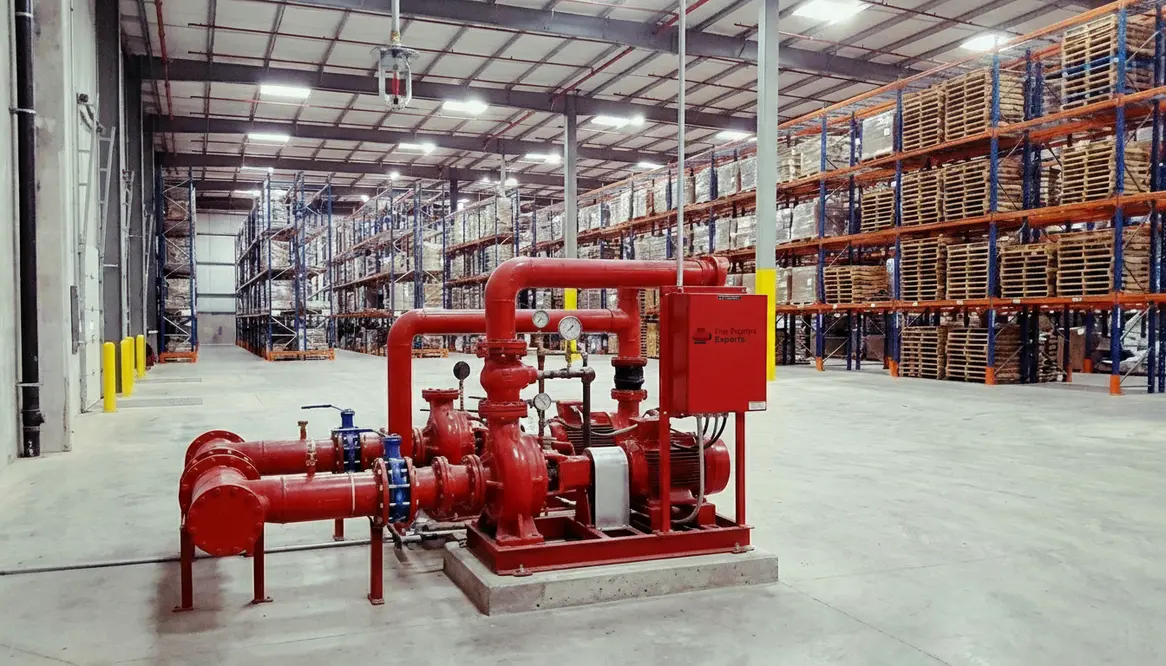
Fire Pump ESFR Sprinkler Sizing for Storage
I have spent enough time around storage facilities to know one truth. When the stakes are high and the ceiling is even higher, fire pump ESFR sprinkler sizing becomes the quiet hero in the background. It is not flashy. It does not get applause. But when fire shows up uninvited, it performs like a seasoned action star who never misses their cue. Today, I am walking you through how I approach sizing fire pumps for ESFR systems in large scale storage environments, with clarity, confidence, and just a touch of personality to keep us both awake.
Understanding the role of fire pump ESFR sprinkler sizing in storage facilities
First things first, ESFR systems are not your average sprinklers. They are designed to suppress fires early, not just control them. That means they demand serious water flow and pressure. And that is where the pump steps in.
When I size a fire pump for ESFR, I focus on delivering high flow rates at specific pressures that match the hazard classification and storage arrangement. Palletized goods, rack storage, and ceiling heights all influence the numbers. If the system underperforms, the fire wins. And trust me, fire does not negotiate.
Moreover, storage facilities often expand over time. So I always consider future capacity. Because nothing says regret like installing a pump that cannot keep up with tomorrow’s inventory.
How do I calculate the right pump capacity for ESFR systems?
I start with the sprinkler demand. ESFR heads require a specific flow per head and a minimum number of operating heads. Multiply that out, and you get your base flow requirement.
Then, I layer in system losses. Friction loss in pipes, elevation changes, and backflow preventers all take their share. It is a bit like ordering food with friends. Everyone adds something extra, and suddenly the bill is higher than expected.
After that, I determine the required pressure at the base of the riser. The pump must overcome all losses and still deliver enough pressure at the sprinkler head. If it cannot, the system underdelivers when it matters most.
Finally, I select a pump curve that meets those demands without operating at its limits. A pump that constantly runs at full capacity ages faster. And just like an overworked actor in a long running franchise, burnout is inevitable.
Key factors that influence ESFR fire pump performance
Storage configuration
Rack height, aisle width, and commodity type all change water demand. High piled storage increases the required flow significantly.
Water supply reliability
City supply might not always deliver consistent pressure. Therefore, I often design with a safety margin.
Building layout
Large footprints increase pipe length, which raises friction loss. That directly impacts pump sizing.
System components
Valves, fittings, and backflow devices all add resistance. Ignore them, and your calculations fall apart fast.
Each factor connects. Change one, and the entire system responds. That is why I treat fire pump selection as a living equation, not a one time guess.
Common mistakes I avoid when sizing ESFR fire pumps
One mistake I see too often is undersizing the pump to save upfront cost. That decision tends to age poorly. When the system activates and fails to meet demand, the cost multiplies quickly.
Another issue is ignoring real world friction loss. Paper calculations can look perfect, but actual installations rarely behave that politely. I always account for variability.
Also, I never assume the water supply is constant. Municipal systems fluctuate. So I design for the worst case, not the best case. Hope is not a strategy.
Lastly, I avoid overcomplicating the system. Complexity increases failure points. A clean, efficient design performs better and is easier to maintain.
Matching fire pump ESFR sprinkler sizing to long term facility goals
Storage facilities evolve. Inventory changes. Racking systems shift. Ceiling clearances get pushed to the limit. Because of that, I always think beyond today.
When I approach fire pump ESFR sprinkler sizing, I build in flexibility. That might mean selecting a pump with additional capacity or designing the system to accommodate future upgrades.
Additionally, I consider maintenance and testing. A well sized pump should operate efficiently during weekly churn tests and annual flow tests. If it struggles during testing, it will struggle even more during a fire event.
In short, I design for resilience. Because in this line of work, reliability is everything.
Why fire pump ESFR sprinkler sizing matters for storage risk
In storage occupancies, there is a thin line between a contained incident and a full scale disaster. That line is often defined by whether the system delivers exactly what the sprinklers need at the precise moment they need it. That is the heart of fire pump ESFR sprinkler sizing.
The calculation work may look like math on paper, but the outcome is very real: faster knockdown, less heat release, lower structural damage, and a higher chance that operations can resume instead of being written off. When storage density jumps or a facility introduces new commodity classes, revisiting the pump and ESFR configuration is not optional; it is part of responsible risk management.
The most successful facilities I see treat fire pump ESFR sprinkler sizing as a strategic decision tied directly to business continuity, not just a code checkbox to satisfy during permitting.
FAQ: Fire pump sizing for ESFR systems
What flow rate is typical for ESFR systems?
Flow rates often range from 1000 to over 3000 gallons per minute, depending on storage type and design criteria.
Do ESFR systems always require a fire pump?
Not always. However, many storage facilities need a pump to meet required pressure and flow.
How do I know if my current pump is adequate?
Compare its performance curve to your system demand and include all friction losses.
Can I oversize a fire pump?
Yes, but excessive oversizing can cause inefficiency and operational issues.
How often should fire pumps be tested?
Weekly churn tests and annual full flow tests are standard practice.
Final thoughts and next steps
If you are managing a commercial or industrial storage facility, I encourage you to take a hard look at your fire protection strategy. The right pump is not just a piece of equipment. It is a safeguard for your assets, your operations, and your people. Work with experienced professionals, validate your system demands, and ensure your design can handle both today and tomorrow. When the moment comes, you will be glad you did.