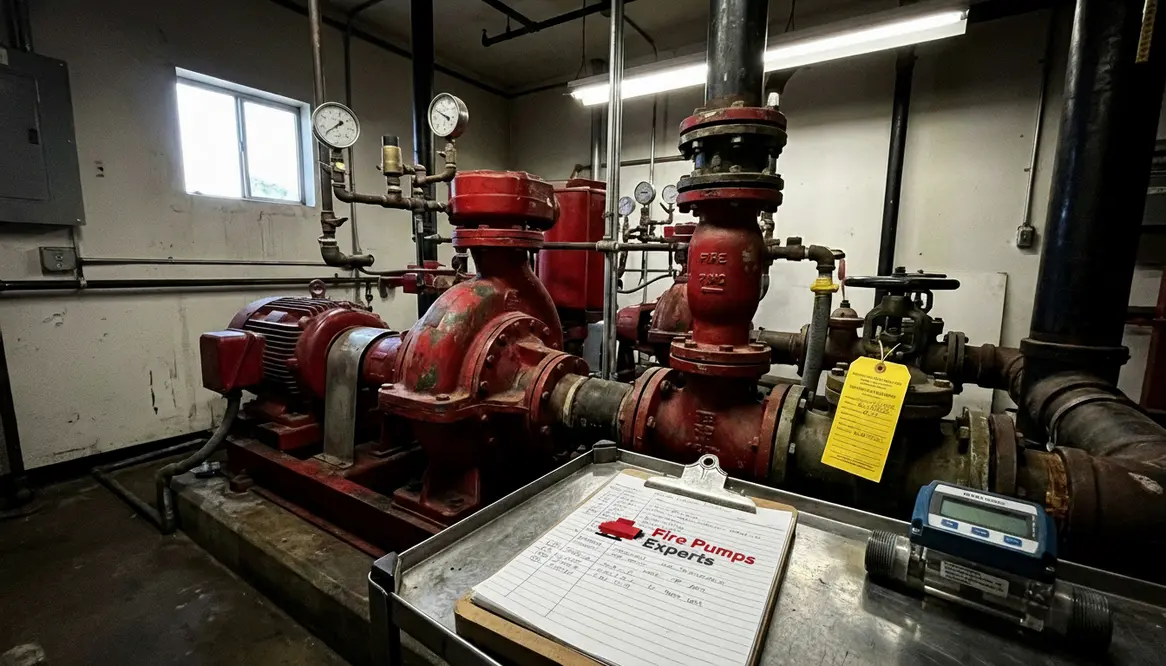
Fire Pump Flow Test San Diego Curve Degradation
I have stood in many mechanical rooms across San Diego where the hum of a fire pump feels almost reassuring. It is the quiet promise that, if the worst day arrives, the building will still stand a fighting chance. Yet that promise only holds if the pump performs exactly as designed. That is where a fire pump flow test san diego interpret curve degradation conversation begins. The test itself is only half the story. The real insight comes from reading the pump curve and spotting early signs of decline before they become a costly failure.
In large commercial and industrial facilities, the stakes are high. A hospital tower, a biotech campus, or a massive distribution center cannot afford uncertainty in its fire protection system. So today, I want to walk you through how I interpret those curves, how degradation shows up in the data, and why paying attention early saves more than just repair bills. Sometimes it even saves reputations.
What does a fire pump flow test reveal in a San Diego commercial facility?
When I run a fire pump flow test, I am not simply checking if water comes out of the pipe. That would be like judging a sports car by whether it starts. Sure, it is important, but it barely scratches the surface.
The real purpose of the test is to compare the pump’s current performance to its original design curve. That curve shows how much water the pump should deliver at different pressure levels. In simple terms, it tells us how the pump behaves under stress.
During a proper test, I record three key operating points.
- Churn pressure with no flow
- Rated flow performance
- 150 percent overload capacity
Why these three points matter
Each point tells a different part of the story:
- Churn pressure reveals the pump’s baseline health.
- Rated flow shows whether the pump can deliver its intended output.
- The 150 percent test exposes weaknesses that might stay hidden under normal demand.
Together, they show whether your system will actually perform when a fire pushes it to the edge of its design.
However, numbers alone do not mean much. The real insight appears when I plot those results against the manufacturer curve. That is where the narrative unfolds. And sometimes that narrative feels like watching a once great athlete lose a step. Think of it like a veteran quarterback who still throws well but cannot scramble like he used to.
Understanding pump curves without needing an engineering degree
A pump curve looks intimidating at first glance. Lines cross the chart like a subway map designed by someone who clearly skipped their morning coffee. Yet once you break it down, it becomes surprisingly straightforward.
The horizontal axis represents flow measured in gallons per minute. The vertical axis represents pressure.
The curve itself represents the pump’s expected performance. As flow increases, pressure naturally drops. That relationship should follow a predictable path.
Quick pump curve checklist
When I compare test data to the curve, I look for three things.
- Does the pump still meet rated flow requirements
- Does pressure remain within acceptable tolerance
- Does the curve shape still resemble the original design
If those answers line up properly, the system is healthy. If they do not, then the curve starts telling a different story.
And trust me, curves rarely lie. People might argue. Spreadsheets might get creative. But hydraulic performance is stubbornly honest.
Early warning signs when interpreting pump curve degradation
One of the most valuable skills I have developed during a fire pump flow test san diego interpret curve degradation review is learning how to spot trouble early. Pumps rarely fail overnight. Instead, they slowly drift away from their original performance.
Several subtle signs usually appear first.
- Pressure drop at rated flow
- Lower churn pressure than historical readings
- Steeper curve slope than expected
- Difficulty reaching 150 percent capacity
What those symptoms often mean
Each symptom points toward a specific mechanical issue.
For example, worn impellers often reduce pressure output. Meanwhile, internal corrosion can restrict flow and distort the curve shape. In other cases, suction supply problems create performance drops that mimic pump damage.
Therefore I always compare current results with historical data. Patterns matter. A small deviation during one test may not raise alarms. However, a consistent decline across several years tells a very different story.
And yes, sometimes the pump looks fine on paper but sounds like a lawn mower chewing gravel. That is usually a clue as well.
Common causes of fire pump performance degradation in San Diego buildings
San Diego offers a beautiful climate for people. Pumps, however, sometimes disagree.
Salt air near the coast accelerates corrosion. Hard water can build mineral deposits inside pump components. Over time, both factors quietly change hydraulic performance.
In large commercial properties, I often see several recurring issues.
- Impeller wear from long term operation
- Obstructed suction piping
- Air entrainment inside the system
- Driver issues affecting pump speed
- Valve restrictions that distort test results
Additionally, facility expansions can unintentionally stress older pumps. A building designed twenty years ago may now support far more tenants, equipment, and fire protection demand.
When that happens, the pump may still operate properly, yet the margin of safety shrinks. It is a bit like asking a pickup truck to haul the weight of a semi trailer. Eventually physics wins that argument.
That is why curve analysis becomes critical. It tells us whether the pump still operates within its intended range and whether a fire pump flow test san diego interpret curve degradation review should trigger upgrades instead of just minor repairs.
Reading the numbers side by side during a San Diego flow test
What I Look For
- Alignment with original manufacturer curve
- Stable pressure readings during flow
- Smooth pressure decline across test points
- Consistent pump speed
- Reliable suction supply
Red Flags I Watch Closely
- Pressure loss beyond acceptable tolerance
- Sharp curve drop between test points
- Inability to reach rated flow
- Vibration or cavitation sounds
- Inconsistent readings during the test
This side by side comparison makes curve interpretation far clearer for facility managers. Rather than staring at graphs, they see the operational story behind the data.
And honestly, once you understand it, the process becomes almost addictive. It is a little like detective work. Except instead of solving a crime, we are protecting a building worth hundreds of millions of dollars.
Why annual testing matters for major commercial properties
In high value facilities, complacency is the real enemy. Fire pumps spend most of their lives waiting for a moment that hopefully never comes.
Because of that, problems can develop quietly.
Annual flow testing forces the system to prove itself under load. It confirms that controllers, drivers, valves, and the pump itself all function together as designed.
More importantly, each test adds another data point to the pump’s historical record. Over time, those records reveal trends that a single test could never show.
I often compare it to tracking your health over decades rather than relying on one annual physical. If cholesterol jumps slightly one year, you might ignore it. But if it climbs steadily for five years, suddenly the doctor starts giving you that look.
For large commercial campuses and industrial complexes, that trend analysis protects both life safety and operational continuity. Partnering with a specialist team that lives in this world every day, such as a dedicated fire pump service provider like Kord Fire Protection’s fire pump service, makes staying ahead of degradation far easier than trying to interpret every test alone.
FAQ: Fire Pump Flow Testing and Curve Interpretation
These are the questions I hear most often right after we finish a fire pump flow test san diego interpret curve degradation review and walk through the results with a facility team.
Protecting performance before problems grow
Every pump tells a story through its performance curve. When I review results from a fire pump flow test san diego interpret curve degradation analysis, I am not just studying numbers. I am listening for subtle changes in that story.
Sometimes that story is simple: the pump still matches its original curve, the building’s demand is unchanged, and your risk profile looks great. Other times, the curve makes it clear that corrosion, wear, or changing system demands have started to eat into your safety margin long before alarms or obvious failures appear.
If your commercial or industrial facility depends on a fire pump system, now is the time to verify its true performance. Schedule a professional flow test, review the curve carefully, and address early warning signs before they escalate. Make that fire pump flow test san diego interpret curve degradation discussion part of your normal maintenance culture, not an afterthought when something finally breaks.
Because when safety systems work exactly as designed, nobody notices. And honestly, that is the best outcome we could ask for.