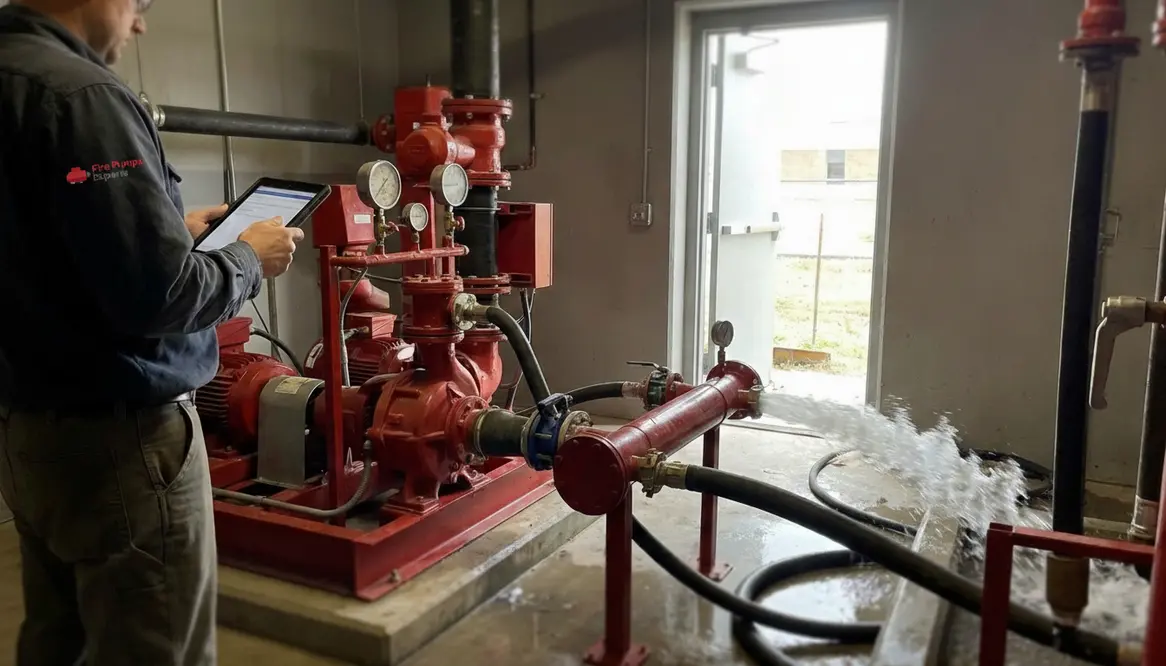
Fire Pump Flow Testing Guide: Procedure and Requirements
I treat fire pump flow testing like a health check for a building’s fire defense. It tells me if the pump can do its job when pressure drops and water demand climbs. For commercial and industrial facilities, that matters a lot. A pump that looks fine on paper can still fall flat under real load, and that is the kind of surprise nobody wants on a busy site. In this guide, I walk through the full procedure, the key requirements, and the common checks I use to keep large properties ready for action.
Why I Never Skip the Prep Work
Before I start any test, I make sure the system is ready. First, I confirm the pump room is safe, clear, and easy to access. Then I check the suction and discharge valves, the controller, gauges, fuel or power source, and the test equipment. I also look for leaks, damage, or signs of wear. This step may sound simple, but it saves time and stops trouble before it starts. In other words, I do not want to find a loose fitting while water is already flying around like a scene from a disaster movie.
Next, I review the site records and system details. I want to know the pump type, rated capacity, and design pressure. That helps me compare the test results against the right benchmark. For large commercial and industrial sites, I also check if there are special site rules, shutdown limits, or safety controls that need attention.
Why Good Testing Protects Real Sites
The point of all this preparation is not paperwork; it is about making sure the pump will perform when a real fire loads the system. In a high-rise, warehouse, or industrial plant, poor testing can hide problems in suction lines, power supplies, or controllers until the worst possible moment.
Done properly, fire pump flow testing gives you proof that your equipment is ready, your water supply is up to the job, and your records can stand up under compliance reviews and insurance scrutiny.
How I Perform Fire Pump Flow Testing
I start the test by setting up the flow path so I can measure performance without creating risk to the building. Then I run the pump and let it stabilize. After that, I record the suction pressure, discharge pressure, speed, and flow rate at each test point. I want a clear picture of how the pump behaves at churn, rated flow, and higher demand levels.
My Core Test Sequence
Here is the short version of my process:
Step
Start up
Flow points
Pressure readings
System response
Shutdown
What I Check
Smooth launch, no abnormal noise, stable pressure
Output at rated and higher demand levels
Suction and discharge changes under load
Controller action, valves, and alarms
Safe stop and no lingering faults
As I work through each point, I watch for pressure drops that seem too steep, vibration that feels off, or flow that does not match the expected curve. Those signs can point to suction issues, worn parts, or a control problem. And yes, pumps can be a bit dramatic when they are unhappy. They do not whisper their feelings; they announce them with noise, heat, and poor performance.
What Requirements I Check During the Test
Fire pump flow testing is not just about opening a valve and hoping for the best. I measure the system against the relevant code, the pump nameplate data, and the site design needs. For major properties, I also check that the water supply can support the system under real demand. A strong pump with a weak supply is like a superhero with a bad battery.
Core Performance And Compliance Checks
Performance: The pump should meet the expected flow and pressure range.
Stability: The system should avoid sudden pressure swings.
Safety: The test should protect staff, equipment, and the building.
Documentation: I record the readings, conditions, and results in full.
Compliance: I compare findings against local standards and site rules.
For Australian facilities, I often review guidance tied to AS 2419 and related maintenance needs. If you want a useful reference, I recommend this AS 2419 fire pump testing and compliance guide. It gives a helpful compliance view that supports broader pump maintenance planning.
How I Read the Results and Spot Trouble
Once the test is done, I compare the numbers with the pump curve and the expected site demand. If the pump falls short, I do not jump to blame the pump right away. Instead, I look at the whole chain. The issue may sit in the suction line, tank level, valves, controller, or even the power supply. A pump is rarely the only actor in the play, even if it likes to take center stage.
I also look for trends. One test may show a small issue, but repeated results can reveal a bigger pattern. For example, a slow pressure loss over several visits can point to wear, clogging, or a supply problem. That is why I value records. They tell the story that one test alone cannot.
How Often I Use Fire Pump Flow Testing In Practice
In real facilities, I use fire pump flow testing as part of a structured maintenance plan, not a one-off event. Regular checks keep performance visible and give everyone confidence that the pump will hold up under a real emergency.
Why Proper Records Matter
Every time I carry out fire pump flow testing, I add to the site’s performance history. That history helps spot creeping problems long before they show up during a fire event. When audits or inspections roll around, those records also prove that the pump has been checked under realistic conditions.
Fitting Testing Around Operations
On busy sites, I plan fire pump flow testing to reduce disruption. That might mean coordinating with production schedules, shift changes, or visitor hours. With the right preparation, the building stays protected without throwing the workday into chaos.
FAQ
Conclusion
When I handle fire pump flow testing with care, I protect the building, the people inside it, and the business that depends on both. If you manage a commercial, industrial, or major property site, make testing part of your fire protection plan, not an afterthought. Review your records, check your system, and act on weak results before they become real problems. If you want a reliable testing schedule or help with compliance, now is the right time to take the next step.