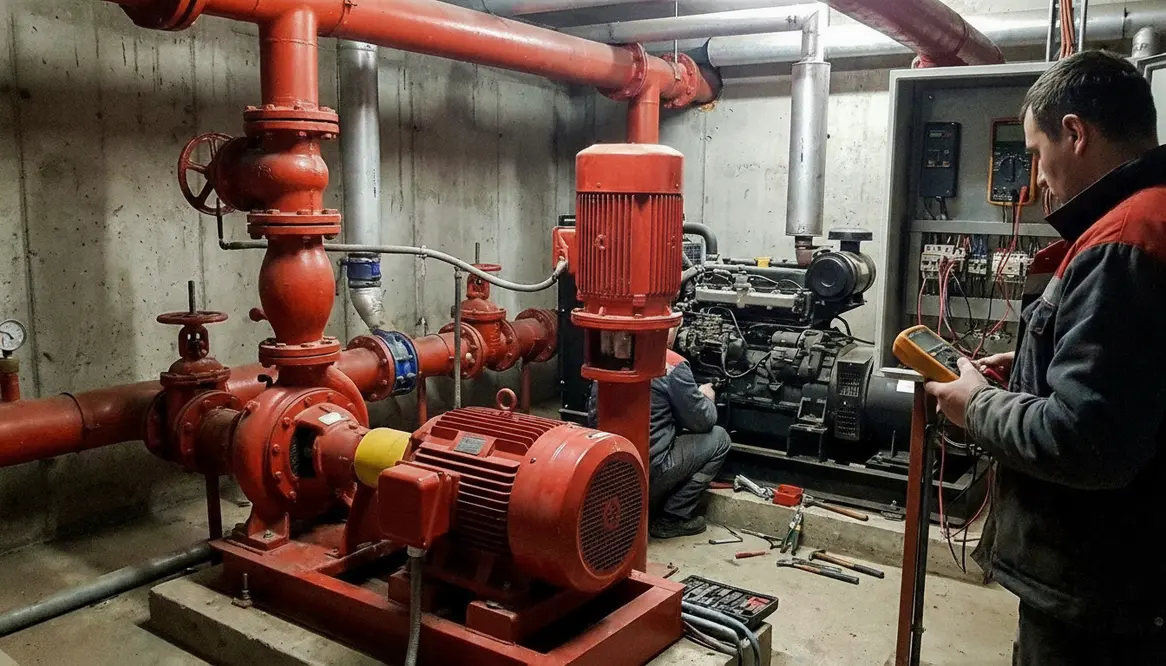
Fire Pump Troubleshooting Guide Issues and Fixes
Fire Pump Troubleshooting Guide: Common Issues and Solutions
When a fire pump acts up, I do not treat it like a small hiccup. In a commercial or industrial building, that pump stands between normal business and a very bad day. So, in this fire pump troubleshooting guide, I will walk through the most common problems I see, why they happen, and how I check them before they turn into costly shutdowns. The goal is simple: keep your system ready, keep your property protected, and keep everyone from getting that same nervous look they get when the fire alarm tests at 8 a.m. on a Monday.
For major facilities, speed matters. However, good troubleshooting also means discipline. I always start with the basics, then move to the deeper system checks. That approach saves time, reduces guesswork, and helps me avoid chasing ghosts in the machine.
At-a-Glance Fire Pump Checks
- Confirm power or fuel is available and stable.
- Verify suction source, valves, and visible leaks.
- Listen for new or harsh noises when the pump runs.
- Review controller alarms and event history.
- Compare recent test data to past test results.
Why My Fire Pump Loses Pressure
Low pressure usually points to one of three things: supply issues, mechanical wear, or a system leak. First, I check the water source. If the tank level is low or the suction line has a blockage, the pump cannot do its job well. Next, I look at the impeller and wear rings. Over time, those parts wear down, and the pump starts to work harder for less result. Finally, I inspect the discharge side for leaks, because even a small loss can drag performance down fast.
When I handle fire pump troubleshooting in a large facility, I also look at system demand. Sometimes the pump is fine, but the building load is not. If a valve is partly closed or a zone problem is pulling pressure away, the pump gets blamed for the wrong crime.
Supply-Side Checks
- Verify water tank level and make sure refill is working.
- Inspect suction strainers for blockage or debris.
- Confirm suction valves are fully open and locked.
- Check for any recent work that may have changed piping.
System-Side Clues
- Look for unexpected open drains or test headers.
- Walk critical zones and risers for audible leaks.
- Confirm pressure-reducing valves are set correctly.
- Compare current pressures to your past test records.
How I Check If the Pump Will Not Start
If the pump does not start, I do not panic. I check the power source first. For electric pumps, I look at breakers, controllers, wiring, and phase loss. For diesel pumps, I check battery charge, fuel supply, and control settings. Simple things fail more often than people like to admit. That is life. Even a strong system can stop because one small switch decided to retire early.
Next, I test the automatic start signal. In many cases, the pump waits for a pressure drop, but a faulty sensor or bad controller setting blocks the command. I also inspect alarms, because they often tell the story before I do. If I see repeated fault codes, I treat them like clues in a detective show, except with more pipes and less dramatic music.
Start-Failure Checklist
- Confirm normal power is available or diesel fuel level is adequate.
- Inspect controller for lockout, emergency stop, or manual mode.
- Check pressure switch or transducer settings and wiring.
- Review event history for repeated start failures or alarms.
- Perform a supervised manual start to confirm basic operation.
Common Signs of Pump Vibration and Strange Noise
Noise and vibration can point to poor alignment, loose parts, cavitation, or bearing trouble. I always listen closely, because a healthy pump has a steady sound. By contrast, a rough or rattling sound tells me the system wants attention now, not later.
Quick Checks I Make Right Away
Electric pump: I inspect motor mounts, controller faults, and power supply stability.
Diesel pump: I check fuel, batteries, cooling, and engine speed.
Both systems: I review suction conditions, valve position, and visible leaks.
Facility systems: I confirm that the demand load matches the design.
Vibration often gets ignored until bolts loosen and seals fail. Then the repair bill shows up like a plot twist nobody asked for. So I always recommend a full mechanical check when the sound changes.
What I Do When the Pump Runs but Performs Poorly
A pump can run and still fail to deliver what the building needs. That is the tricky part. In those cases, I focus on flow restrictions, clogged strainers, air pockets, and worn internals. I also check for cavitation, which happens when the pump does not get enough clean water at the inlet. Cavitation can damage parts fast, so I treat it with urgency.
I also compare the actual test data to the pump curve. If the numbers do not match, I know I need to dig deeper. This step matters in industrial and high value commercial sites, because guesswork is expensive and, frankly, a little embarrassing when the manual already gave the answer.
Performance Red Flags During Fire Pump Troubleshooting
- Pressure and flow are both lower than historical test results.
- The pump reaches shutoff pressure but cannot maintain flow.
- Discharge pressure swings up and down while running.
- Controller shows frequent starts with short run times.
- Noise at the suction side suggests possible cavitation.
Why Routine Testing Matters for Major Facilities
Routine testing gives me the best chance to catch trouble early. It also helps me spot slow changes that a one time inspection would miss. I keep records of pressure, flow, start time, vibration, and controller behavior. Over time, those records tell a clear story.
If your facility handles critical operations, I suggest working with a trusted fire pump service team that understands commercial and industrial systems. For deeper guidance and service support, I also recommend reviewing this commercial fire pump maintenance resource. That kind of support helps me stay ahead of failures instead of chasing them after hours, which is a far less glamorous way to spend a night.
Building a Routine Fire Pump Troubleshooting Habit
- Log every weekly or monthly test in a consistent format.
- Flag any gradual decline in pressure, flow, or start times.
- Schedule deeper inspections after any major system change.
- Train onsite staff to recognize abnormal sounds or alarms.
- Engage professionals for annual testing and data review.
Focused Fire Pump Troubleshooting FAQs
Conclusion
If I want a fire pump to stay ready, I do not wait for a failure to teach the lesson. I inspect the basics, track performance, and fix small issues before they grow teeth. And if your building needs reliable support, now is the time to act. Schedule a professional inspection, review your test records, and keep your system prepared for the moment it matters most. That calm before the storm is worth every bit of effort.