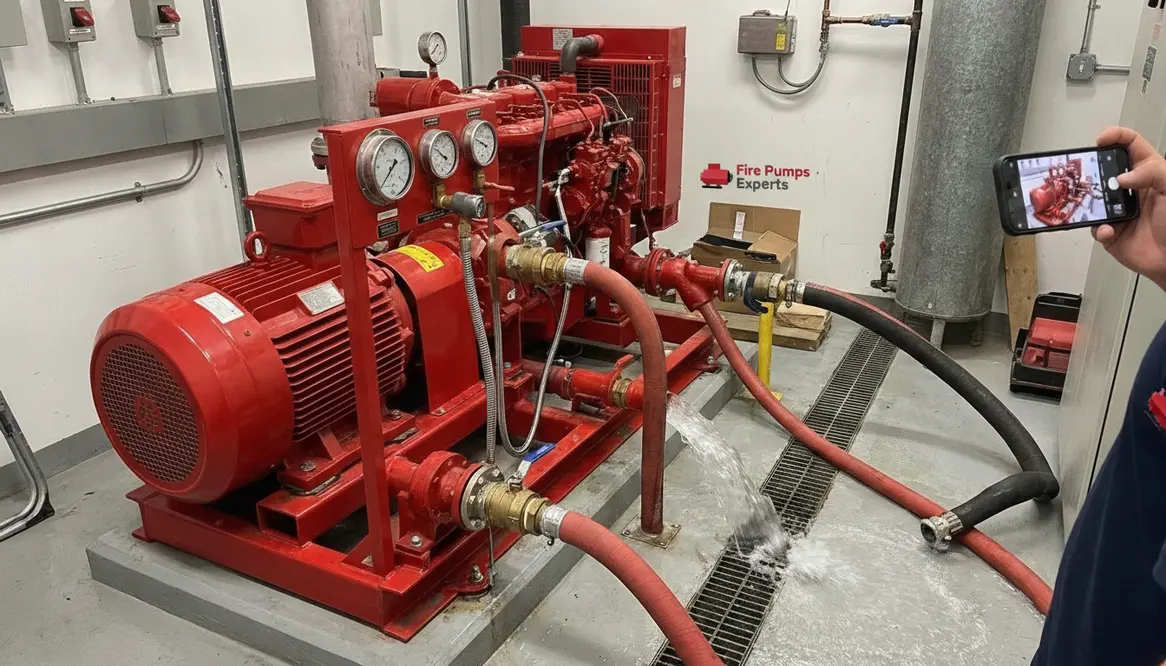
Fire Pump Pressure Testing Guide for Compliance
A practical, field-tested walkthrough of fire pump pressure testing that keeps your system compliant, reliable, and ready for the moment that never gives you advance notice.
Fire Pump Pressure Testing: What You Need to Know
I have seen a lot of building systems in my time, and I can tell you this with a calm, steady voice: fire pump pressure testing is not the kind of task you leave to chance. In a commercial tower, an industrial site, or a major property, a fire pump is the quiet workhorse that stands ready when pressure drops and trouble walks in uninvited. And trouble, as always, arrives with terrible timing. So, if you want your fire protection system to stay ready, you need a test plan that is steady, proper, and well documented.
In this article, I will walk through what the test does, why it matters, what gets checked, and how it supports compliance for commercial and industrial facilities. I will also point to a useful reference on AS 2419 fire pump testing and maintenance compliance in Australia for anyone who wants a deeper look at local requirements. Now, let us get into it.
Why fire pump pressure testing matters in commercial buildings
When I look at a fire pump, I do not see a metal box with pipes. I see a last line of defense. A building can have sprinklers, hydrants, and all the right hardware, yet still fall short if the pump does not deliver the pressure and flow it should. That is why pressure testing matters so much.
First, it helps confirm the pump can meet design demand. If the system needs a certain pressure to push water through the network, the pump must deliver it without hesitation. Second, it helps uncover wear before it turns into failure. Bearings wear down, seals age, valves drift, and motors get tired. Even machines need a checkup now and then. No shame in that. Machines also need their version of a caffeine break.
For commercial and industrial properties, testing also supports compliance and insurance records. In other words, it does more than satisfy a rulebook. It protects the building, the people inside it, and the business that depends on normal days staying normal.
How I approach the testing process
Before any test starts, I make sure the site is ready. That means I check system notes, confirm access, and review the pump type. Then I look at the pump room itself. I want a clean setup, clear gauges, and safe working space. If I cannot trust the basics, I do not trust the results.
Here is the general flow I follow:
- Step one: Inspect the pump, controller, valves, suction line, and discharge line. I want to spot leaks, damage, or anything odd before the pump runs.
- Step two: Connect the right test gear and make sure it can read pressure and flow with accuracy. A shaky reading helps no one. Not even a very optimistic engineer.
- Step three: Run the pump under test conditions and record the pressure at set points. I compare the results to the design and expected performance.
- Step four: Watch how the pump behaves under load. Smooth start, steady run, and stable pressure all matter. If the numbers jump around like a sitcom plot, I dig deeper.
- Step five: Document everything. Clear records help with maintenance planning, audits, and future repairs.
What I check during pressure testing
During fire pump pressure testing, I focus on more than one number on a gauge. I look at the whole system response. That includes:
- Pump start time and response
- Discharge pressure at key flow points
- Suction conditions and signs of restriction
- Controller performance and alarms
- Vibration, noise, or heat that signals trouble
- Valve position and any sign of leakage
These details tell a fuller story. For example, a pump may still reach pressure, but only after strain builds in the system. That strain matters. Over time, strain turns into damage, and damage turns into expensive downtime. Nobody enjoys that sequel.
Dual column view of common test results and what they may mean
Result
Low discharge pressure
Slow start
High vibration
Pressure drop under load
Possible meaning
Pump wear, suction issue, or blocked line
Electrical fault, controller issue, or poor maintenance
Misalignment, bearing wear, or mounting problem
Inadequate pump capacity or system restriction
Common problems I see and how they affect performance
Some issues show up often enough that I almost expect them. One is poor maintenance history. If a pump has not been tested on schedule, small problems stay hidden until the system needs to work hard. Another is internal wear. Over time, the pump may lose efficiency and struggle to hold pressure.
I also see problems with valves and instrumentation. A stuck valve or faulty gauge can send the wrong message, and that is dangerous. If the numbers lie, the whole maintenance plan starts acting like a movie villain with a fake smile.
In some facilities, water supply issues also play a role. If suction pressure is poor, the pump cannot perform as designed. So, I do not just blame the pump. I look at the full system, because the full system is what saves the day.
How often I recommend testing and records
The right schedule depends on the site, the system, and local rules. However, I always advise regular checks, routine service, and documented pressure testing at proper intervals. For major commercial and industrial facilities, that record trail matters just as much as the test itself. It shows the system has been watched, measured, and maintained with care.
Good records should include the date, test conditions, readings, any faults found, and follow up work. Then, when an audit comes around, you are not digging through a drawer like you lost the keys to the kingdom. You already have the proof ready.
Fire pump pressure testing also ties directly into your broader fire protection strategy. When records show consistent performance, it gives everyone from maintenance teams to insurers confidence that the system is not just installed, but actively verified.
Putting fire pump pressure testing into context
In many jurisdictions, standards and local codes shape how fire pump pressure testing is planned and documented. References such as AS 2419 in Australia, or similar standards elsewhere, exist to make sure performance is not based on guessing. They define how pumps should be tested, how results should be recorded, and what “acceptable” really means when lives and assets are on the line.
When you treat fire pump pressure testing as a recurring discipline rather than a once-and-done event, patterns start to appear. Slight drops in pressure, slower starts, or creeping vibration can be picked up early. That allows you to plan repairs rather than respond to failures in the middle of an emergency, which is never the time you want to discover a hidden weakness.
It also helps align your fire protection team, your maintenance provider, and your insurers around one shared reality: the data. Clear test logs give everyone the same view of how the pump is performing and whether the system is heading in the right direction or quietly slipping away from design intent.
FAQ
Conclusion
If you manage a commercial or industrial facility, I encourage you to treat fire pump pressure testing as a serious part of your protection plan, not a box to tick and forget. The right test gives you proof, peace of mind, and a better shot at avoiding failure when it matters most. So, review your schedule, check your records, and make sure your pump system stays ready for the real moment, not just the paperwork.