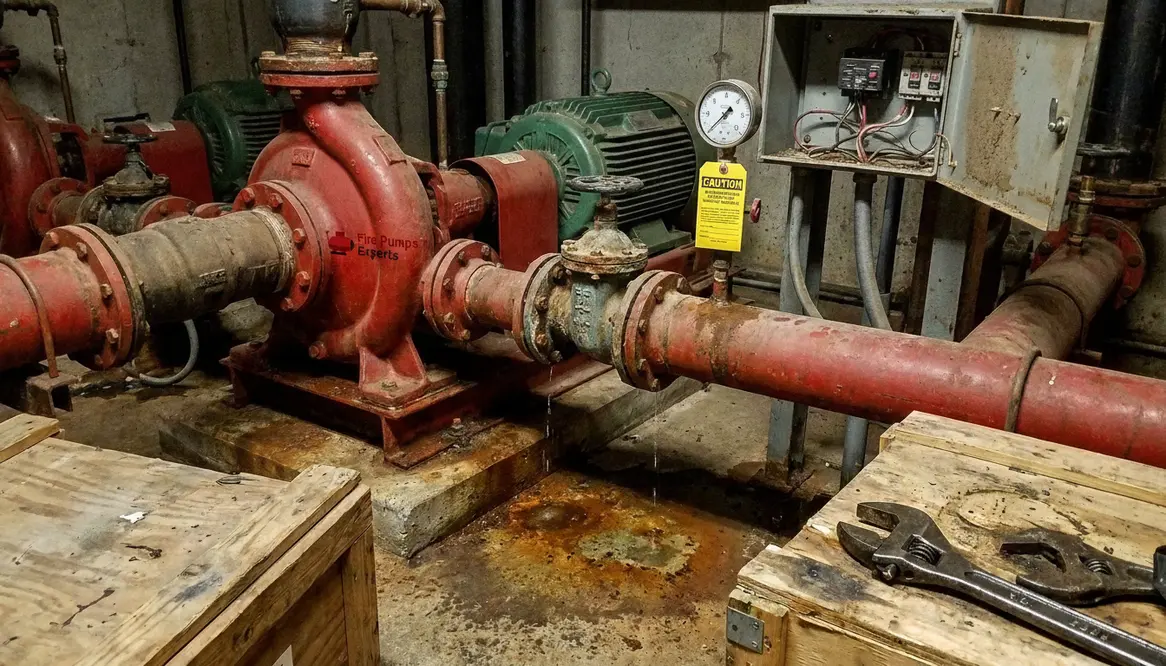
10 Fire Pump Failure Causes and How to Prevent Them
A clear, practical walkthrough of real-world problems that quietly take fire pumps out of the fight long before anyone smells smoke.
10 Common Causes of Fire Pump Failure
I have seen a lot of fire protection systems in my time, and I can tell you this: when a fire pump fails, it rarely does so with dramatic flair. More often, it acts like a quiet troublemaker. The cause may be small at first, yet it can grow into one of the most expensive fire pump failure causes a facility can face. In commercial and industrial buildings, that is not a side note. That is the main event. So, if you manage a plant, warehouse, high rise, or large property, I want to walk you through the issues that usually start the chain reaction. We will keep it practical, clear, and yes, just interesting enough to keep the coffee from getting lonely.
At a glance: what usually breaks first
- Weak or unreliable water supply
- Power and controller problems
- Mechanical wear and bad installation
- Rust, scale, and contamination
- Human error and lack of expert review
Why fire pumps fail in the first place
Most pump problems do not come from one giant breakdown. Instead, they start with small misses in care, testing, or system design. I have found that many fire pump failure causes come from the same handful of habits: poor maintenance, bad water supply, weak power, worn parts, and human error. Also, a pump that sits idle for long periods can become a bit of a diva. It wants attention. It demands exercise. Ignore it, and it will remind you at the worst possible time. That is why I always look at the full system, not just the pump itself.
1. Water supply problems that starve the pump
Fire pumps need a steady water source. When the supply drops, the pump cannot do its job, no matter how solid it looks on paper. Low tank levels, blocked suction lines, broken city supply connections, and poor water pressure can all create trouble. I have also seen sediment build up in ways that make a system feel fine until the moment it does not. If the pump cannot pull enough water, the whole fire protection plan starts to wobble.
How to prevent water supply failures
- Verify tank levels, city connections, and suction conditions on a set schedule.
- Flush lines to remove sediment before it becomes a clog.
- Track pressure trends so slow losses do not stay invisible for years.
2. Electrical failure and bad power control
Electric fire pumps depend on reliable power. If the controller fails, the wiring wears out, the breaker trips, or voltage drops too low, the pump may not start at all. Even small electrical issues can cause big damage over time. For commercial and industrial facilities, I always treat this as a top risk because power problems love to hide until stress shows up. And stress, as we all know, has terrible timing.
Power-side habits that avoid trouble
- Inspect and test controllers, breakers, and transfer switches.
- Correct low-voltage conditions before they cook components.
- Keep accurate logs of every power event that touches the pump.
3. Mechanical wear in moving parts
Every pump has parts that move, rub, spin, and work hard. Over time, bearings wear down, seals leak, couplings loosen, and shafts can shift. When that happens, the pump loses efficiency and may fail during a demand test or, worse, during a real fire event. I have seen systems limp along for months with small signs of wear. Then one day, they stop acting like a hero and start acting like a paperweight with ambition.
Mechanical checks that keep pumps honest
- Listen for new noises and vibration during weekly or monthly runs.
- Inspect seals, couplings, and bearings for visible wear or leaks.
- Compare test results over time to catch falling performance early.
4. Poor routine testing and weak maintenance
If I had a dollar for every pump that failed because no one tested it often enough, I would not need a fire safety blog. Regular inspections and flow tests reveal problems early. Without them, small defects stay hidden until a real emergency exposes them. Maintenance also matters because dust, rust, loose fittings, and fluid leaks do not fix themselves. They just wait. Patiently. Rudely.
Turning maintenance into a nonnegotiable habit
- Follow code-based weekly, monthly, and annual test schedules.
- Document every test result so you can see trends, not just snapshots.
- Fix small leaks and faults instead of writing “monitor” and walking away.
5. Controller and alarm issues
Fire pump controllers do more than look important in a cabinet. They start the pump, monitor status, and signal problems. If the controller fails, the system may not respond when needed. Faulty alarms can also keep staff from noticing a growing issue. I always tell property teams to treat controller checks as nonnegotiable. A smart pump with a bad controller is like Batman without the utility belt. Still impressive, but not ready for action.
Alarms that cry “wolf” (or stay silent)
Nuisance alarms train people to ignore real ones. Silent alarms let problems grow without a peep. Both paths lead straight to the same place on the list of fire pump failure causes.
What to do instead
- Test alarm functions during routine drills.
- Calibrate or repair devices that alarm too often.
- Make sure real faults are loud, clear, and documented.
How I group the most common failure points
Category |
What usually goes wrong |
Water side |
Low supply, blocked suction, dirty water, pressure loss |
Power side |
Breaker trips, bad wiring, controller faults, voltage issues |
Mechanical side |
Seal wear, bearing damage, shaft misalignment, loose parts |
People side |
Skipped testing, missed repairs, poor records, weak oversight |
6. Frozen or overheated system conditions
Temperature can damage a fire pump in both directions. In cold spaces, water can freeze inside lines and fittings. In hot rooms, equipment can overheat and lose performance. I have seen facilities focus hard on one climate risk while missing the other. That is how trouble sneaks in wearing a fake mustache. A pump room needs proper ventilation, heating where needed, and protection from harsh conditions.
Simple environmental checks
- Monitor room temperature and airflow seasonally.
- Insulate or heat vulnerable piping where freezing is possible.
- Keep vents and louvers clear so equipment can breathe.
7. Bad installation or poor system design
Some fire pump failure causes start on day one. If the pump sits on a weak base, uses the wrong pipe size, or connects to a poorly planned layout, it may never perform as intended. I also watch for bad alignment and vibration issues that come from rushed installation. Good equipment can still fail when the setup works against it. Design matters. A lot. In fire protection, “close enough” is not a strategy.
Design choices that pay off later
- Confirm the pump, suction, and discharge sizing match system demand.
- Use solid, level foundations and correct alignment from the start.
- Have a qualified designer or reviewer sign off before you call it “done.”
8. Rust, scale, and contamination inside the system
Over time, corrosion and dirt can build up inside pipes, valves, and pump parts. This can reduce water flow, damage components, and make the pump work harder than it should. Contaminated water can also wear internal surfaces faster. For large properties and industrial sites, this risk grows when systems sit idle or lack regular water movement. A clean system is not flashy, but it does its job without drama. Kind of like the best supporting actor in a good movie.
Keeping the inside of the system clean
- Schedule periodic flushing and internal inspections where possible.
- Watch for discolored water during tests as an early warning.
- Control corrosion with coatings, treatments, or replacements as needed.
9. Human error during operation or service
People make mistakes. I make them. You make them. The trick is building systems that can survive them. A valve may stay closed, a switch may get left in the wrong setting, or a test may get done the wrong way. Sometimes the pump itself is fine, but the setup around it is not. Clear labels, trained staff, and solid procedures can prevent many of these issues before they turn ugly.
Designing for “forgivable” mistakes
- Label critical valves and switches so clearly they are hard to misuse.
- Use checklists for tests so steps are not invented from memory.
- Train more than one person, because people take vacations and change jobs.
10. Lack of outside expert review
One of the more overlooked fire pump failure causes is simple: no one brings in the right expert often enough. Internal teams do a lot, but a third party can spot patterns they may miss. That is why I value resources like fire pump inspection and maintenance support for commercial properties, especially when the goal is to protect a high value facility. A fresh set of eyes can find weak points before they become headlines.
For more technical guidance and best practices, one useful reference is https://firepumps.org, which offers additional context on fire pump design, testing, and maintenance.
Connecting the dots: how causes stack up
Most incidents are not caused by just one bad decision. The biggest fire pump failure causes usually show up as a stack of small issues: a slightly weak water supply, a controller that “acts up” sometimes, maintenance that runs late, and a test that no one has time for this month. On the day the pump is needed, all of those choices arrive together.
FAQ: Fire pump failure causes
Conclusion
I believe fire pump reliability starts with attention, not luck. If you manage a commercial or industrial facility, do not wait for a failure to expose the weak spots. Review your water supply, power, maintenance plan, and equipment condition now. Then, if needed, schedule a professional inspection and keep your system ready for the day it must perform. A strong pump does its best work before anyone notices it. That is the point.