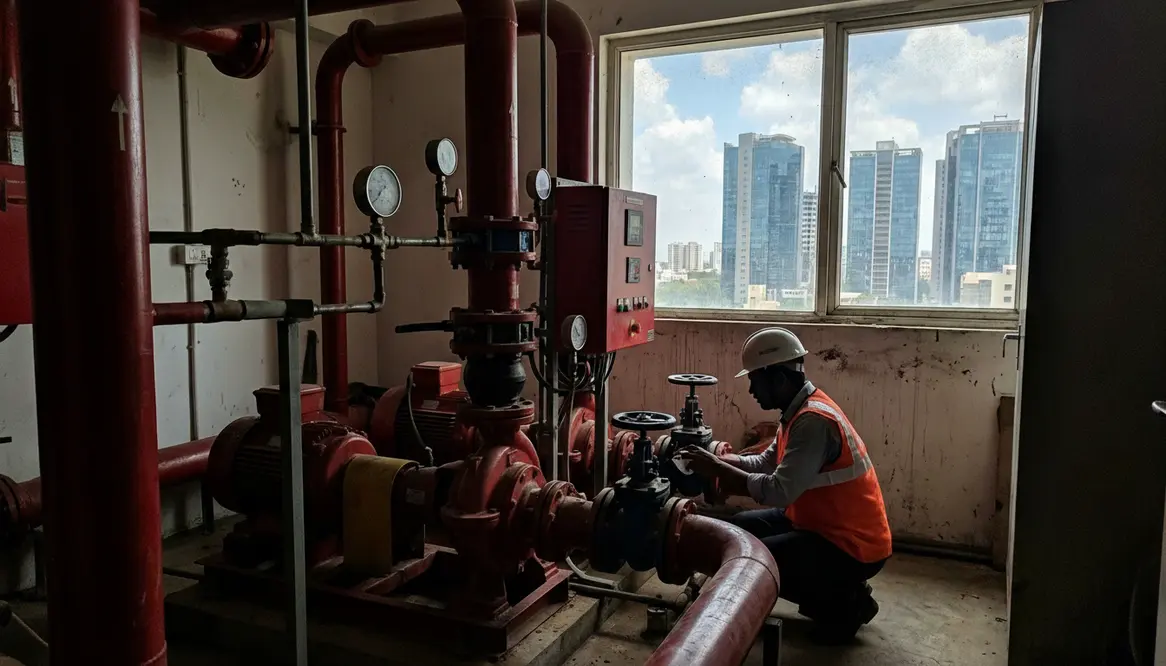
Fire Pump High Rise Bangalore Requirements Guide
I have spent years walking through mechanical rooms that hum like a low bass note, and if there is one thing I never take lightly, it is choosing the right fire pump for a high rise. In a city like Bangalore, where towers climb fast and expectations climb faster, understanding fire pump high rise Bangalore requirements is not just a technical task. It is a responsibility. Because when something goes wrong, the pump is not just equipment. It is the quiet hero waiting in the dark.
Understanding Fire Pump High Rise Bangalore Requirements in Real Buildings
Let me say this plainly. High rise buildings in Bangalore are not forgiving. They demand precision. The pressure requirements alone can humble even experienced engineers. However, I always start with one simple idea. Water must reach the highest point with enough force to fight fire effectively.
Therefore, I look closely at building height, static head, and friction loss. These are not just numbers on paper. They shape the entire system. In addition, local codes and fire authority expectations play a major role. Bangalore tends to follow strict compliance, and rightly so.
Now here is the twist. Many assume one pump fits all. That is like thinking one pair of shoes works for a marathon and a wedding. It does not. Instead, I tailor each system to the building’s personality. Yes, buildings have personalities. Some are demanding divas. Others are quiet but complex.
How Do I Choose the Right Fire Pump for a High Rise in Bangalore?
I begin with flow and pressure. Always. Without those, everything else is just decoration. Then I decide between horizontal split case, vertical turbine, or inline pumps. Each has its place.
For instance, when water supply comes from underground tanks, vertical turbine pumps often step into the spotlight. On the other hand, split case pumps offer reliability and easier maintenance. Therefore, I match the pump type to the site conditions rather than forcing a preference.
Moreover, I consider redundancy. Because if one pump fails, there must be another ready to step in like a well trained understudy. Fire safety does not tolerate single points of failure.
And yes, I also think about space. Mechanical rooms in high rise buildings can feel like trying to park an SUV in a studio apartment. So layout matters more than people expect.
Key System Components That Make or Break Performance
A fire pump does not work alone. It is part of a system. And every piece matters.
Essential elements I always focus on
Controller panels that ensure automatic start without hesitation
Jockey pumps that maintain pressure and prevent unnecessary starts
Reliable power supply including diesel backup when electricity decides to take a vacation
Proper piping design that avoids pressure drops and inefficiencies
Additionally, I pay attention to testing lines and accessibility. Because a system that cannot be tested is a system you cannot trust. And trust, in this context, is everything.
Design Considerations That Often Get Overlooked
Here is where things get interesting. Many designs look perfect on paper. Then reality walks in and says hello.
For example, suction conditions are often ignored. However, poor suction can cause cavitation, which is a polite way of saying your pump is slowly destroying itself. Not ideal.
Similarly, I always check for future expansion. Bangalore buildings evolve. Today’s 20 floors can become tomorrow’s 25. Therefore, planning for scalability saves headaches later.
And let us not forget compliance testing. I have seen systems installed beautifully but fail during inspection. That is like rehearsing for months and forgetting your lines on stage.
Fire Pump High Rise Bangalore Requirements in Practice
When I apply fire pump high rise Bangalore requirements on site, I focus on execution. Because design is only half the story.
What I Check First
Pressure consistency across floors
Controller responsiveness
Backup system readiness
Noise and vibration levels
What I Refine Next
Flow balancing
Energy efficiency
Maintenance access
System integration with alarms
In addition, I work closely with contractors and facility teams. Because even the best system can fail if handled poorly. Communication, therefore, becomes just as important as engineering.
And yes, sometimes I crack a joke during inspections. It helps. Fire pumps may be serious business, but the people around them are still human.
Common Mistakes I Avoid Every Time
I have seen patterns over the years. Mistakes that repeat like reruns of an old sitcom.
Oversizing and underthinking
First, oversizing the pump. Bigger is not always better. It can cause pressure issues and unnecessary wear.
Forgetting maintenance and coordination
Second, ignoring maintenance planning. If you cannot service the pump easily, you will not. It is that simple.
Third, poor coordination between systems. Fire pumps must work seamlessly with sprinklers and hydrants. Otherwise, it is like assembling the Avengers and forgetting Iron Man.
Testing as a discipline
Finally, underestimating testing. Regular testing is not optional. It is the heartbeat of reliability, especially when meeting strict fire pump high rise Bangalore requirements on demanding projects.
Conclusion
If you are planning or upgrading a high rise in Bangalore, I encourage you to treat fire pump selection as a priority, not an afterthought. The right system protects lives, property, and reputation. Work with experts who understand real world demands, not just theory. At firepumps.org, we focus on commercial and industrial scale solutions that perform when it matters most. Reach out, and let us build a system that stands ready, silent, and strong while fully aligned with fire pump high rise Bangalore requirements for your project.