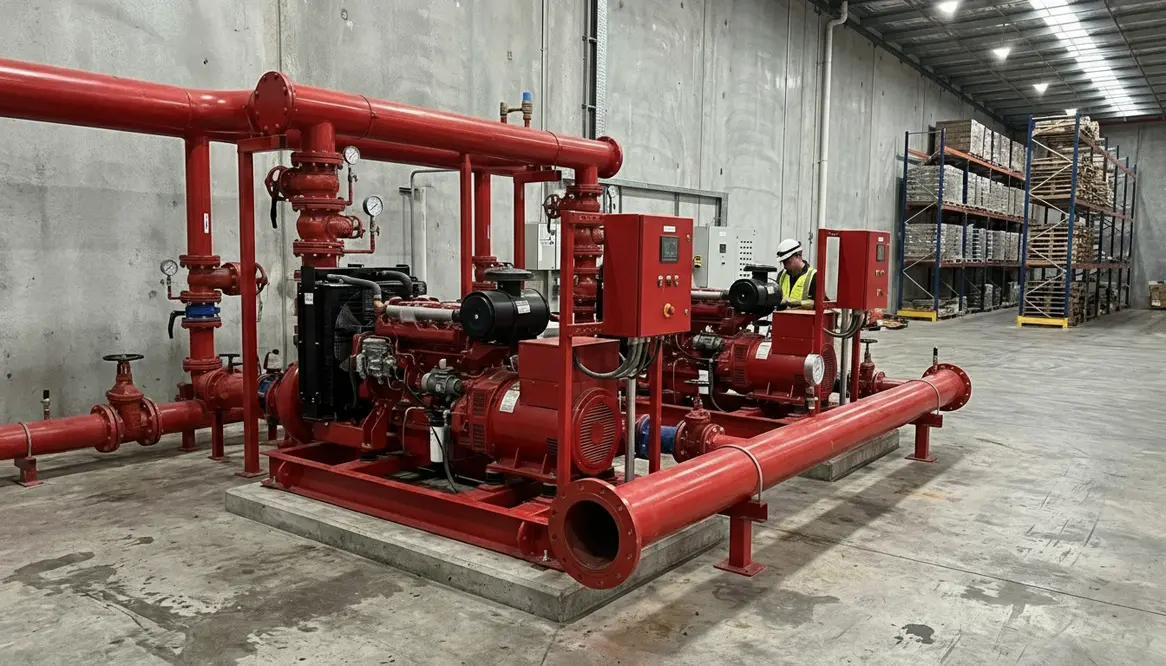
Fire Pump Industrial Park Corona Design Guide
I have spent years around industrial systems, and if there is one thing I have learned, it is this: fire protection is not the place for guesswork. When we talk about fire pump industrial park Corona design, we are stepping into a world where precision meets responsibility. Industrial parks in Corona are not small operations. They house large facilities, complex processes, and assets that do not forgive mistakes. So I approach every design with a steady mindset, a clear plan, and just enough humor to keep things human. After all, even the most serious systems deserve a little personality.
What makes fire pump design different in Corona industrial parks?
Corona is not just another dot on the map. It brings specific challenges. For starters, water supply conditions can vary across industrial zones. Therefore, I always begin with a detailed analysis of available flow and pressure. Without that, everything else is just theory dressed up as engineering.
Additionally, industrial parks tend to have larger footprints. Because of this, I must account for longer pipe runs, higher friction loss, and multiple hazard classifications within a single property. One warehouse might store electronics while another handles flammable liquids. As a result, a one size fits all approach simply will not work.
And let’s be honest, if your fire pump system cannot keep up during peak demand, it is about as useful as a screen door on a submarine. So I design with margin, not just minimums.
Core components that define a reliable system
Every solid system rests on a few critical elements. I focus on how they work together, not just how they perform individually.
Pump selection
I choose between electric and diesel pumps based on reliability and site conditions. Electric is clean and efficient, but diesel offers independence during power loss.
Controller systems
Controllers act like the brain. They must respond quickly and consistently. I never cut corners here.
Water storage
If municipal supply falls short, I integrate tanks. Because without water, even the best pump is just expensive decor.
Pressure maintenance
Jockey pumps keep pressure stable. This prevents unnecessary starts and extends system life.
Together, these components form a system that does more than meet code. It performs under stress.
How I design for large scale industrial demand
Designing for industrial parks means thinking big. However, it also means thinking smart. I start by mapping out the most demanding scenario. Then I build backward from that point.
For example, if multiple buildings draw water at once, I ensure the system can handle that combined load. Meanwhile, I factor in future expansion. Because if there is one thing businesses love, it is growing faster than expected.
Furthermore, I pay close attention to layout. Strategic placement of pumps and connections reduces inefficiencies. In turn, this keeps performance consistent across the entire property.
And yes, I admit it, there is a bit of artistry here. Like a good director staging a scene, everything must be in the right place at the right time. Except instead of actors, I am directing water under pressure.
Compliance and standards I never ignore
Codes are not suggestions. They are the baseline. In Corona, I align every industrial fire pump system with NFPA 20 and local regulations. However, I do not stop there.
I also coordinate with fire authorities early in the process. This avoids surprises later. Because nothing slows down a project faster than a last minute compliance issue.
In addition, I document everything. From flow tests to equipment specs, I keep records clear and accessible. This ensures inspections go smoothly and systems remain serviceable over time.
Think of it this way. Compliance is like the rules of a game. You can try to bend them, but eventually, the referee will notice. And in this case, the stakes are much higher than a missed free throw.
Fire pump industrial park Corona planning for long term performance
A system that works today must also work ten years from now. That is why I design with maintenance in mind. Easy access, clear layouts, and durable components all play a role.
Moreover, I consider operational realities. Industrial facilities do not shut down easily. Therefore, I plan systems that allow testing and servicing without disrupting business.
Another key factor is monitoring. Modern systems can provide real time data. I encourage integrating these tools because they catch issues early. And early detection is always cheaper than emergency repair.
Over time, even the best systems face wear. However, with the right design approach, they age gracefully instead of falling apart like an old action movie sequel that should have stopped at part two.
Common mistakes I help clients avoid
I have seen enough projects to know where things go wrong. Fortunately, most mistakes are preventable.
- First, undersizing the system. It might save money upfront, but it creates risk later.
- Second, poor coordination between trades. When systems clash, performance suffers.
- Third, ignoring future needs. Expansion is not a possibility. It is a probability.
Because of this, I guide clients toward smarter decisions. I explain the tradeoffs clearly. Then I help them invest where it truly matters.
In the end, a well designed Corona industrial fire pump setup does not just protect property. It protects continuity, reputation, and peace of mind.
Key design priorities for any fire pump industrial park Corona project
Hydraulics that match reality
Designs for any fire pump industrial park Corona installation must reflect real-world operating conditions. I account for elevation changes, friction loss, diverse hazard areas, and simultaneous demand so that calculations mirror what happens on the toughest day, not the easiest one.
Redundancy where it counts
For high-value facilities, I lean toward redundancy in pumps, power sources, and controls. A fire pump industrial park Corona layout that includes backup power, alternate routing, and robust monitoring avoids a single-point failure when pressure and stakes are highest.
Behind every resilient fire pump industrial park Corona system is a mix of accurate data, thoughtful planning, and clear communication between owners, engineers, contractors, and the fire authority.
FAQ
Fire pump industrial park Corona solutions that work when it matters
When I design these systems, I think beyond diagrams and specs. I think about the moment they are needed most. That moment does not come with a warning. So the system must be ready, steady, and dependable.
If you are planning or upgrading a facility, now is the time to act. A well designed system protects your operation, your people, and your future. Reach out and let us build something that stands strong when everything else is under pressure.
To learn more about best practices, standards, and reference material for these systems, a useful starting point is https://www.firepumps.org, alongside direct coordination with your local Authority Having Jurisdiction.