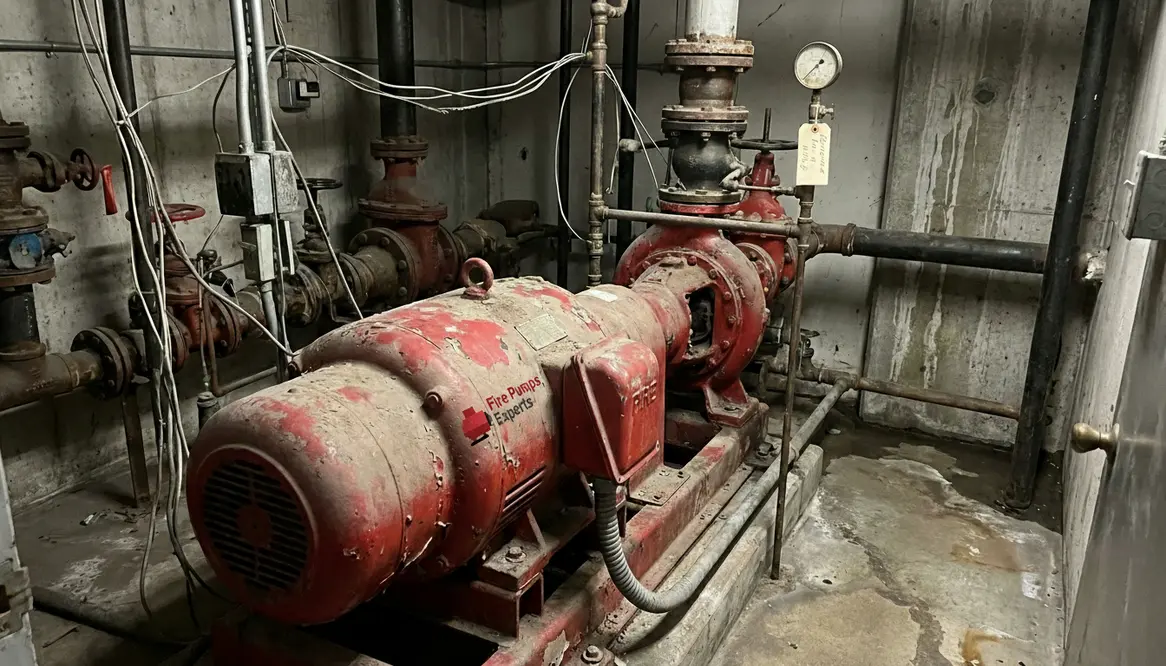
Fire Pump Limitations in Old Buildings Pasadena
A clear eyed look at how yesterday’s infrastructure handles today’s fire protection demands in Pasadena’s older commercial and industrial properties.
I have spent enough time around aging infrastructure in Pasadena to know one thing for certain. The charm is real, but so are the challenges. When we talk about fire pump limitations old buildings Pasadena, we are not just discussing equipment. We are dealing with decades of design decisions, outdated standards, and systems that were never built to handle today’s fire protection demands. And yes, sometimes it feels like asking a classic car to win a Formula One race. It looks good, but it was not built for that kind of pressure.
These systems carry stories of previous owners, earlier codes, and long forgotten “temporary fixes” that somehow became permanent. Every inspection is part archaeology, part engineering, and part reality check on how much risk a building can quietly accumulate before someone asks hard questions.
Why Older Buildings Struggle With Modern Fire Pump Demands
First, I see a clear mismatch between past expectations and present requirements. Many commercial and industrial properties in Pasadena were built when fire codes were less demanding. As a result, the installed fire pumps often lack the horsepower or pressure capacity needed today.
Moreover, older systems were designed for smaller sprinkler zones. Now, facilities expand, tenants change, and fire loads increase. Consequently, the original pump simply cannot keep up. I often compare it to streaming high definition movies on dial up internet. Technically possible, but painfully inadequate.
Additionally, water supply conditions have changed. Municipal pressure may have dropped over time, which further exposes the limits of aging pumps. Therefore, what once worked reliably now struggles under modern expectations. That is one reason fire pump limitations old buildings Pasadena keeps showing up as a recurring theme during performance testing and forensic reviews after near misses.
What Are the Most Common Fire Pump Limitations Old Buildings Pasadena Faces?
Let me break it down in a way that mirrors what I see in the field.
Mechanical Constraints
- Undersized pump capacity
- Worn internal components
- Inefficient motors
- Limited pressure output
System Design Gaps
- Outdated pipe sizing
- Inadequate sprinkler coverage
- Lack of redundancy
- Non compliant control panels
Now, here is where it gets interesting. Even if the pump itself still runs, the surrounding system often holds it back. In other words, upgrading just one piece rarely solves the whole problem. When people talk about fire pump limitations old buildings Pasadena, they are usually seeing symptoms of a deeper system wide design story, not just a tired pump begging for retirement.
How Do Space and Layout Restrictions Affect Fire Pump Upgrades?
Older buildings in Pasadena were not exactly designed with future upgrades in mind. Mechanical rooms are tight, access points are limited, and structural constraints can make installing modern equipment feel like solving a puzzle blindfolded.
Because of this, I often need to get creative. However, creativity has limits when safety is involved. Larger, more efficient pumps require space, proper ventilation, and updated electrical connections. If those elements are missing, the upgrade becomes more complex and costly.
Furthermore, seismic requirements in California add another layer. New installations must meet stricter standards, which older structures may not easily support. So while the idea of a simple swap sounds appealing, reality tends to disagree.
Sometimes the best “upgrade” is rethinking where the fire pump lives, how it is anchored, and how it ties into the wider distribution system. That kind of work is not glamorous, but it is often the difference between a system that passes a test once and a system that performs when a real fire turns theoretical risks into actual flames.
Code Compliance Gaps in Aging Pasadena Infrastructure
Let us be honest. Codes evolve for a reason. They respond to real world incidents and improved understanding of fire behavior. However, many older commercial and industrial buildings operate under grandfathered conditions.
That said, grandfathered does not mean optimal. In fact, it often means vulnerable. Fire pump systems in these properties may lack features like automatic transfer switches, modern controllers, or adequate backup power.
Consequently, during an emergency, these gaps can slow response times or reduce system effectiveness. And in fire protection, seconds matter. A lot.
Also, inspections today are more rigorous. So even if a system passed years ago, it may struggle to meet current testing expectations. That is where proactive upgrades become less of a luxury and more of a necessity. The phrase fire pump limitations old buildings Pasadena often appears in deficiency reports not because inspectors love buzzwords, but because the gap between “allowed” and “actually resilient” can be uncomfortably wide.
Staying ahead of code is not about chasing paperwork; it is about making sure your system behaves predictably when everything else in the building is going wrong. That is the real standard that matters.
The Hidden Cost of Ignoring Fire Pump Limitations
I have seen it too many times. A facility delays upgrades because the system still operates. On the surface, that seems reasonable. However, beneath that surface lies risk.
First, inefficient pumps consume more energy. Over time, that adds up. Second, maintenance costs increase as parts wear out and replacements become harder to source. And third, insurance providers may raise premiums when systems fall behind modern standards.
Then there is the big one. System failure during a fire event. That is not just a financial issue. That is a safety issue. No punchline there, just reality.
There is also reputational damage. When a serious incident reveals that a building owner knew about fire pump limitations old buildings Pasadena and chose to gamble on “maybe it will be fine,” that rarely plays well in post incident reports, courtrooms, or community discussions.
Smart Strategies for Modernizing Fire Protection Systems
So what do I recommend? I take a phased and strategic approach.
First, I assess the entire system, not just the pump. Then, I identify the biggest performance gaps. After that, I prioritize upgrades that deliver the most impact.
In many cases, this includes:
- Installing higher efficiency fire pumps
- Upgrading controllers and monitoring systems
- Improving water supply reliability
- Reconfiguring piping for better flow
Additionally, I always plan with future expansion in mind. Because if there is one thing I know about commercial and industrial facilities, it is this. Change is constant.
A smart modernization plan looks at how tenants might change, how production lines might shift, and how local water conditions might evolve. It pairs today’s upgrades with tomorrow’s likely needs instead of chasing quick fixes.
Sometimes the smartest move is commissioning a full fire protection master plan. Resources like https://firepumps.org can help owners understand industry expectations, but the real value comes from tailoring those expectations to a specific building’s age, layout, and operational realities.
FAQ: Fire Pump Challenges in Older Pasadena Buildings
Moving Forward With Confidence
When I look at Pasadena’s older infrastructure, I do not see problems. I see opportunities to improve safety and performance. Addressing fire pump limitations old buildings Pasadena is not about replacing history. It is about reinforcing it with smarter, stronger systems.
If you manage a commercial or industrial property, now is the time to act. Evaluate your system, plan upgrades, and ensure your building is ready when it matters most. Because in fire protection, preparation is everything. And waiting for a wake up call is one plan I would not recommend.
The buildings may be old, but your approach to risk does not have to be. Treat fire pump limitations old buildings Pasadena as a starting point for questions, not a line item to ignore until the next inspection. The sooner those questions are asked, the more options you have, and the more likely it is that your building’s best stories will come from successful fire drills, not from after action reports.