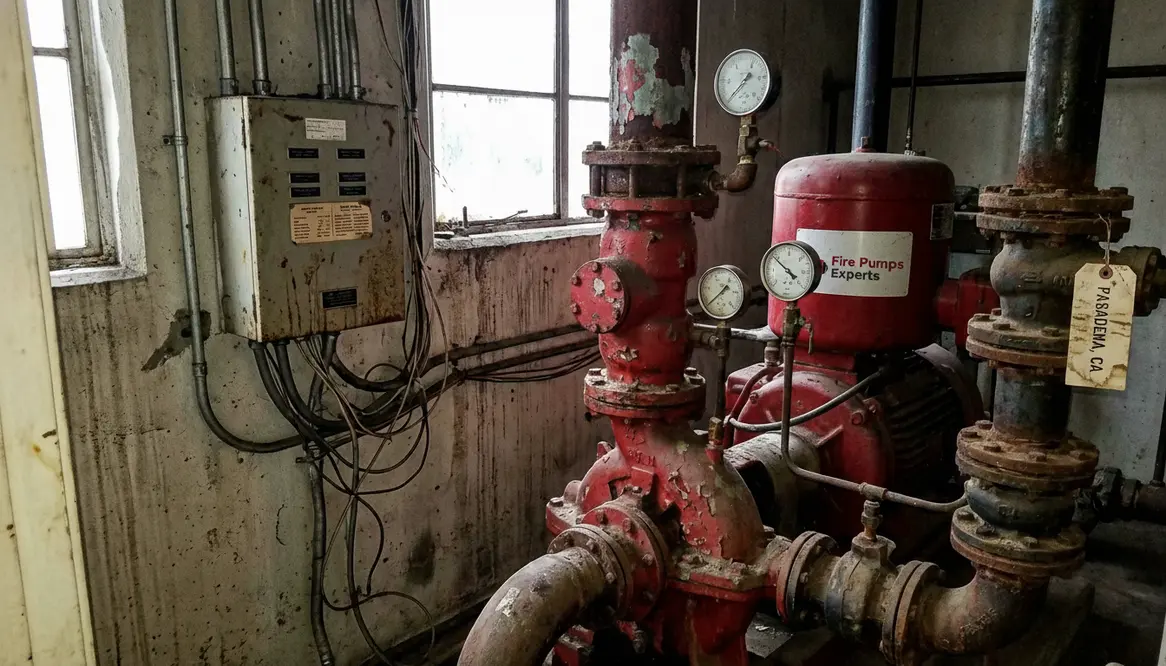
Fire Pump Limitations in Old Buildings Pasadena
I have walked through many mechanical rooms in Pasadena, and I can tell you this much with a calm certainty: time leaves fingerprints. When we talk about fire pump limitations old buildings Pasadena, we are really talking about systems designed for a different era trying to keep up with modern demands. These buildings carry history in their bones, yet their fire protection systems often lag behind current codes and real world risks. So, let me guide you through what I have seen, what matters now, and why these limitations deserve your attention before they decide to introduce themselves at the worst possible moment.
What Happens When Legacy Fire Pumps Meet Modern Demand
First, older fire pumps were not built with today’s density or hazard levels in mind. Back then, buildings did not house the same electrical loads, server rooms, or high value equipment. As a result, the original pump capacity often falls short. Moreover, water supply assumptions have changed, and city pressure is not always as reliable as it once was.
Because of this, I often see pumps that struggle to maintain consistent pressure across large commercial properties. And while they may still run, they operate like an aging actor trying to perform an action scene. It is admirable, but not exactly reassuring.
Additionally, older controllers lack the smart monitoring features we rely on today. Without real time diagnostics, small issues grow quietly. Then one day, they are not small anymore.
Fire Pump Limitations Old Buildings Pasadena: Why Age Is Not Just a Number
Age brings character, yes, but it also brings wear. In Pasadena, many commercial and industrial facilities still depend on pumps installed decades ago. Over time, internal components corrode, seals weaken, and efficiency drops.
However, the real concern is not just wear. It is compatibility. Modern fire protection systems demand precise coordination between pumps, alarms, and sprinklers. Older systems were never designed for that level of integration.
Consequently, when upgrades happen in one part of the system, the pump may become the weak link. It is like upgrading your smartphone but keeping dial up internet. Technically functional, but painfully limited.
How Do I Know If My Fire Pump Is Reaching Its Limits?
I usually tell facility managers to look for patterns, not just problems. For instance, fluctuating pressure during testing is a red flag. Likewise, delayed startup times can signal mechanical fatigue.
Another sign is frequent maintenance that feels reactive instead of planned. If your team keeps putting out small fires, metaphorically speaking, the system is telling you something.
Furthermore, compliance issues often reveal deeper limitations. If your system struggles to meet updated fire codes, the pump itself may no longer be suitable for the building’s risk profile.
In many Pasadena properties, especially those with a long history, this is where the phrase fire pump limitations old buildings Pasadena stops being theoretical and becomes uncomfortably real.
Common Warning Signs
- Inconsistent water pressure
- Unusual vibration or noise
- Frequent controller faults
- Slow system response times
Underlying Causes
- Aging internal components
- Outdated pump design
- Electrical inefficiencies
- Mismatch with upgraded systems
Infrastructure Constraints That Complicate Upgrades
Now, here is where things get interesting. Older Pasadena buildings were not designed with future retrofits in mind. Space is tight, access is limited, and structural constraints make large equipment upgrades challenging.
Because of this, replacing a fire pump is rarely a simple swap. It often requires creative engineering solutions. In some cases, we must redesign layouts or reinforce structural elements just to accommodate modern equipment.
Meanwhile, water supply infrastructure can also pose limits. Older pipes may not support the flow rates required by newer pumps. So even if you install a high performance unit, the system around it might hold it back.
It is a bit like putting a high performance engine into a vintage car without upgrading the brakes. It might move faster, but stopping becomes the real problem.
Fire Pump Limitations Old Buildings Pasadena in High Value Facilities
When I step into large commercial or industrial properties, the stakes rise quickly. These facilities often house critical operations, expensive equipment, and high occupancy levels. Therefore, any limitation in fire pump performance becomes a serious liability.
In these environments, reliability is everything. Even a brief failure can lead to significant losses. Yet older pumps often lack redundancy and advanced fail safes.
Additionally, energy efficiency becomes a factor. Modern pumps operate with better efficiency and control, reducing operational costs over time. Older systems, on the other hand, tend to consume more power while delivering less performance.
So, while nostalgia may have its place in architecture, it has no business running your fire protection system. When assessing fire pump limitations old buildings Pasadena, especially in high value facilities, the cost of inaction often outweighs the cost of thoughtful upgrades.
FAQ
Conclusion
If you manage a commercial or industrial property in Pasadena, now is the time to take a closer look at your system. I have seen what happens when small limitations grow into major failures, and it is never convenient. Let us evaluate your fire pump, identify risks, and plan smart upgrades that protect both people and assets. Reach out today, and we will make sure your system is ready when it matters most.
For additional resources and a deeper look into performance testing strategies beyond code minimums, you can review guidance at https://firepumps.org, then apply those ideas to the real-world constraints and fire pump limitations old buildings Pasadena bring to the table.