Fire Pump Limited Water Supply Lancaster Guide
I have spent enough time around pump rooms to know one truth. Water does not always show up when you need it most. And in a place like Lancaster, where supply can be limited or inconsistent, planning becomes more than a checkbox. It becomes survival. When I talk about fire pump limited water supply Lancaster, I am not talking theory. I am talking about real systems that must perform under pressure, with less water than they would like. So today, I am going to walk you through the options that actually work, without putting you to sleep in the process.
Understanding the challenge of limited water supply in Lancaster facilities
First, let me set the stage. Not all facilities enjoy a generous municipal water source. In fact, many commercial and industrial buildings in Lancaster operate with restricted flow rates or low pressure. As a result, the fire protection system cannot rely on city supply alone.
Because of this, I often recommend designing with intention rather than hope. You do not want your system acting like a superhero who forgot their cape. Instead, you need equipment that compensates for scarcity.
Moreover, limited supply affects more than pressure. It influences duration, reliability, and compliance. Therefore, choosing the right pump is less about preference and more about strategy.
Which fire pump types work best when water is scarce?
If I had a dollar for every time someone asked me this, I could probably fund a small pump station myself. The answer is not one size fits all, but a few options stand out.
Electric fire pumps work well when power is reliable and water storage tanks are in place. They are efficient, clean, and relatively quiet. However, without stored water, they can struggle.
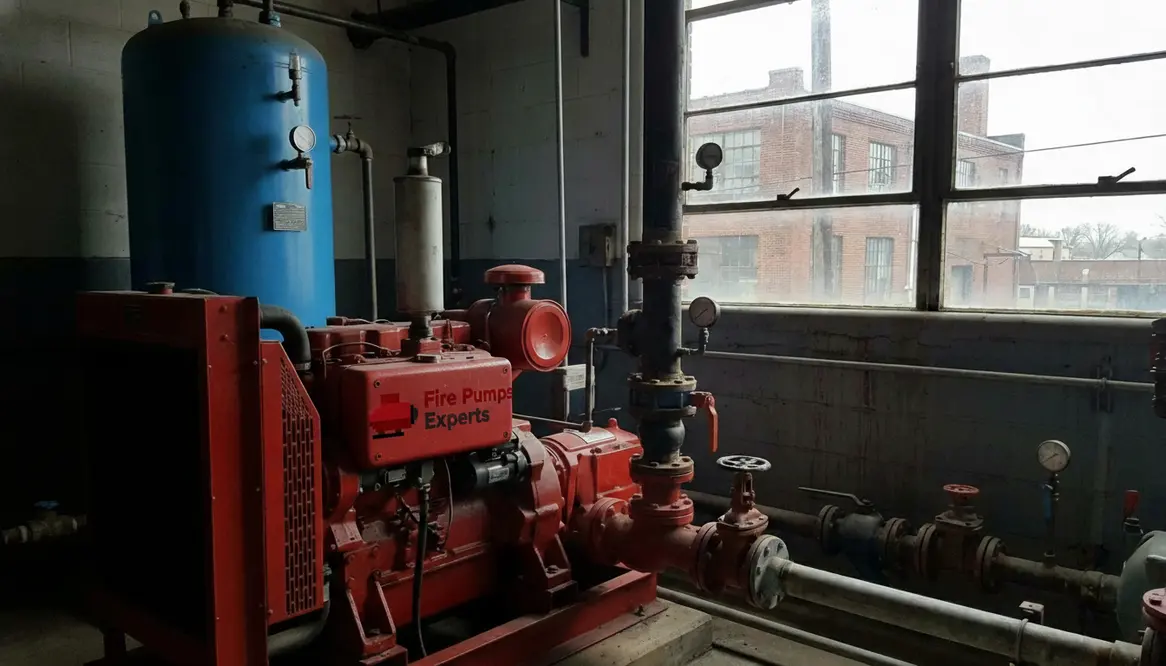
Diesel driven fire pumps bring independence. They do not rely on electrical grids, which makes them a strong choice for facilities where outages are a concern. Additionally, they can draw from dedicated tanks, making them ideal for limited supply scenarios.
Vertical turbine pumps shine when the water source sits below ground, like wells or underground tanks. These pumps pull water upward efficiently, which is critical when every gallon counts.
And then there is the pressure maintenance pump, often called a jockey pump. While it does not fight fires directly, it keeps system pressure stable. Think of it as the calm, collected stage manager behind the scenes.
Each option has its role. The key is matching the pump to the reality of your facility, not the brochure.
Designing systems that stretch every drop
Now here is where things get interesting. When water is limited, design becomes an art form. I have seen systems that waste water like it is an all you can eat buffet. That approach does not work here.
Instead, I focus on efficiency. Storage tanks become essential. By storing water onsite, you create a controlled and reliable source. Furthermore, smart pipe sizing reduces friction loss, ensuring that what little water you have travels farther.
Equally important, zoning the system helps prioritize critical areas. Not every square foot needs the same level of protection at the same time. By segmenting the system, you conserve supply without compromising safety.
And yes, automation plays a role too. Modern controllers optimize pump performance, ensuring that the system responds precisely, not excessively. No drama, no overreaction, just steady performance.
Choosing the right setup for commercial and industrial properties
When I evaluate a facility, I do not just look at the pump. I look at the whole ecosystem. Warehouses, manufacturing plants, and large commercial buildings all have unique demands.
For example, a distribution center with high rack storage needs sustained pressure over time. Meanwhile, a manufacturing plant may require rapid response for specific hazard zones.
Key considerations I always review
- Available water source and refill rate
- Required fire flow and duration
- Power reliability and backup options
- Space for tanks and pump equipment
Common solutions I recommend
- Diesel pump paired with onsite storage
- Vertical turbine pump for underground sources
- Hybrid systems combining electric and diesel
- Advanced controllers for precise operation
Because every facility tells a different story, the solution must follow the plot. Otherwise, you end up with a system that looks good on paper but struggles in reality.
Fire pump limited water supply Lancaster compliance and reliability
Let us talk about the part nobody wants to ignore. Compliance. Codes and standards are not suggestions. They are the rules of the game.
In Lancaster, systems must meet strict requirements for performance and reliability. Therefore, selecting a fire pump for limited water supply in Lancaster means ensuring it can deliver the required flow for the specified duration, even when supply is tight.
Regular testing becomes critical. You cannot just install a pump and hope it behaves. Weekly and annual tests confirm that the system performs as expected. Think of it as a rehearsal before the big show.
Additionally, redundancy adds peace of mind. Backup pumps or dual power sources can mean the difference between control and catastrophe.
Common mistakes I see and how to avoid them
I will be honest. Some mistakes are so common they deserve their own highlight reel.
First, undersizing the water storage tank. This is like bringing a water bottle to a marathon. It simply will not last.
Second, ignoring maintenance. Even the best pump will fail if neglected. Routine inspections keep everything running smoothly.
Third, overcomplicating the system. Complexity often leads to failure points. Simplicity, when done right, wins every time.
Finally, choosing based on cost alone. I understand budgets matter. However, cutting corners on fire protection is like buying a parachute on clearance. It is not the place to gamble.
FAQ about fire pumps in limited water conditions
Fire pump limited water supply Lancaster solutions that actually work
At the end of the day, I believe every facility deserves a system that performs without hesitation. If you are dealing with a fire pump limited water supply Lancaster challenge, the solution lies in smart design, the right equipment, and consistent maintenance. So take the next step. Evaluate your system, ask the hard questions, and invest in a setup that will stand strong when it matters most. Because when the moment comes, there is no room for maybe.