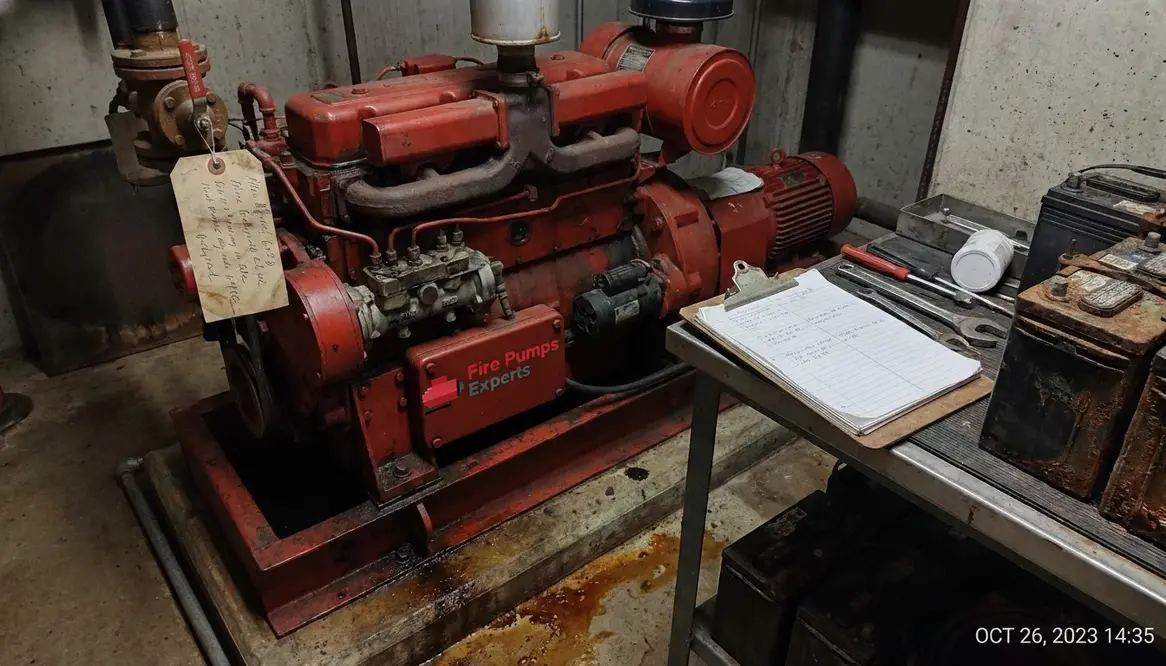
Fire Pump Maintenance Mistakes That Cause Failure
Fire Pump Maintenance Mistakes That Cause Failures
I have seen a lot of fire pump maintenance mistakes, and most of them look harmless at first. That is the tricky part. A pump can sit there like a quiet bodyguard, then fail the moment a real fire turns up. And when that happens, the small stuff you skipped starts looking very expensive. In commercial and industrial buildings, plus major property sites, I treat fire pump care like a serious daily job, not a “we’ll get to it next quarter” task. Because when the system needs to work, it needs to work now.
A fire pump sits quietly for years, then has one job: move water at the exact moment everything else is going wrong. This post walks through the fire pump maintenance mistakes that quietly build up behind the scenes until they turn into full-blown failure at the worst possible time.
Why Small Fire Pump Maintenance Mistakes Turn Into Big Failures
I always start here because this is where many teams miss the point. A fire pump does not usually fail all at once. Instead, it weakens over time. Loose parts, bad records, dirty strainers, weak batteries, and missed test runs all pile up. Then, one day, the pump starts under stress and stumbles like an actor forgetting the whole script. Not ideal.
In my experience, the biggest danger is false confidence. A pump room can look neat, and still hide problems. Therefore, I check more than the surface. I look at pressure, flow, alignment, fuel, heat, vibration, and signs of wear. If your team only gives the system a quick visual once in a while, you are basically trusting a superhero with a cracked cape.
This slow decline is exactly why fire pump maintenance mistakes are so dangerous. Nothing explodes, nothing screams for attention. Things just drift: a little less pressure here, a bit more heat there, a test skipped “just this once.” By the time the system is needed, that quiet drift has turned into a loud failure.
Fire Pump Maintenance Mistakes I See Most Often
Here are the mistakes that cause the most trouble in commercial and industrial settings. If you want to avoid painful surprises, start by hunting these down in your own pump room.
1. Skipping Weekly and Monthly Tests
Routine testing catches trouble early. When teams skip it, they lose the warning signs. As a result, small issues become major failures during an emergency.
I have seen pumps that passed a quick “walk-by” inspection fail within minutes of a real demand because nobody actually ran them under proper test conditions. A test that exists only on paper is one of the most common fire pump maintenance mistakes hiding in plain sight.
2. Ignoring Suction Problems
A pump can only do its job if water reaches it properly. Low suction, air leaks, clogged strainers, or valve issues can all choke the system. I have seen good pumps blamed for bad water supply. The pump was not the villain. The setup was.
If suction problems exist, you can test and tweak the pump all day and still get poor performance. That is not fine-tuning; that is arguing with physics. Checking strainers, tanks, valves, and supply pressure should be a fixed part of every inspection routine, not a “maybe later” task.
3. Letting Diesel and Electric Systems Drift
Diesel pumps need fuel care, battery checks, and engine attention. Electric pumps need power checks, control inspections, and clean connections. When teams treat them the same, trouble follows. Different systems, different needs. Simple enough, yet often forgotten.
I regularly find diesel tanks with old fuel, batteries that could barely start a lawnmower, or electric drivers living at the mercy of unstable voltage. These are classic fire pump maintenance mistakes: everyone assumes the power and fuel “will be there” without proving it.
4. Leaving Records Incomplete
If I cannot trace the history, I cannot spot the pattern. Missing logs make it hard to prove service was done, and even harder to plan the next step. Good records help me see slow change before it turns into failure.
When logs are half-filled, scattered, or “living” in someone’s head, subtle drops in performance stay invisible. Proper testing without proper record keeping is like reading only every third page of a manual and insisting you understand the whole system.
5. Delaying Repairs
People love the phrase “it still works.” Sure, until it does not. A seal leak, worn bearing, or control issue should not sit on a to do list for months. Repair delays often turn a manageable fix into a full outage. That is not maintenance. That is gambling with the building.
One of the most expensive fire pump maintenance mistakes is pretending that “minor” issues will stay minor. They rarely do. If a pump could talk, it would probably say, “Fix the small problem now, or pay for the large one later.”
How I Inspect Commercial and Industrial Fire Pumps for Real Reliability
When I inspect a fire pump system, I follow a clean path. First, I check the room conditions. Then I review the pump, driver, controller, valves, and power source. After that, I look at test data and compare it with past results. This matters because trends tell the truth. One reading may look fine, but five readings can show a slow slide.
Key Checks: From Water Supply to Wear and Tear
Left column
Water supply strength
Valve position and function
Driver health
Control panel status
Noise, heat, and vibration
Right column
Battery charge or power feed
Fuel level and fuel quality
Pressure stability
Test run results
Signs of corrosion or wear
Also, I make sure the team knows the system is not a decoration. It is life safety gear for large buildings, plants, and major facilities. That means every finding needs action, not just a polite nod and a clipboard selfie. Yes, I said it.
How to Build a Maintenance Routine That Actually Works
To avoid fire pump maintenance mistakes, I keep the routine simple, steady, and repeatable. First, assign one clear owner. Then, set a fixed schedule for testing and review. After that, train the team to spot warning signs, not just complete forms. A lot of failures start when people do tasks without understanding why they matter.
Simple Structure, Serious Follow-Through
A basic, reliable routine usually includes:
- Clear ownership of the fire pump system and its schedule
- Weekly and monthly tests that are actually performed, not just checked off
- Detailed logs of readings, issues, and repairs
- Standard responses for alarms, odd noises, or unusual readings
- Planned shutdown windows for bigger repairs, instead of last-minute chaos
Use Outside Eyes and Solid Guidance
I also push for outside review on a regular basis. Internal teams do good work, but a fresh set of eyes can catch what familiarity hides. If you want a strong reference for proper care in large facilities, I suggest using a trusted resource like expert fire pump maintenance guidance for commercial facilities. It helps keep service aligned with the needs of industrial sites and major properties.
Most of all, I tell clients to treat every odd sound, pressure change, or test shift as a clue. That is how you prevent the drama. And honestly, nobody wants the fire pump version of a season finale.
Avoiding the Costliest Fire Pump Maintenance Mistakes
By now, the pattern should be clear: the worst fire pump maintenance mistakes are not wild, dramatic errors. They are quiet habits of delay, assumption, and guesswork. The pump does not care if everyone meant well; it only responds to the condition it is actually in when the fire hits.
If your process is loose, your testing is inconsistent, and your repairs depend on “spare time,” then your risk is much higher than it looks. Tight routines and honest inspections cost far less than a single failure in a real emergency.
FAQ
Conclusion
If I want fire pumps to protect a commercial or industrial building when it matters most, I cannot treat maintenance as an afterthought. I need steady tests, clean records, fast repairs, and careful reviews. So, if your site relies on a fire pump system, now is the time to tighten your process, fix weak spots, and protect the people and property that depend on it. Start today, because failure never waits for a convenient moment.