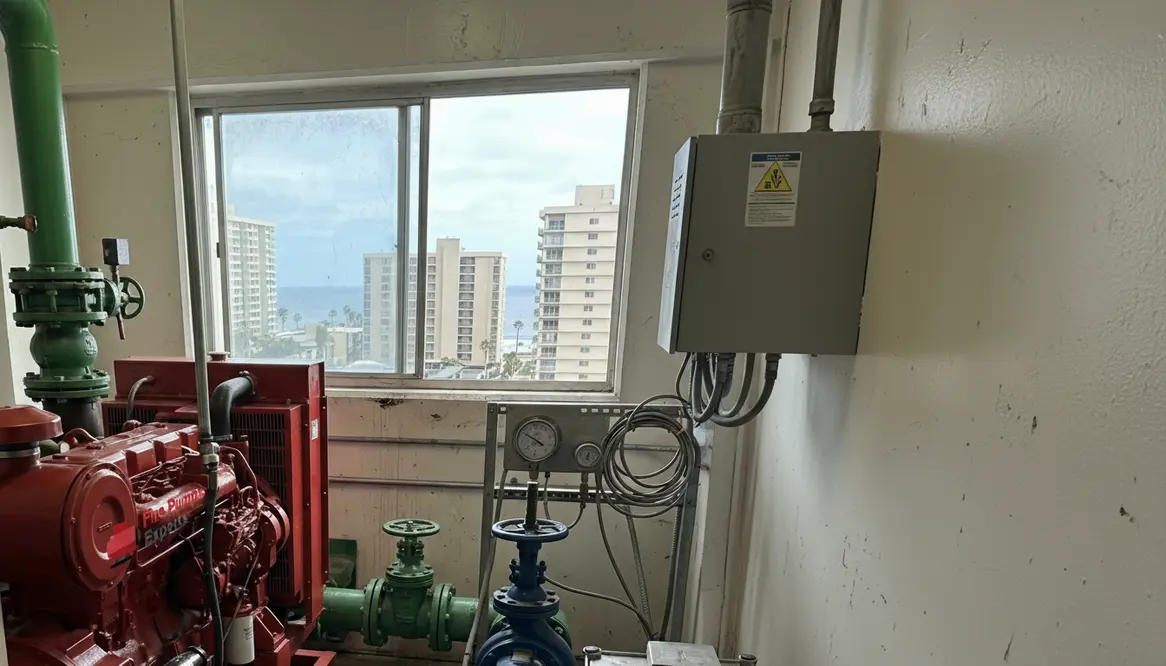
Fire Pump Multi Story Building Long Beach Guide
I have spent enough time around high rise systems to know one thing for certain. When water needs to move fast and with purpose, there is no room for guesswork. In a city like Long Beach, where vertical growth meets coastal conditions, choosing the right fire pump multi story building Long Beach setup becomes more than a code requirement. It becomes a responsibility. And yes, while pumps are not exactly Hollywood material, they do carry more pressure than most action heroes.
So let me walk you through this the way I would explain it to a building owner standing next to a humming pump room, coffee in hand, wondering if they made the right call.
The stakes in a multi story property are amplified vertically. Floors stack, occupants multiply, and the demand on your fire protection system climbs with every level. In Long Beach, that vertical reality also meets coastal air, seismic requirements, and the not-so-subtle expectation that when sprinklers need water, they get it instantly and with authority.
That is where a properly designed fire pump multi story building Long Beach arrangement earns its keep. It is not about overbuilding for bragging rights. It is about engineering enough performance to be boring on test day and flawless on the worst day.
What makes a fire pump system right for multi story buildings in Long Beach
The answer comes quickly. It is about pressure, reliability, and local conditions. However, not all systems are built equal, and certainly not all buildings demand the same solution.
Height and occupancy: where the math starts
First, I look at building height. The taller the structure, the more pressure you need to deliver water to the upper floors. Then, I consider occupancy type. A commercial high rise filled with tenants and equipment carries a different risk profile than a warehouse with open space.
Local Long Beach realities
Additionally, Long Beach brings its own personality into the mix. Coastal air can be corrosive. Power reliability matters. Therefore, I often lean toward systems that include redundancy, like diesel backup pumps paired with electric units.
And let’s be honest. If your pump fails during a fire event, no one is going to say, “Well, at least it saved on upfront costs.” When the standard is life safety, a correctly engineered fire pump multi story building Long Beach configuration becomes the quiet workhorse behind every sprinkler and standpipe outlet in the building.
Understanding pump types without falling asleep
The core options on the table
Let’s keep this simple and useful. There are three main players I deal with in multi story applications.
Electric fire pumps are efficient and clean. They work beautifully when power is stable. However, they depend entirely on that power source.
Diesel fire pumps bring independence. Even if the grid goes down, they keep running. They do require more maintenance, and yes, they can sound like a truck starting up in your basement.
Vertical turbine pumps are often used when water supply comes from underground sources. These are common in larger commercial properties where municipal supply alone is not enough.
As a result, I often recommend a combination approach. It is not overkill. It is preparation. In a tall coastal building, an electric primary with a diesel backup can turn a vulnerable fire pump multi story building Long Beach setup into a resilient one that keeps working when everything else is having a bad day.
How do I size a fire pump for a tall commercial building
Flow, pressure, and the art of not guessing
I start with flow and pressure requirements. That means calculating gallons per minute and the pressure needed to reach the highest outlet. Then, I factor in friction loss, elevation, and system demand.
Moreover, local codes in Long Beach and California NFPA standards guide every step. You cannot improvise here. You follow the math, the code, and experience.
Here is where things get interesting. Oversizing a pump sounds safe, but it can damage the system. Undersizing it is worse. It is like casting the wrong actor for a lead role. The whole production suffers.
So I take a balanced approach. Precise calculations, real world adjustments, and a little respect for how systems behave under stress.
fire pump multi story building Long Beach installation factors I never ignore
Installation is where theory meets reality. And reality has a habit of exposing shortcuts.
Location and access
Location matters
I place pumps in accessible, protected environments. Flood zones and tight corners are not your friends.
Ventilation and cooling
Diesel units especially need airflow. Heat buildup can shut things down fast.
Seismic and control integrity
Seismic considerations
California does not negotiate with earthquakes. Proper anchoring and flexible connections are essential.
Controller reliability
The controller is the brain. If it fails, the pump does not even get a chance to perform.
Additionally, I always plan for testing and maintenance access. Because if you cannot test it, you cannot trust it. A well-thought-out fire pump multi story building Long Beach design leaves room for technicians to work, valves to be operated, and performance to be verified without acrobatics.
Maintenance keeps your system honest
Testing routines that actually protect you
A fire pump system is not a set it and forget it piece of equipment. It demands attention. Weekly churn tests, monthly inspections, and annual performance testing all play a role.
Furthermore, Long Beach conditions can accelerate wear. Salt in the air has a way of creeping into places it should not be. इसलिए, regular inspection is not optional. It is survival.
I have seen pristine systems fail simply because no one checked a valve position. On the flip side, I have seen older systems perform flawlessly because someone cared enough to maintain them.
Think of it like a classic car. Treat it right, and it will show up when it matters.
Cost vs reliability in commercial fire pump systems
Spending where it actually counts
Let me be clear. The cheapest option rarely wins in the long run. However, that does not mean you throw money at the problem without strategy.
I guide clients toward value. That means selecting equipment that meets demand, complies with code, and holds up over time. Upfront investment often reduces long term repair costs and downtime.
Besides, when tenants and operations depend on your building, reliability becomes part of your brand. No one brags about cutting corners on life safety systems. The most respected properties are usually the ones quietly running a robust fire pump multi story building Long Beach configuration behind the scenes and letting that reliability speak through uptime and safety records.
Conclusion
If you are managing or developing a high rise property, now is the time to get your system right. I help commercial and industrial property owners design and implement fire pump solutions that perform when it counts. Reach out today and let’s build a system that protects your investment, your occupants, and your peace of mind. Because when pressure rises, your system should already be ready.
If you want to understand how your existing installation stacks up against best practices, walking your pump room with a critical eye is a strong first step. Look at the layout, the condition of components, testing records, and whether the design still matches the building as it is used today. When in doubt, a professional review of your fire pump multi story building Long Beach system is cheaper than discovering problems amid sirens and smoke.
FAQ
Learn more about fire pump standards and best practices here.